
316L is a lower carbon version of 316 with a maximum carbon content of 0.03%,known for superior corrosion resistance.
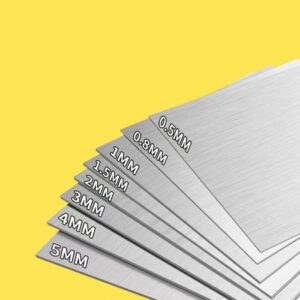
Cold rolled Thickness: 0.3-4 mm, custom size
Hot rolled Thickness: 3-120 mm, custom size
Width: 600mm, 1000mm, 1219mm, 1500mm, custom size
Length: 2000mm, 2438mm, 3000mm, custom size
316L stainless steel plate is stainless steel material with excellent performance and characteristics, is the low-carbon version of austenitic stainless steel 316, where L represents the low carbon content, the maximum carbon content of 0.03%, the main components of chromium (16-18%), nickel (10-14%), molybdenum (2-3%), and contains a small amount of manganese, silicon and other elements.
The low carbon content makes it less prone to carbide precipitation in welding or high temperature environments, to maintain corrosion resistance. Compared to 304 stainless steel, the addition of molybdenum in 316L dramatically increases its resistance to pitting and crevice corrosion in seawater and acidic conditions.
This low-carbon, molybdenum-enhanced alloy offers exceptional corrosion resistance, making it ideal for harsh environments like chemical plants, marine settings, and food processing facilities.These key Advantages making 316L stainless steel a popular choice:
Excellent Corrosion Resistance
316L stainless steel plate has excellent corrosion resistance, the high chromium and molybdenum content provides excellent resistance to general corrosion and seawater pitting, which reduces the need for maintenance and extends the life of the equipment, even in harsh environments.
Resistance to chloride corrosion
316L stainless steel has excellent corrosion resistance, the addition of molybdenum significantly improves resistance to chlorides (e.g. seawater, brine), acidic media (sulphuric acid, phosphoric acid, etc.) and industrial atmospheres, and is particularly good at resisting pitting and crevice corrosion.
Heat resistance
excellent oxidation resistance when used intermittently below 871°C (1600°F) or continuously below 927°C (1700°F); but need to avoid continuous use in the 427-857°C (800-1575°F) range. 316L stainless steel plate still maintains good corrosion resistance and strength under high-temperature conditions, suitable for high-temperature processes and equipment.
Weldability
316L stainless steel plate has good plasticity and malleability, easy to process and form, and can be used to manufacture complex shapes. The low carbon properties make it almost no precipitation of carbides in welding, thus ensuring corrosion resistance at the welded joints.
Mechanical properties
compared with some other stainless steel, 316L is non-magnetic in the annealed state (may be slightly magnetic after cold working), with tensile strength ≥ 70 ksi, yield strength ≥ 25 ksi, and elongation ≥ 40%
High strength
316L stainless steel plate has high yield strength and tensile strength, enabling it to provide reliable support in structural and assembly applications.
Standard: ASTM A240,EN10088
Technology: Hot rolled/Cold rolled
Cold rolled Thickness: 0.3-4 mm, custom size
Hot rolled Thickness: 3-120 mm, custom size
Width: 600mm, 1000mm, 1219mm, 1500mm, custom size
Length: 2000mm, 2438mm, 3000mm, custom size
Edge: Mill Edge, Slit Edge
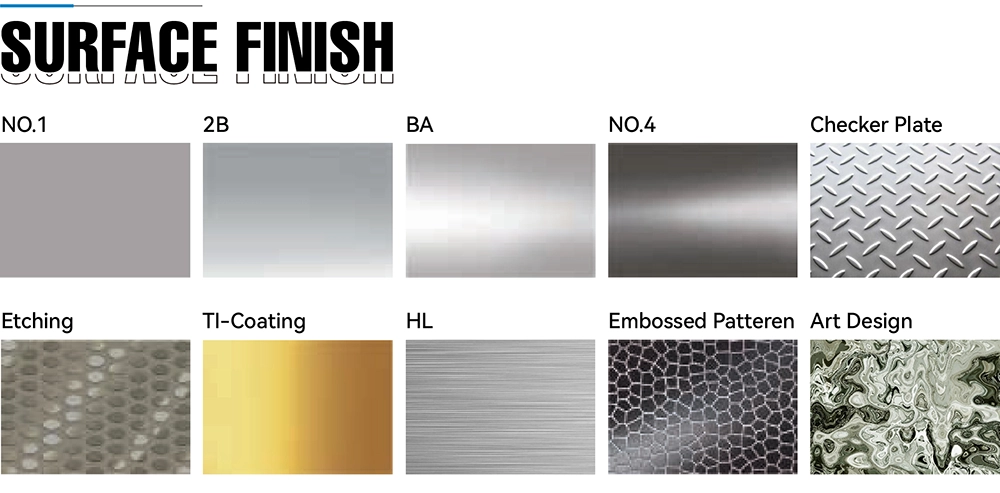
Surface Finish: 2B, 2D, BA, 8K, NO.4, HL, NO.8, etc. Multiple finish options
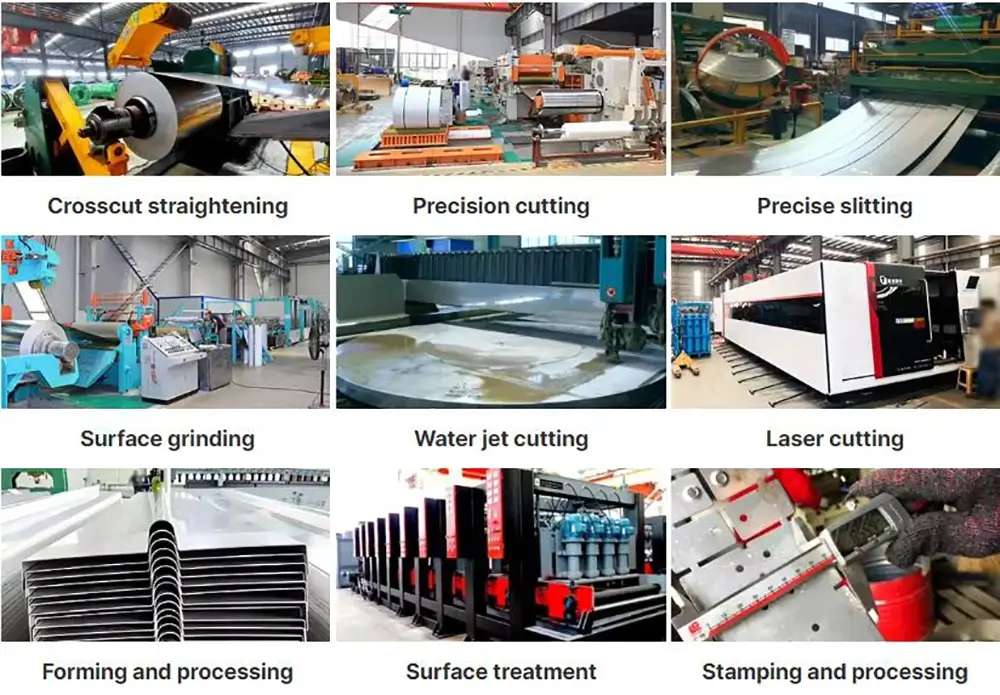
Processing Service: Bending, Welding, Decoiling, Punching, Cutting, Shot Blasting, Heat Treatment ,etc
| Lớp | C | Si | Mn | P | S | Ni | Cr | Mo |
| 316 | ≤0.08 | ≤1.0 | ≤2.0 | ≤0.045 | ≤0.03 | 10.0-14.0 | 16.0-18.0 | 2.0-3.0 |
| 316L | ≤0.03 | ≤1.0 | ≤2.0 | ≤0.045 | ≤0.03 | 11.0-14.0 | 16.0-18.0 | 2.0-3.0 |
| Mechanical Property of 316/316L | 316 | 316L |
| Yield Strength, min. (ksi) | 30 | 25 |
| Tensile Strength, min. (ksi) | 75 | 70 |
| Elongation, min. (%) | 40 | 40 |
| Hardness, max. (Rb) | 95 | 95 |
We offer precision shearing, laser/waterjet cutting, slitting, flattening and chamfering services to customize 316L plate to any size or shape. State-of-the-art equipment ensures that thickness and width tolerances meet stringent requirements
Các tấm thép được cán nguội chính xác và làm phẳng để đảm bảo độ dày đồng đều và độ phẳng cao. Cung cấp đầy đủ các loại bề mặt hoàn thiện (cán nóng, mờ 2D, bề mặt thô 2B, chải số 4, mờ HL, ủ sáng BA, gương 8K, v.v.) kèm theo tùy chọn ủ hoặc đánh bóng, nhằm đáp ứng các yêu cầu khác nhau về vệ sinh và thẩm mỹ.
Chúng tôi cung cấp các tấm thép được cắt theo kích thước yêu cầu để đảm bảo các mép cắt nhẵn mịn. Mỗi lô hàng đều được đóng gói cẩn thận (trong các bó bọc màng chống thấm nước hoặc trên pallet gỗ) và dán nhãn kèm số theo dõi. Lô hàng có thể đi kèm với Giấy chứng nhận kiểm tra tại nhà máy theo tiêu chuẩn EN 10204-3.1.
Tấm thép không gỉ 316L đóng vai trò quan trọng trong nhiều ngành công nghiệp khác nhau:
1. Thép không gỉ 316L so với 304:
Nhờ hàm lượng molypden, thép 316L có khả năng chống ăn mòn tốt hơn đáng kể so với thép 304 trong môi trường chứa clorua (ví dụ: nước biển) và điều kiện có nồng độ muối cao.
2. Thép không gỉ 316L so với thép không gỉ 316:
Hàm lượng cacbon thấp (≤0,03%) của thép 316L khiến loại thép này phù hợp hơn cho các công việc hàn và các trường hợp không thể thực hiện quá trình ủ để tránh nguy cơ ăn mòn giữa các hạt; trong khi đó, thép 316 có hàm lượng cacbon cao hơn (≤0,08%), độ bền cao hơn một chút nhưng khả năng chống ăn mòn lại kém hơn một chút.
Hàn và gia công:
Quá trình gia công nguội có thể gây ra tính từ nhẹ, do đó cần kiểm soát mức độ biến dạng nguội; khi hàn nên sử dụng vật liệu hàn có hàm lượng carbon thấp để tránh hiện tượng ăn mòn giữa các hạt
Giới hạn nhiệt độ:
Tránh sử dụng trong thời gian dài ở nhiệt độ 427–857°C để ngăn ngừa sự suy giảm các tính chất của vật liệu.
Việc kiểm soát toàn diện các sản phẩm giúp chúng tôi đảm bảo khách hàng luôn nhận được chất lượng, giá cả và dịch vụ tốt nhất. Hãy liên hệ với chúng tôi để nhận báo giá miễn phí; JBLSTEEL sẽ cung cấp giải pháp phù hợp nhất cho dự án của quý khách.