How to choose the appropriate model of AR400 wear-resistant plate?
When selecting high-quality AR400 steel plates, one should follow the engineering logic that is derived from the application end, rather than simply comparing prices or hardness values.
High-quality machining involves clearly defining the process parameters: the main types of wear (impact, abrasion, compression), the magnitude and frequency of the impact energy, the pressure load it withstands, the working environment (temperature, humidity, corrosiveness), and the required subsequent processing methods (especially the welding requirements).
How to distinguish the authenticity of AR400 wear-resistant plate?
To assess the quality of the steel plates, it is necessary to rely on an objective technical evidence chain:
- Review material certificates
- Pay attention to performance consistency
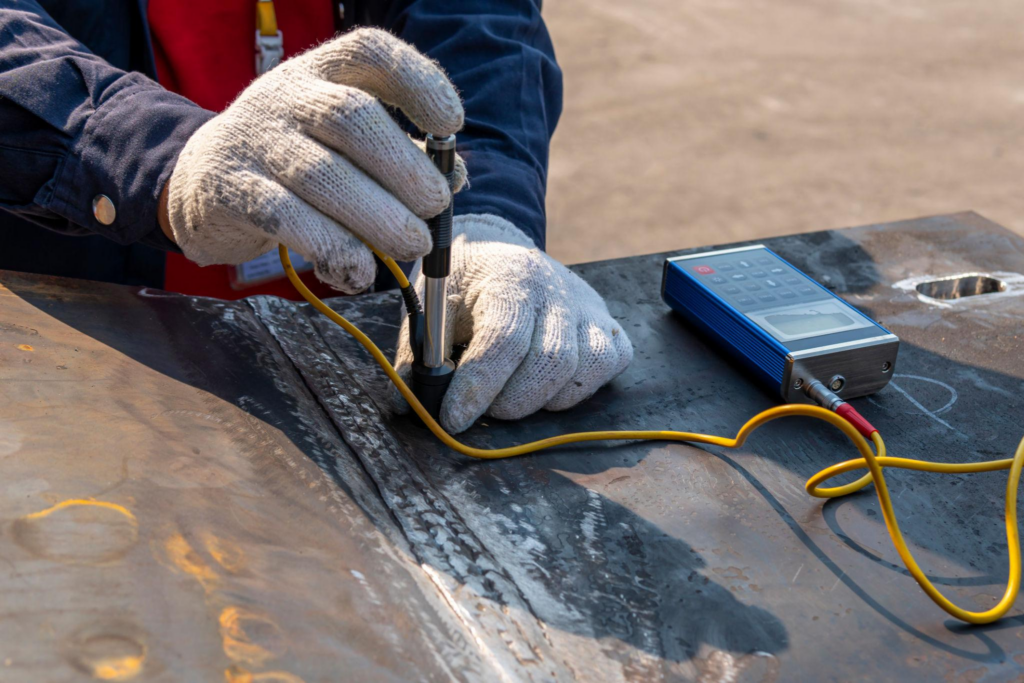
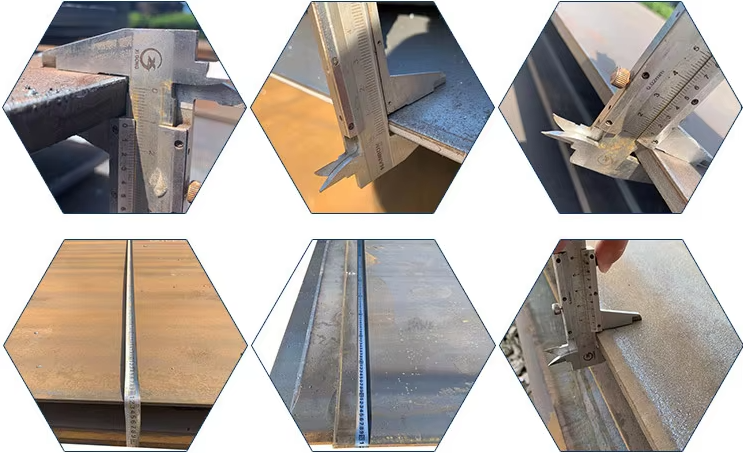
- Physical inspection assistance
What is the price of the AR400 wear-resistant plate?
From the perspective of initial investment, the price of AR400 wear-resistant plate is indeed higher than that of ordinary steel, possibly costing several thousand yuan per ton. However, when evaluating the economic performance of the material, we cannot only consider the purchase cost, but should also take into account the service life, maintenance costs and equipment downtime losses.
Is AR400 classified as high-strength steel or wear-resistant steel?
“High-strength wear-resistant steel”
What are the differences between AR400 and ordinary structural steel?
AR400 is a low-alloy high-strength wear-resistant steel with a Brinell hardness of approximately 400HB. It is specially designed for high-wear conditions. Ordinary structural steel (such as Q235) is a general building material guided by yield strength, with low hardness and poor wear resistance. The core difference between the two lies in the alloy design goal, hardness/maintenance of wear resistance, and applicable scenarios.
What are the differences between AR400 and AR450, AR500?
| Dimensionality | AR400 | AR450 | AR500 |
|---|
| Hardness index | About 400 HB | Approximately 450 HB | About 500 HB |
| wear-resisting property | Medium, suitable for general wear environments | Higher, suitable for moderate to severe wear and tear | Extremely high, suitable for extremely severe wear conditions |
| typical application | Containers, general structural components, light-load conveying equipment | Excavator buckets, dump truck linings, agricultural machinery | Mining machinery, crusher components, ballistic protection, heavy-load working conditions |
| processing characteristics | The welding and cutting performance are excellent, and the forming property is good. | Welding requires preheating, and the difficulty of cutting slightly increases | The welding requirements are high (requiring strict procedures), cold processing is difficult, and mostly thermal processing is adopted. |
| Intensity trend | Basic wear resistance strength | The yield/tensile strength is approximately 12.5% higher than that of AR400 | The yield/tensile strength is approximately 25% higher than that of AR400 |
What is the typical lifespan of the AR400?
- Low impact with high friction (such as coal gangue chute, cement plant conveyor chute): The wear is slow, the lifespan is long, up to 5-8 times that of ordinary steel plates. In some scenarios, it can be used for 2-4 years (depending on the replacement cycle).
-
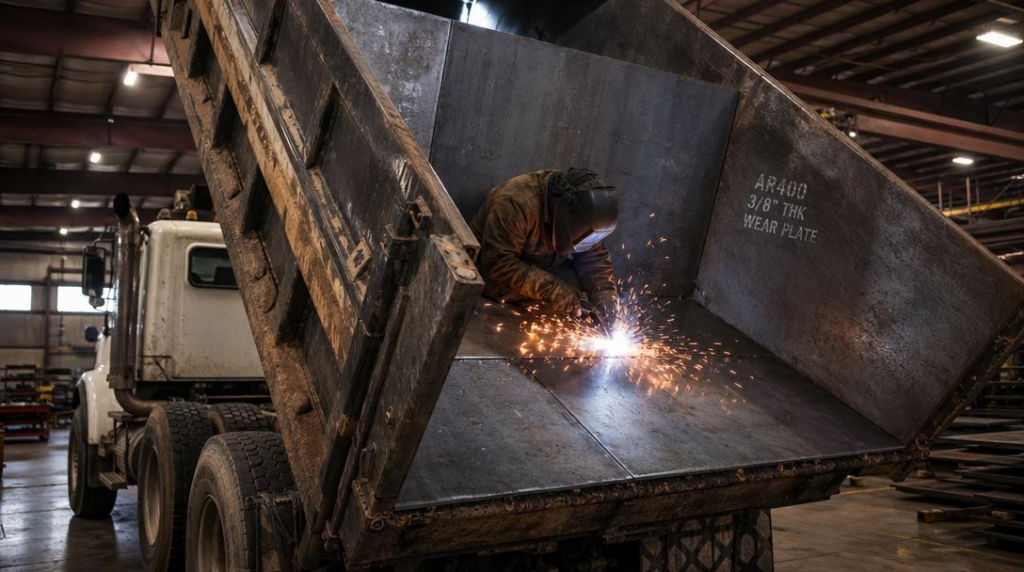
- Medium impact with moderate wear (such as excavator bucket, dump truck body): The overall wear is significant, the lifespan is about 3-5 times that of ordinary steel plates. Usually, it requires maintenance or partial replacement every 1-2 years.
-
- High impact with severe abrasion (such as mine crusher liner, screen plate): Under extreme conditions, micro cracks are prone to occur. Although the hardness is high, balance between toughness is required. The lifespan is reduced to 2-3 times. It may need to be replaced every few months. At this time, it is often recommended to upgrade to AR450/AR500 or NM500 grades.
What are the differences in the AR400 production process among different steel mills?
AR400 is not a specific brand exclusive to a certain steel mill. Instead, it is the code name for a wear-resistant steel in the American AISI standard (corresponding to NM400 in China, Hardox 400 in Sweden, etc.). The core production processes of each steel mill are consistent (smelting in a converter/electric furnace + refining + continuous casting + controlled rolling + quenching and tempering), with the main differences lying in alloy fine-tuning, heat treatment parameter control, and purity management strategies.
Why is the production of thick plates more difficult with AR400?
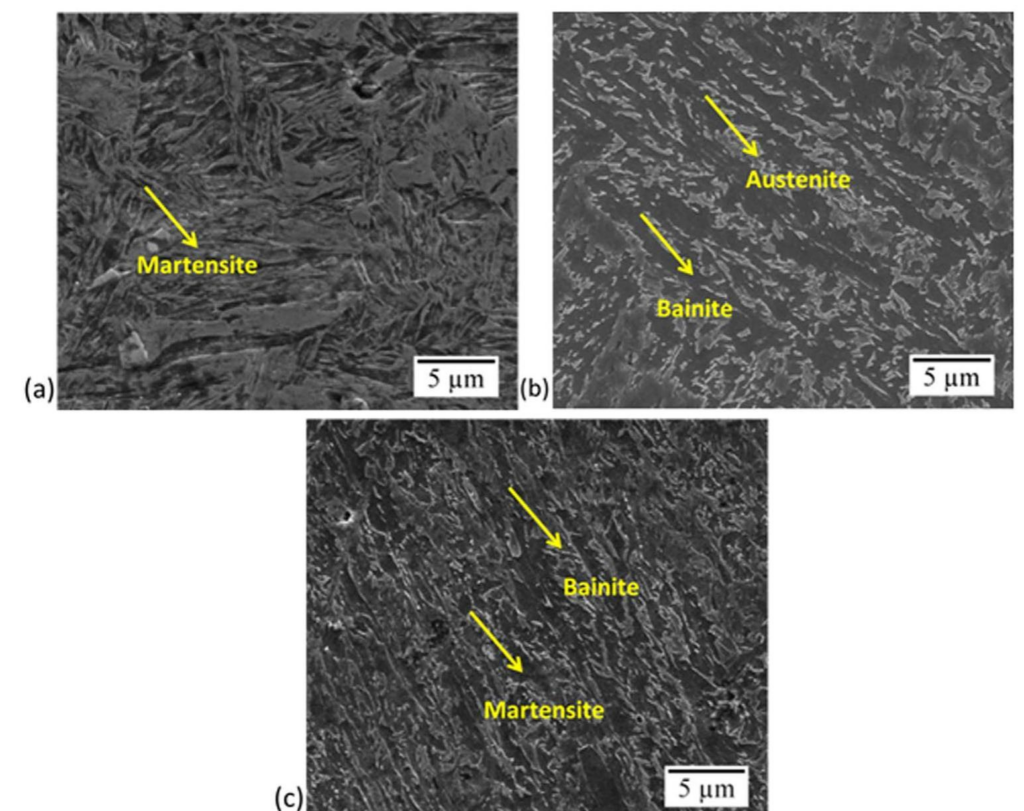
The production of AR400 thick plates is more challenging. The key issue lies in the uneven cooling of the cross-section, which results in insufficient hardness in the core, incomplete transformation of the microstructure, and extremely difficult control of the plate shape. It is difficult to simultaneously meet the requirements of a hardness of ≥ 400HB throughout the thickness and the toughness index.
Can AR400 replace NM400?
TIDAK
What are the differences between AR400 and the Chinese NM400?
The core performance of AR400 and NM400 (with hardness ranging from 360 to 450 HB, quenched and tempered state, and for wear-resistant applications) is basically the same. The main differences lie in the naming system/execution standards being different and some minor adjustments to the component ratios by certain manufacturers. They represent different grades of the same material.
What are the differences between AR400 and Hardox 400?
If the application scenario has strict requirements for wear resistance life consistency, complex structure welding or lightweight bending (such as for high-end excavator buckets or dump truck compartments), then Hardox 400 is the preferred choice. If it is only a general wear-resistant plate and cost is a concern, the AR400 produced by regular steel mills can meet the basic needs, but it is necessary to strictly inspect the hardness upon entry into the warehouse and obtain the flaw detection report.
What are the differences between AR400 and Raex 400?
The price range of AR400 is quite wide (domestic products start at approximately 5800 yuan per ton, while imported American standards are higher). It has a high cost-performance ratio. Raex 400, as an imported high-end brand, has a significantly higher price than ordinary domestic Ar400 400hbw Wear Resistant Steel Plate. It focuses on providing a lifespan guarantee under extreme wear conditions.
What are the differences between AR400 and XAR 400?
The Alloy Wear Plate AR400 can be produced by various parties such as Wudang Steel, Baosteel, and importers in accordance with common standards (such as ASTM A829/JIS, etc.); while the XAR400 is only produced by the German ThyssenKrupp Steel Plant.
Where is the quality gap between the Chinese AR400 and the imported AR400?
The NM400 produced by state-owned enterprises at the head level (such as Wugang and Baowu) has largely replaced imported products under normal conditions. The main gap lies in ultra-low temperature, ultra-thick plates, and scenarios with high reliability requirements.
Why is the import price of AR400 higher?
The higher import price of AR400 mainly stems from factors such as tariffs, logistics costs, premium for original factory craftsmanship, and the accumulation of supply chain costs, rather than being solely due to brand factors.
How to choose between the domestic AR400 and the imported AR400?
The main differences between domestic and imported “AR400” lie in the standard system, performance stability and cost: Domestic products follow GB/T 16270 or enterprise standards (often对标 NM400), with a wide hardness range (360-450HBW), and have high cost performance; imported ones (such as Hardox 400 from Sweden and Abrasion Resistant Steel Plate AR400 from the United States) follow strict standards like ASTM/SSAB, with better uniformity of hardness, toughness and welding processability, but the price is usually 1.5-2 times that of domestic products and the delivery time is longer.
How to reduce the procurement cost of Ar400 Plate?
The core of reducing the procurement cost of AR400 (high-strength wear-resistant steel plate) lies in: Based on the Total Cost of Ownership (TCO) strategy, structural cost reduction can be achieved through centralized purchasing for scale-based bargaining, promoting material/process optimization at the design stage, locking in long-term agreements, and optimizing logistics inventory, rather than simply lowering the unit price.
Is the price of AR400 higher as the thickness increases?
yes

 English
  Русский
 Deutsch
 Español
 简体中文
简体中文
 Português
 Italiano
 日本語
日本語
 Bahasa Indonesia
 한국어
한국어
 Français
 Nederlands
 العربية
 Tiếng Việt
 ไทย
ไทย
 Tagalog
 Bahasa Melayu
 Polski
 Türkçe
 Português do Brasil
 हिन्दी
 Қазақ тілі
 বাংলা
বাংলা
 Hausa
Hausa
 Kiswahili
 አማርኛ
አማርኛ
 فارسی
فارسی
 Ελληνικά
 Română
 Українська