

Grade 304L low-carbon austenitic stainless steel
304L stainless steel is a grade of stainless steel produced in accordance with the American ASTM standard.
304L stainless steel has a significantly lower carbon content than 304; it offers superior resistance to pitting corrosion, particularly at weld joints or in areas that have undergone other types of processing.
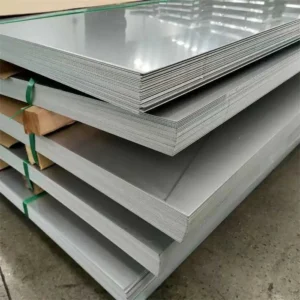
JBL supplies Grade 304L low-carbon austenitic stainless steel (S30408), including hot-rolled, cold-rolled, and mirror-finish varieties. We offer 304L stainless steel plates compliant with the GB/T14976-2002 standard. Our inventory includes a comprehensive range of specifications—from mirror-finish and cold-rolled sheets to medium-to-heavy plates—all featuring high material purity and competitive pricing.
304L stainless steel, also known as low-carbon stainless steel, is a versatile stainless steel material frequently used to manufacture equipment and components that require a good balance of properties—specifically, corrosion resistance and formability.

304L Stainless Steel Grade:
Under the old standard JB/T 4237-1992, it corresponds to 00Cr19Ni10.
Under the new standards—GB/T 20878-2007 (Grades and Chemical Compositions of Stainless and Heat-Resisting Steels) and GB 24511-2009 (Stainless Steel Plates and Strips for Pressure Equipment)—it corresponds to 022Cr19Ni10, with a carbon content of approximately 0.03%.
Its Unified Numbering System (UNS) code is S30403 (distinct from the S30408 code used for 304).
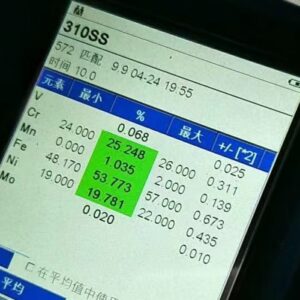
Chemical composition of 304L stainless steel (%):
Carbon (C): ≤0.03
Silicon (Si): ≤1.0
Manganese (Mn): ≤2.0
Chromium (Cr): 18.0–20.0
Nickel (Ni): 9.0–12.0
Sulfur (S): ≤0.03
Phosphorus (P): ≤0.045
Mechanical properties of 304L stainless steel:
Yield strength (N/mm²): ≥205
Tensile strength (N/mm²): ≥520
Elongation (%): ≥40
Hardness: HB ≤187, HRB ≤90, HV ≤200; Density: 7.93 g/cm³
Specific heat capacity (c) at 20°C: 0.502 J/(g·°C)
Thermal conductivity (λ) [W/(m·°C)] at the following temperatures (°C):
20 | 100 | 500
12.1 | 16.3 | 21.4
Coefficient of linear thermal expansion (α) [10⁻⁶/°C] over the following temperature ranges (°C):
20–100 | 20–200 | 20–300 | 20–400
16.0 | 16.8 17.5 18.1
Resistivity 0.73 Ω·mm²·m⁻¹
Melting point 1398–1420°C
Grade 304L low-carbon austenitic stainless steel

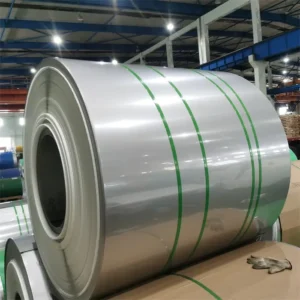
304L Cold-Rolled (Thickness < 3mm):
Surface finishes: Matte, brushed, mirror, patterned (embossed), sandblasted, colored (plated), etc.
Cold rolling: This process uses hot-rolled steel coils as raw material. After the oxide scale is removed via pickling, the steel undergoes continuous cold rolling, resulting in “full-hard” coils. Due to work hardening—a consequence of continuous cold deformation—the strength and hardness of these coils increase, while their toughness and ductility decrease. Consequently, their formability (stamping performance) is poor, making them suitable only for parts requiring simple deformation.
Product characteristics: As they have not undergone an annealing process, these coils possess very high hardness (HRB > 90) and extremely poor machinability. They are suitable only for simple, directional bending operations of less than 90 degrees (performed perpendicular to the coiling direction).

304L Hot-Rolled (Thickness > 3mm):
Surface: Pickled industrial finish (matte/non-reflective).
Processing options: Brushed, mirror-polished, patterned (e.g., “lotus leaf” texture), sandblasted, etc.
Hot rolling: uses steel slabs (primarily continuously cast slabs) as raw material. After being heated, these slabs pass through roughing and finishing mill stands to be processed into steel strip. Upon exiting the final finishing stand, the hot steel strip is cooled to a specific temperature via laminar cooling and then coiled. Depending on customer requirements, these coils undergo various finishing processes—such as temper rolling, leveling, transverse or longitudinal cutting, inspection, weighing, packaging, and labeling—to produce steel plates, leveled coils, or slit steel strips. In simpler terms, the process involves heating a steel slab (the kind you might see on television, glowing red-hot) and passing it through several rolling stages, followed by edge trimming and leveling, to ultimately produce steel plates; this is what is known as “hot rolling.”
Grade 304L low-carbon austenitic stainless steel
Comparison Item | Acciaio inox 304 | Acciaio inox 304L |
|---|---|---|
Contenuto di carbonio | ≤ 0.08% | ≤ 0.03% (ultra-low carbon) |
Chromium / Nickel Content | 18% Cr, 8% Ni | 18% Cr, 8% Ni |
Resistenza alla corrosione | Good; suitable for general corrosive environments | Similar to 304 under normal conditions; offers better resistance to intergranular corrosion after welding or stress relief |
Durezza | Slightly higher due to its higher carbon content | Slightly lower due to its lower carbon content |
Price | Benchmark price | Typically RMB 300–500/ton higher than 304; for some specifications, the premium may reach RMB 1,000–1,500/ton |
Typical Applications | Food processing, chemical industry, construction, shipbuilding, household products, and other general-purpose applications | Welded structures, containers, heat exchangers, and chemical process equipment requiring improved resistance to intergranular corrosion |
Analysis of Key Characteristics of 304L:
Grade 304L low-carbon austenitic stainless steel
304L Stainless Steel Plate: A Reliable Choice for Low-Temperature Environments
In extremely cold operating conditions or low-temperature storage scenarios, the mechanical performance of materials is of critical importance. As a prime example of austenitic stainless steel, the 304L stainless steel plate—thanks to its specialized low-carbon formulation—maintains excellent toughness at temperatures as low as -196°C (or even lower). Compared to standard 304 stainless steel, 304L effectively reduces susceptibility to intergranular corrosion through strict control of carbon content (C ≤ 0.03%) while ensuring stability during low-temperature impact testing, thereby providing a solid material foundation for projects in cold regions.
Grade 304L low-carbon austenitic stainless steel
Excellent low-temperature toughness: Verified by rigorous low-temperature impact testing, 304L stainless steel plate resists brittle fracture in cryogenic environments and offers superior impact resistance, making it suitable for manufacturing equipment that handles cryogenic media such as liquid nitrogen and liquefied natural gas (LNG).
Stable corrosion resistance: It retains the inherent corrosion-resistant advantages of the 300-series stainless steels, performing reliably in oxidizing media and various atmospheric environments. Its low-carbon composition minimizes the risk of chromium carbide precipitation during welding, thereby enhancing corrosion resistance in both the weld seam and the heat-affected zone.
Good formability and machinability: The material exhibits excellent plasticity and ductility, facilitating cold-working processes such as bending, stamping, and deep drawing. It meets the forming requirements for complex structures while minimizing material waste during production.
Reliable welding performance: High-quality welded joints can be achieved without the need for special pre-heating or post-weld heat treatment. The joints maintain mechanical properties comparable to the base metal even under cryogenic conditions, ensuring the overall structural integrity and safety.
Grade 304L low-carbon austenitic stainless steel

Energy and Chemical Industry:
Used for the fabrication of storage tanks and piping systems for liquefied petroleum gas (LPG) and liquefied natural gas (LNG), as well as reaction vessels intended for cryogenic chemical media.

Cryogenic Equipment Manufacturing:
Equipment designed for the storage and transport of cryogenic liquids, such as liquid oxygen, liquid argon, and liquid nitrogen.

Transportation Equipment:
In the sectors of specialty vehicles, rail transit vehicles, and aerospace, these materials are used to manufacture components that must operate in extremely cold environments—for instance, support structures for thermal insulation layers and external protective panels.

Food and Pharmaceutical Processing:
In food production lines or pharmaceutical manufacturing facilities—where clean environments are required and low-temperature storage may be involved—the use of components with sanitary-grade surface finishes and corrosion-resistant properties helps ensure product quality and safety.
Grade 304L low-carbon austenitic stainless steel
Il controllo completo sui prodotti ci permette di garantire ai nostri clienti i prezzi e il servizio migliori. Contattateci per un preventivo gratuito, JBLSTEEL vi fornirà la soluzione giusta per il vostro progetto.