



Magnetic 430 Stainless Steel Sheet Plate Metal
Typical Application Areas:
Suitable for kitchenware, burner components, internal and external parts for home appliances, architectural decorative elements, cabinet panels, food service equipment, general corrosion-resistant fasteners, and industrial structural components. When used in applications involving stretching, bending, stamping, or welding, the process should be evaluated by taking into account the degree of deformation, the welding method, and any subsequent surface treatment.
JBL Stainless Steel offers Magnetic 430 Stainless Steel Sheet Plate Metal . Direct from the manufacturer; custom specifications available upon request.
Properties of JBL Metal SUS430 Stainless Steel
430 stainless steel is a general-purpose grade with good corrosion resistance. It features better thermal conductivity and a lower coefficient of thermal expansion compared to austenitic stainless steels. It offers resistance to thermal fatigue, and the addition of titanium as a stabilizing element ensures excellent mechanical properties in welded areas. 430 stainless steel is used in architectural decoration, fuel burner components, household utensils, and home appliance parts. Grade 430F is a variant of 430 designed for improved machinability, primarily used for components produced on automatic lathes, such as bolts and nuts. Grade 430LX, which contains added titanium (Ti) or niobium (Nb) and a reduced carbon (C) content, offers enhanced formability and weldability; it is primarily used for hot water tanks, hot water supply systems, sanitary fixtures, durable household appliances, and bicycle freewheels.
Due to its chromium content, it is also referred to as 18/0 or 18-0 stainless steel. Compared to 18/8 and 18/10 grades, it contains slightly less chromium, resulting in a lower hardness.
Chemical Composition of JBL Magnetic 430 Stainless Steel Sheet Plate Metal :
Carbon (C): ≤0.12%
Silicon (Si): ≤0.75%
Manganese (Mn): ≤1.00%
Phosphorus (P): ≤0.040%
Sulfur (S): ≤0.030%
Nickel (Ni): ≤0.60% (may be present)
Chromium (Cr): 16.00–18.00%
Mechanical Properties(Magnetic 430 Stainless Steel Sheet Plate Metal) :
Density: 7.75 g/cm³
Melting Point: 1427°C
Coefficient of Expansion: mm/°C (at 20–100°C)
Young’s Modulus: kN/mm²
Shear Modulus: kN/mm²
Applicable Standards: N/A (UNS)
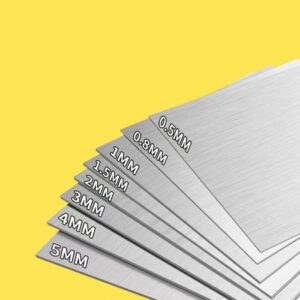
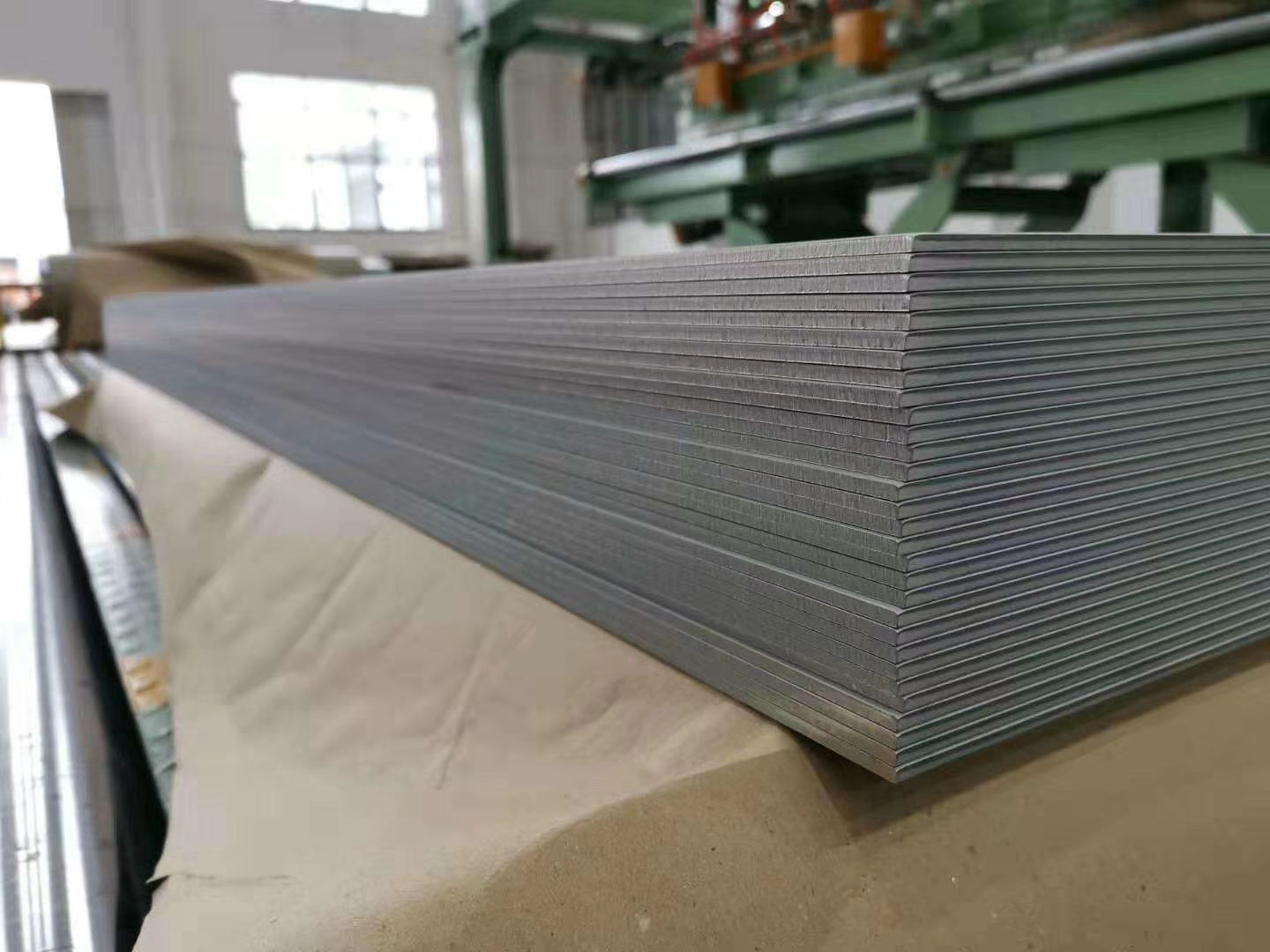
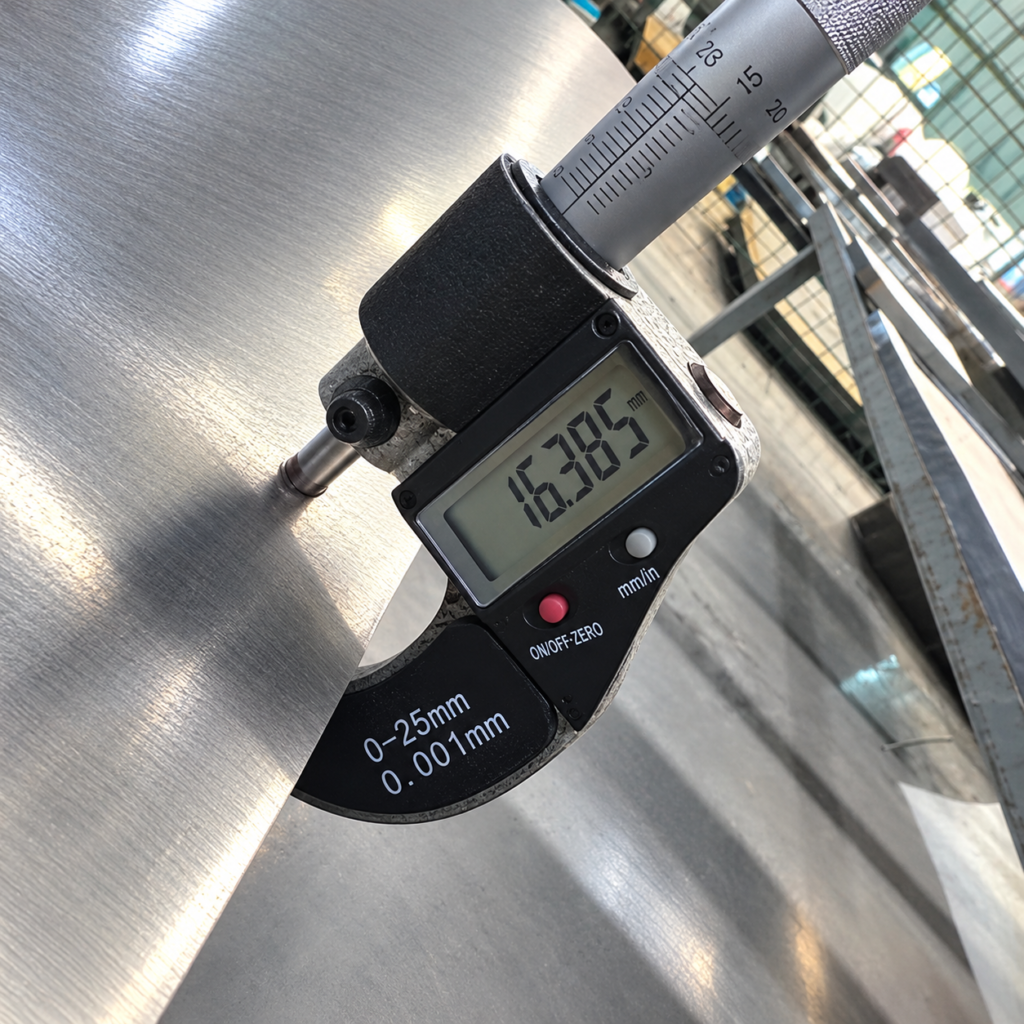
Specifications: Sheets/Plates: Thickness 0.3 mm–160 mm; Dimensions: 1000 mm × 2000 mm, 1219 mm × 2438 mm, 1219 mm × 3050 mm, 1500 mm × 3000 mm, 1500 mm × 6000 mm, 1800 mm × 6000 mm (custom cutting/slitting available)
Coils: Thickness 0.3 mm–10 mm; Width: 1000 mm, 1219 mm, 1500 mm, 1800 mm (custom cutting/slitting available)
Grades: 430.
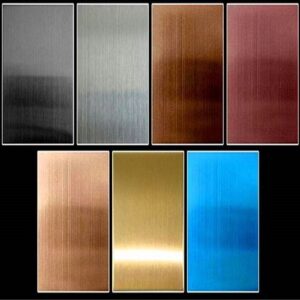
Surface Finishes: BA, 2B, No. 1 (hot-rolled/annealed), 2D, No. 4 (brushed/satin), HL (hairline), 8K (mirror) — (custom surface processing available upon request)
Types: Industrial stainless steel plates, decorative stainless steel plates, precision stainless steel plates
Origin: Domestic (Zhangpu, Baosteel, TISCO, Lianzhong); Imported (POSCO [South Korea], Nippon Steel [Japan], ThyssenKrupp [Germany], Allegheny Technologies/ATI [USA])

厚さ(mm) | Stock Size 1 (mm) | Stock Size 2 (mm) | Stock Size 3 (mm) | Cold-Rolled Sheet | Hot-Rolled Sheet |
|---|---|---|---|---|---|
0.5 | 1219 × 2438 | — | — | ✓ | — |
0.6 | 1219 × 2438 | — | — | ✓ | — |
0.7 | 1219 × 2438 | — | — | ✓ | — |
0.8 | 1219 × 2438 | 1500 × 3000 | — | ✓ | — |
0.9 | 1219 × 2438 | — | — | ✓ | — |
1.0 | 1219 × 2438 | 1500 × 3000 | — | ✓ | — |
1.2 | 1219 × 2438 | 1500 × 3000 | — | ✓ | — |
1.5 | 1219 × 2438 | 1500 × 3000 | — | ✓ | — |
2.0 | 1219 × 2438 | 1500 × 3000 | — | ✓ | — |
2.5 | 1219 × 2438 | 1500 × 3000 | — | ✓ | — |
3.0 | 1219 × 2438 | 1500 × 3000 | 1500 / 1800 / 2000 × 6000 | ✓ | ★ |
4.0 | 1219 × 2438 | 1500 × 3000 | 1500 / 1800 / 2000 × 6000 | ✓ | ★ |
5.0 | 1219 × 2438 | 1500 × 3000 | 1500 / 1800 / 2000 × 6000 | ✓ | ★ |
6.0 | 1219 × 2438 | 1500 × 3000 | 1500 / 1800 / 2000 × 6000 | ✓ | ★ |
8.0 | — | — | 1500 / 1800 / 2000 × 6000 | — | ★ |
10.0 | — | — | 1500 / 1800 / 2000 × 6000 | — | ★ |
12.0 | — | — | 1500 / 1800 / 2000 × 6000 | — | ★ |
14.0 | — | — | 1500 / 1800 / 2000 × 6000 | — | ★ |
16.0 | — | — | 1500 / 1800 / 2000 × 6000 | — | ★ |
Available Materials: 430.
Stainless Steel Grade | Main Characteristics |
|---|---|
310S | An austenitic chromium-nickel stainless steel with excellent oxidation resistance and corrosion resistance. Its relatively high chromium and nickel contents provide good high-temperature creep strength, making it suitable for continuous operation at elevated temperatures. |
316L | 1. Cold-rolled products have an attractive appearance and a smooth, bright surface finish. 2. The addition of molybdenum (Mo) improves corrosion resistance, particularly pitting resistance. 3. Offers good high-temperature strength. 4. Exhibits excellent work-hardening characteristics and may develop weak magnetism after cold working. 5. Generally non-magnetic in the solution-annealed condition. |
316 | A widely used stainless steel grade following 304, commonly used in the food industry and surgical instruments. The addition of molybdenum (Mo) improves corrosion resistance, atmospheric corrosion resistance, and high-temperature strength, making it suitable for demanding environments. It may exhibit some magnetism after processing. |
321 | Titanium (Ti) is added to 304 stainless steel to help reduce the risk of intergranular corrosion during welding and high-temperature service. It is suitable for certain applications at approximately 430–900°C. Its other properties are generally similar to those of 304. |
304L | A low-carbon variant of 304 stainless steel, suitable for welding applications. Its lower carbon content reduces carbide precipitation in the heat-affected zone near welds, helping minimize the risk of intergranular corrosion in certain environments. |
304 | One of the most widely used chromium-nickel austenitic stainless steels. It offers good corrosion resistance, heat resistance, low-temperature strength, and mechanical properties. It resists corrosion in normal atmospheric environments. In industrial atmospheres or heavily polluted areas, regular cleaning and maintenance are recommended to help prevent corrosion. |
Category | 共通グレード |
|---|---|
マルテンサイト系ステンレス鋼 | 410, 420, 440C |
フェライト系ステンレス鋼 | 409, 430, 430F |
Heat-Resistant Stainless Steel | 309S, 310S |
二相ステンレス鋼 | 2205, 2207 |
Precipitation-Hardening Stainless Steel | 630 (17-4PH), 631 (17-7PH) |
Magnetic 430 Stainless Steel Sheet Plate Metal is indeed magnetic! Its structure—characterized by high chromium and low nickel content—allows it to be attracted to magnets. It exhibits moderate magnetism that varies with temperature: it weakens upon heating and returns upon cooling, a typical characteristic of ferritic stainless steel.
Magnetic Comparison: 430 vs. 316 Stainless Steel
When 430 and 316 stainless steel are placed together:
The 430 component: Retains its inherent magnetism.
The 316 component: Remains non-magnetic (due to its austenitic structure).
Combined effect: The assembly as a whole exhibits magnetism—much like attaching a magnet to a non-magnetic metal—with the magnetic force originating primarily from the 430 component. When tested with a chemical reagent, the 430 will turn deep red, while the 316 will remain colorless or appear pale yellow.
Practical Testing Tip
When using a chemical testing solution to identify Magnetic 430 Stainless Steel Sheet Plate Metal :
Reaction color: After applying the testing solution, the surface will turn deep red within 5 seconds.
Color intensity: A deeper color indicates a higher chromium content.
Note: Clean the surface before testing; an oxide layer can affect the results.
This method is quick and intuitive, offering a more accurate way to distinguish 430 stainless steel from other types compared to using a magnet.

JBL’s processing operations ( Magnetic 430 Stainless Steel Sheet Plate Metal)
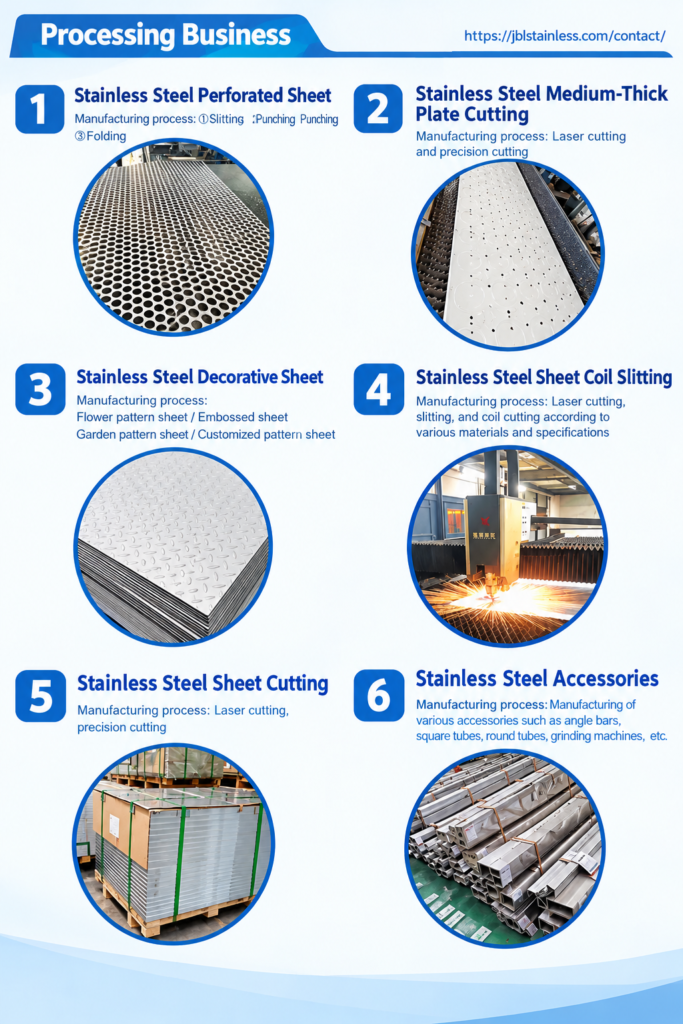
製品を完全に管理することで、お客様に最高品質の価格とサービスをお届けすることができます。JBLSTEELはお客様のプロジェクトに最適なソリューションを提供いたします。