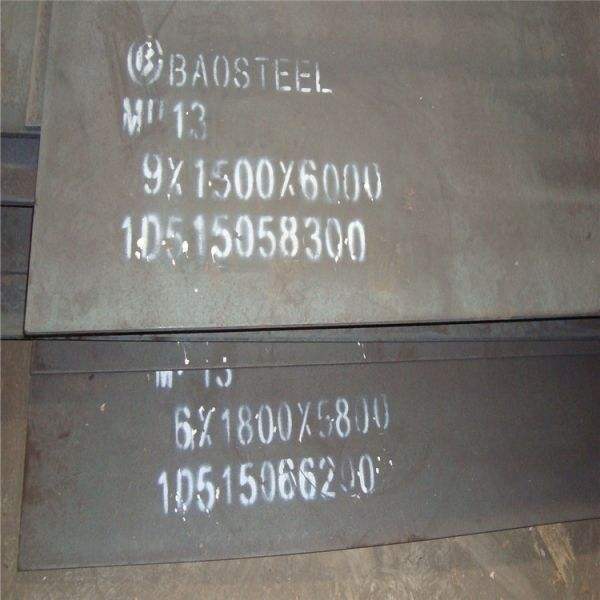
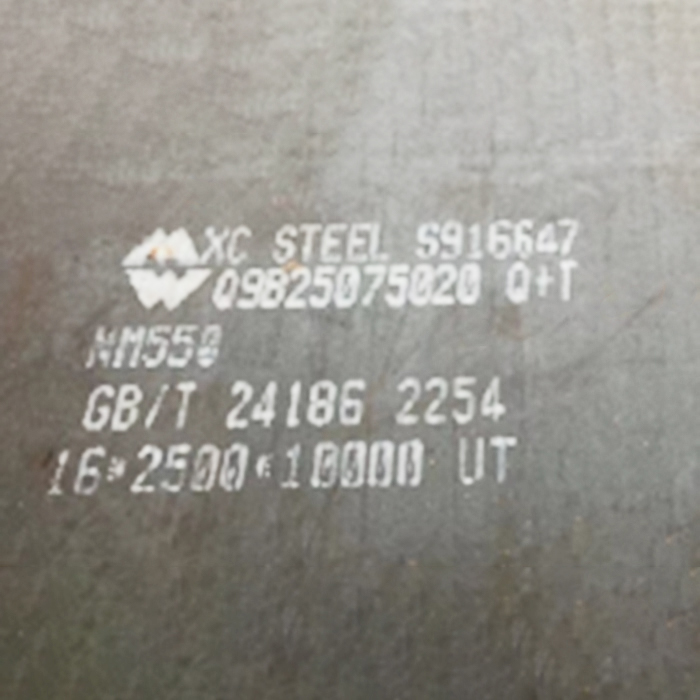
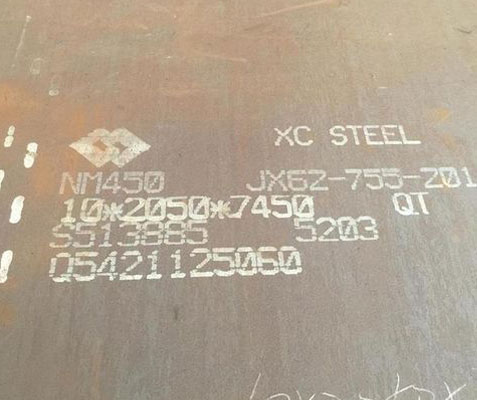
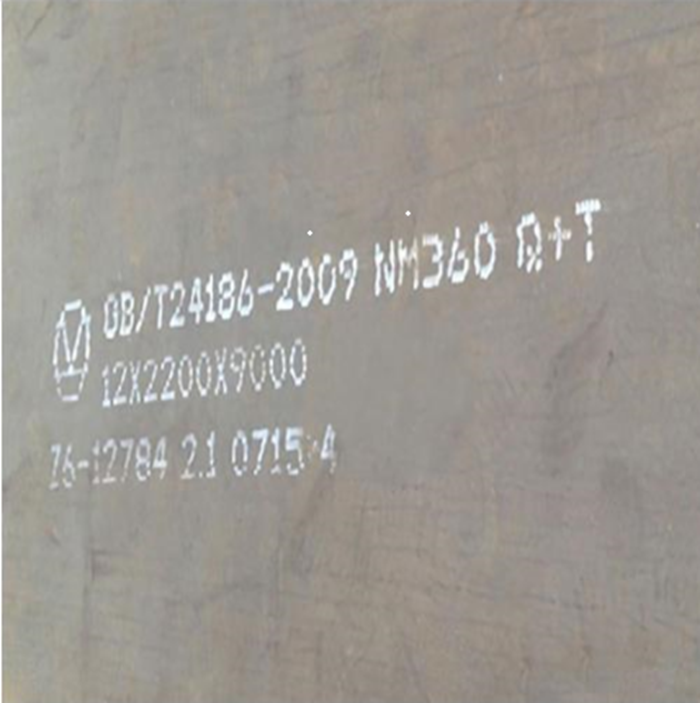
Wear Resistant Steel Plate (High wear resistance / Good impact performance / High hardness)

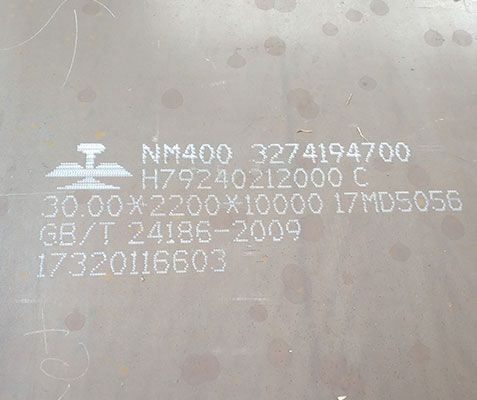
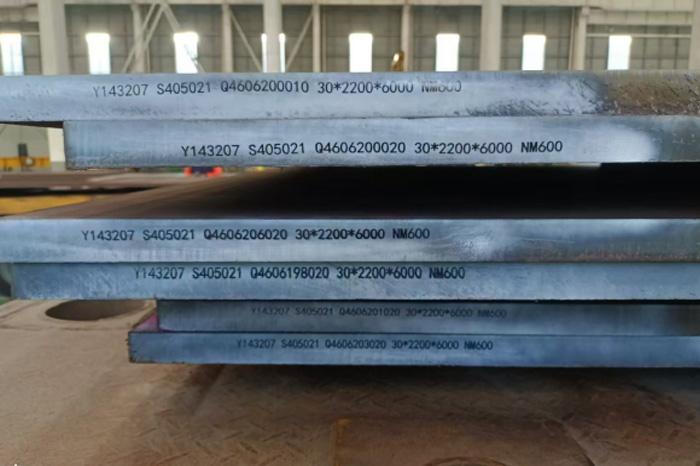
JBL Wear resistant steel grade(NM360,NM400,NM450,NM500,NM550,NM600,NM650/NM700) 

United States (AR series) (AR400, AR450, AR500, AR600)
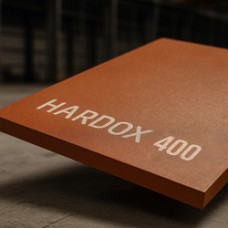
Sweden SSAB (Hardox 400, Hardox 450, Hardox 500, Hardox 550, Hardox 600)
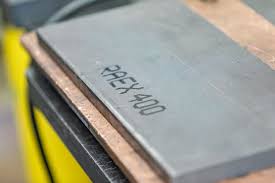
Finland Rautaruukki (Raex 400, Raex 450, Raex 500)
Germany Dillinger (DILLIDUR 325L, 400V, 450V, 500V, 550, 600)
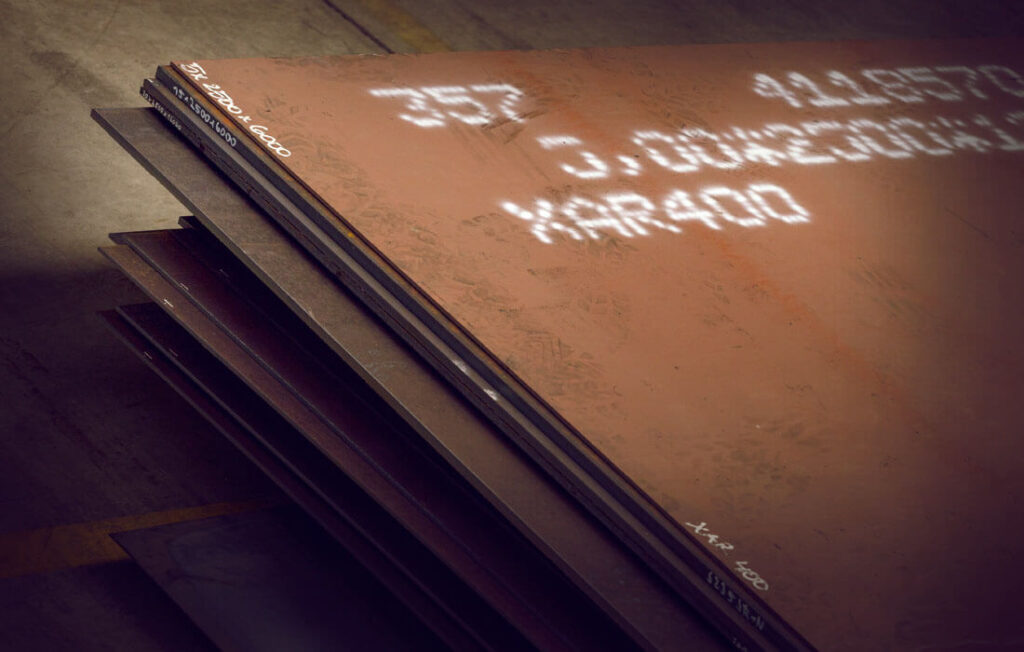
Germany ThyssenKrupp (XAR 400, XAR 450, XAR 500, XAR 600)
Japan JFE (JFE EH360, EH400, EH500)

What is a wear-resistant plate?

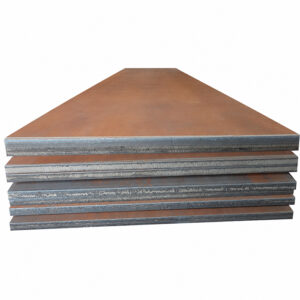
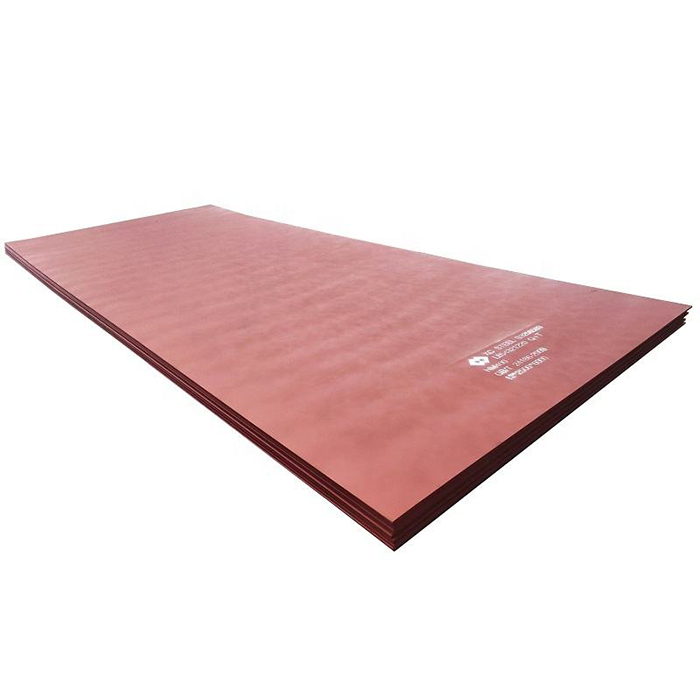
Wear-resistant plates refer to steel plates with wear-resistant properties. Their main application is in fields such as mechanical equipment, construction machinery, and mining equipment, where they are used to protect the equipment from wear and impact.

What are the differences between wear-resistant plates and ordinary steel plates?

The most fundamental difference between wear-resistant steel plates and ordinary steel plates lies in their hardness and wear resistance. The former is specifically designed for high-wear conditions, while the latter is mostly used for general structural load-bearing.

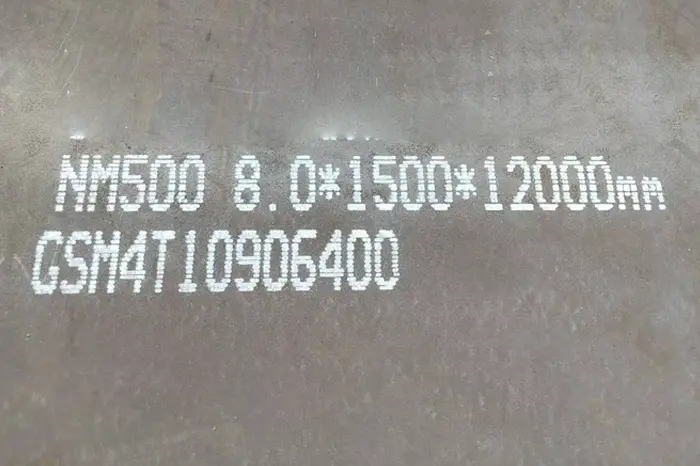
What do the “N” and “M” in the wear-resistant plate represent?

  • N: Corresponding to the initial letter of the pinyin for the character “耐” (resistant), it means “wear resistance”;
  • M: Corresponding to the initial letter of the pinyin for the character “磨” (wear), it means “wear resistance capability”;
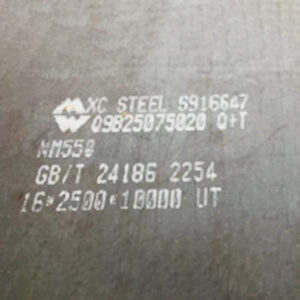
  • The subsequent numbers (such as 360, 400, 450, etc.) represent the average Brinell hardness value (HB) of this steel plate.

How are the hardness grades of wear-resistant plates classified?

  • Low hardness grade (300 – 400 HBW): such as NM360, NM400, Hardox 400. Good toughness, easy to weld, suitable for medium wear environments (such as hoppers, ordinary liners).
  • Medium hardness grade (450 – 500 HBW): such as NM450, NM500, Hardox 450/500. Balanced hardness and toughness, widely used in excavator buckets, crusher liners, dump truck bodies.
  • High hardness grade (550 – 600 HBW): such as NM550, NM600, Hardox 550/600. Extremely high wear resistance, used in extreme wear conditions (such as heavy-duty components in mines), with greater processing difficulty.
  • Special grade: such as Hardox HiTuf (about 350 HBW, high crack resistance), Hardox Extreme (about 650 – 700 HBW, ultra-hard), for specific impact resistance or ultra-wear resistance requirements.

Is it necessarily better if the hardness of the wear-resistant plate is higher?

아니요

Can NM400 replace Hardox 400?

The NM400 can replace Hardox 400 under normal wear conditions, but it is not recommended to directly substitute it in high-impact, low-temperature environments or in scenarios with strict requirements for toughness/consistency.

What are the differences between NM500 and AR500?

Both NM500 and AR500 are high-strength wear-resistant steels with a Brinell hardness of approximately 500HBW.Both NM500 and AR500 are high-strength wear-resistant steels with a Brinell hardness of approximately 500HBW. The main difference lies in the naming system and standard affiliation (NM is a Chinese national standard code, while AR is an American standard or international common code). Moreover, there are differences in the heat treatment process and toughness indicators: NM500 is delivered through mandatory quenching and tempering and clearly specifies requirements for low-temperature impact, while AR500 typically includes hot-rolled or different heat-treated states, focusing on wear resistance and ballistic performance.

What are the differences between domestic wear-resistant plates and imported wear-resistant plates?

The core difference between domestic and imported wear-resistant plates lies in their high hardness/ thick specification stability, batch consistency, and processing performance guarantee. The gap between medium and low grades (NM400/Hardox400 level) has been significantly narrowed. In extreme working conditions, imported plates still have an advantage.

What alloy elements are mainly added to the wear-resistant plates?

  • Carbon (C): Forms the carbide matrix, determining the basic hardness and wear resistance of the material. The content is usually controlled at 0.2%-0.5% (for quenched and tempered steel) or higher (for high-chromium cast iron).
  • Chromium (Cr): The core wear-resistant element, forming high-hardness carbides (such as M7C3), significantly enhancing the ability to resist abrasive wear; the content of high-chromium wear-resistant plates can reach 12%-30%
  • Manganese (Mn): Solutes the matrix to enhance quenchability and work hardening ability. Common content is 1.0%-1.7%.
  • Molybdenum (Mo): Refines grains, inhibits temper softening, enhances high-temperature strength and quenchability, typical addition amount 0.2%-0.65%.
  • Silicon (Si): Desorbs oxygen and is also a solute strengthening element, improving the stability of tempering, with a general content of ≤0.7%.
  • Nickel (Ni): Mainly enhances the toughness and low-temperature impact performance of the matrix, balancing the brittleness risk caused by high hardness.
  • Boron (B): A trace addition (about 0.001%-0.005%) can significantly improve quenchability, facilitating the formation of martensite structure in the core of thick plates.

What effect does the C (carbon) content have on the wear resistance?

An increase in carbon content usually enhances wear resistance (by increasing hardness and the quantity of carbides), but beyond the critical value (approximately 0.8%-1.0%), due to a significant increase in brittleness, it may lead to a decline in impact wear resistance.

How to determine the quality of wear-resistant plates based on their chemical composition?

Carbon content: Usually controlled within the range of 0.2% – 0.5%. Excessively high levels will reduce toughness, while too low levels will affect hardness. The specific parameters need to be adjusted according to the steel plate grade (such as AR400, JFE-EH400), and it is recommended to obtain the third-party test report from the manufacturer (such as SGS or TÜV).

Why are the chemical compositions of NM500 from different manufacturers different?

The differences in chemical composition of NM500 from different manufacturers stem from variations in the execution standards (national standard baseline vs enterprise standard optimization), alloy design routes (carbon reduction and alloy addition vs medium-high carbon route), as well as their respective process windows and cost strategies. As long as the final hardness (≥500HBW), toughness, and tensile strength meet the standards, it is considered compliant.

How does the carbon equivalent (CE) value affect the welding performance?

The higher the carbon equivalent (CE) value is, the poorer the weldability of the steel becomes. The core manifestations are an increase in the tendency to harden and a significant rise in the sensitivity to cold cracks. Compensation measures such as preheating need to be taken.

What mechanical properties are mainly tested for wear-resistant plates?

  • impact resistance of nm600 wear-resistant plate
  • hardness characteristics of nm600 wear-resistant plate 
  • bending strength of nm600 wear-resistant plate

What are the differences between Brinell hardness HBW and Rockwell hardness HRC?

HBW and HRC are two hardness scales that differ completely in terms of principle, indenter, application scope and data characteristics: HBW is calculated based on the surface area of the indentation, reflecting the macroscopic average hardness of the material; HRC is directly read based on the increment of the indentation depth, specifically used for measuring high-hardness quenched and tempered steels.

What are the hardness values of NM400, NM450, and NM500?

HBW

NM400 ████████████████████ 360–440 HBW

NM450 ███████████████████████ 420–500 HBW

NM500 █████████████████████████ 470–530 HBW

What is the relationship between tensile strength and yield strength?

The tensile strength is usually greater than the yield strength. The former represents the maximum force that the material can withstand before breaking, while the latter marks the starting point of plastic deformation. Both are key indicators for measuring the mechanical properties of materials, and there is no fixed conversion formula. They need to be determined through experiments.

Why does the wear-resistant plate have high hardness but decreased toughness?

The high hardness of the wear-resistant plate leads to a decrease in toughness. Essentially, it is the brittle microstructure formed to achieve high hardness (such as high-carbon martensite and a large amount of carbides) that restricts the lattice slip and plastic deformation ability, making the material prone to brittle fracture when absorbing impact energy.

Why does the wear-resistant plate exhibit “qualified hardness but prone to cracking”?

The main reason for the “hardness meeting standards but prone to cracking” of wear-resistant plates is as follows: High hardness is often accompanied by low toughness and a high tendency for hardening. Combined with hydrogen-induced delayed cracks, residual stress, or improper processing (such as not preheating during cutting/welding), the material loses its crack resistance while maintaining the required hardness.

How to enhance the impact toughness of wear-resistant plates?

Low P and low S pure steel + rational alloying + TMCP fine-grained rolling + optimization of quenching and tempering + uniform microstructure + control of residual stress + standardization of welding process

What is the elongation rate of the wear-resistant plate?

The elongation after fracture of the wear-resistant plate is generally between 6% and 12%.

What kind of test reports are required for the production of Wear Resistant Steel Plate NM400 Grade?

  • Material Certificate (MTC) 
  • Chemical Composition Analysis Report 
  • Mechanical Performance Report 
  • Hardness Testing Report 
  • Ultrasonic Testing Report (UT) 
  • Impact Test Report
  • Metallographic Analysis Report
  • Dimension Inspection Report 

Does the performance change when the thickness of the Wear Resistant Steel Plate is increased?

Increasing the thickness of Wear resistant steel alters their overall mechanical properties and processing characteristics: strength typically decreases, toughness reduces, and the tendency for welding/cutting cracks increases. However, service life under wear is extended only due to increased “wear allowance,” not because of improved inherent wear resistance of the material itself.

Does the wear resistance of the Wear Resistant Steel Plate 8mm decrease under high-temperature conditions?

yes

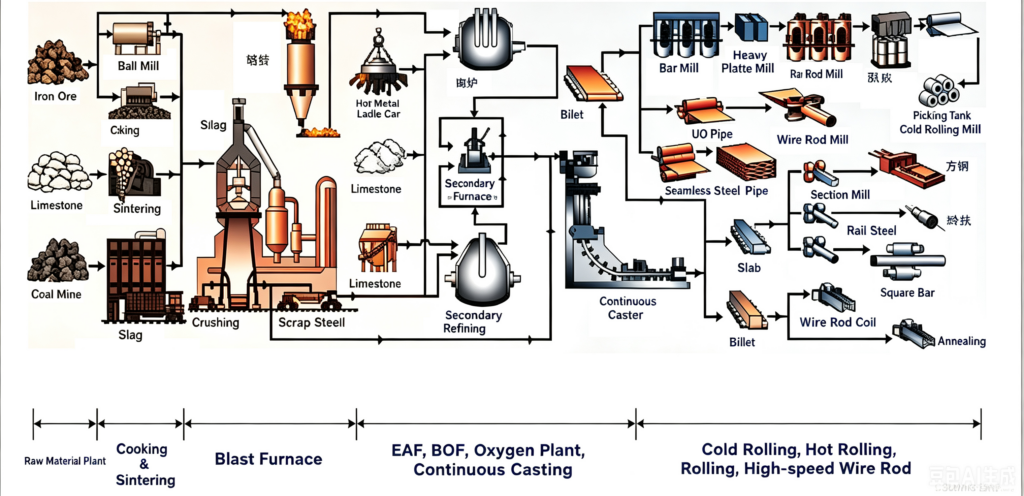
What is the production process of abrasion resistant steel plate?

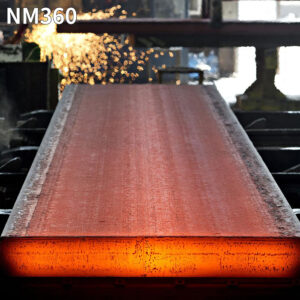
Raw material preparation and smelting     ⇒     Extrusion outside the furnace   ⇒   Continuous casting / Mold casting   ⇒    Heating and rolling / Heat treatment (key)    ⇒   Finishing and inspection   ⇒    Cutting and storage      

Why is wear-resistant plate Steel required to undergo heat treatment?

Whether the STEEL PLATE requires heat treatment depends on the application scenario and material requirements. Advanced surface treatment technologies can replace or assist in enhancing performance.

What impact does the quenching process of wear-resistant plates have on their wear resistance?

The quenching process of Wear Resistant Steel Plate Can Cutting directly determines the upper limit of wear resistance by transforming the base structure into high-hardness martensite; however, it must be combined with low-temperature tempering to eliminate brittleness and internal stress; otherwise, it is prone to cause peeling failure. The actual wear resistance is the result of the combined effect of “quenching + tempering”.

How does the tempering temperature of abrasion resistant steel Sheet affect the microstructure properties?

The tempering temperature is a crucial factor determining the final microstructure and mechanical properties (hardness, toughness, wear resistance) of the abrasion resistant steel plate. As the tempering temperature increases, the microstructure of the wear-resistant plate undergoes changes, resulting in a pattern of “decrease in hardness, improvement in toughness, and initial superiority followed by deterioration in wear resistance”.

What are the common structures of Wear-resistant Steel?

  • Tempered martensite 
  • prismatic martensite
  • a small amount of bainite / residual austenite

How to ensure consistent performance in the thickness direction of the Wear-Resistant Steel Plate?

The key to achieving consistent thickness-direction performance of the Wear Resistant Steel Plate Nm400 lies in maximizing the core cooling rate to inhibit the precipitation of ferrite/pearlite, ensuring the attainment of a martensite-bainite duplex structure throughout the entire cross-section. This is crucially dependent on a high cooling capacity quenching process, precise composition design, and controlled rolling temperature.

Why do thick high strength abrasion resistant steel plates tend to have performance fluctuations?

The core reason for the performance fluctuations of wear-resistant thick plates lies in the insufficient deformation in the thickness direction, resulting in uneven microstructure, the difficulty in eliminating central segregation and inclusion accumulation, as well as the gradient in cross-sectional performance caused by the difference in heat treatment quenching properties.

Why are the performance of the wear-resistant plates of the same brand but from different manufacturers different?

The performance differences among the same brand of Wear Abrasion Resistant Steel Plate  stem from the fact that the standards only specify the acceptable range rather than the optimal values. The varying levels of implementation in terms of component control accuracy, heat treatment process window, purity, and microstructure among different factories result in a disparity in actual service performance.

Why is metallographic testing necessary for wear-resistant plates?

Evaluation of material properties and quality through metallographic testing involves analyzing the microstructure of the metal (such as grain size, phase distribution, defects, etc.) to reveal performance indicators such as strength, toughness, and wear resistance, ensuring that the material meets the application standards.

How to determine if there is segregation in the Wear-Resistant Hot Rolled Carbon Steel Plate Sheets?

The Abrasion Resistant Steel Plate Wear Plate judgment is mainly made through a combination of chemical analysis, metallographic structure, hardness distribution, non-destructive testing and performance testing.

How to detect the residual stress of Wear Resistant Steel Sheet ?

  • XRD diffraction
  • Ultrasound acoustic stress method
  • Drilling method
  • Magnetic stress method
  • Cutting release method

How is the flatness of the sheet material inspected?

First, observe the edges and diagonals, then use a ruler to measure the gaps, and finally simulate the installation to test the elasticity.

What is the standard for the thickness tolerance of the wear-resistant plate?

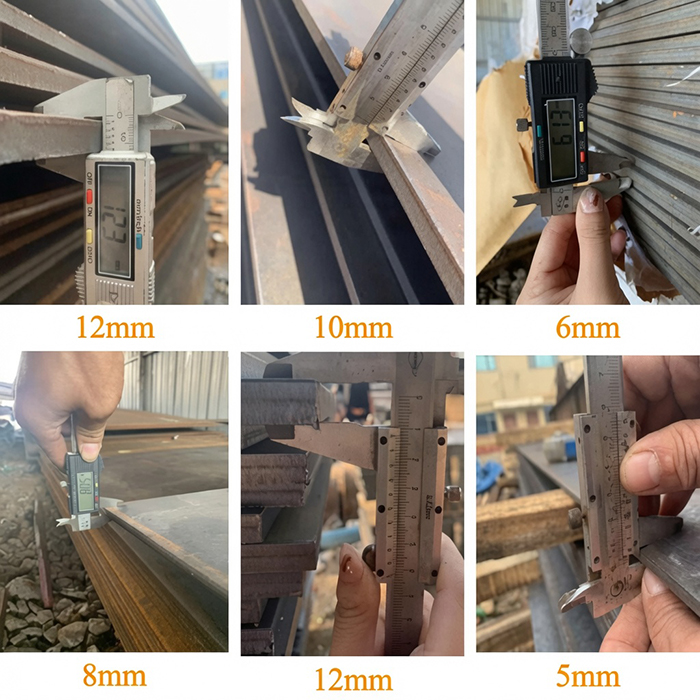
  • Chinese standard (GB/T 709-2006): For the dimensional deviations of High Quality Wear Resistant Steel Plat, refer to this standard. Four types of deviations (N/A/B/C) are provided, and they need to be specified during the order placement. Commonly, for hot-rolled plates (thickness ranging from 3 to 50 mm), under class N (symmetrical positive and negative deviations) or class A (negative deviation is zero), the tolerance varies approximately from ‌±0.2mm to ±0.8mm‌, increasing with the increase in thickness.
  • European standard (EN 10029): The mainstream Wear-Resistant Durable Carbon Steel Plate in the international market (such as Hardox) often adopt the ‌A grade tolerance‌ (the negative deviation is determined by the thickness, and the positive deviation is relatively large). For example: when the thickness is 3-10 mm, it is approximately ‌-0.3/+1.1mm‌; for 10-25 mm, it is approximately ‌-0.5/+1.4mm‌; for 25-40 mm, it is approximately ‌-0.8/+1.9mm‌.

Can Abrasion Resistant Steel Sheet NM500 AR500 A500 be laser-cut?

yes

How to drill holes in Wear Resistant Steel Sheet Plate?

The main factors to consider when drilling holes in wear resistant abrasion steel plate are the size of the holes and the equipment conditions. For small holes, it is recommended to use electrical discharge machining or special drills. For large holes, using plasma cutting directly is more convenient.

Can high-strength wear-resistant steel plate  be formed by stamping?

Can the wear-resistant plate be bent cold?

yes

Will the hot bending of Steel Wear-Resistant Steel reduce their hardness?

yes

Does preheating need to be done before welding the Wear resistant steel plate sheet?

yes

What welding wire is recommended for the abrasion resistant steel plate?

For welding/stripping of Thickness 10mm Abrasion Resistant Steel Plate, the preferred choice is self-shielded flux-cored welding wire (such as LZ570/590/601, YD900/988, NF600 series)

How does the performance of the heat-affected zone change after the Hot Rolled Abrasion Resistant Steel Sheet Steel Plate is welded?

After welding, the heat-affected zone (HAZ) of the Wear Abrasion Resistant Steel Sheet Steel Plate mainly experiences hardness reduction (softening), toughness decrease (brittleness), and residual stress concentration. Among these, the tempering softening that leads to the loss of wear resistance is the core failure risk.

Where is the NM400 mainly applied?

The core is applied to key components in heavy-wear environments such as mining, construction machinery, power, and metallurgy.

For which working conditions is the NM500 suitable?

  • Mining machinery 
  • Construction machinery 
  • Coal and metallurgy

In which extreme wear conditions is the NM600 mainly used?

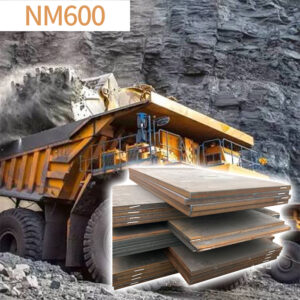
The NM600 is specifically designed for high-stress abrasive wear, severe erosion and strong impact combined working conditions. Its core application scenarios include mining crushing, cement vertical mills, metallurgical conveying, and vulnerable parts of heavy construction machinery.

How is the service life of High Wear-Resistant  Construction Machinery Alloy Steel Plate evaluated?

The assessment of the service life of wear-resistant plates requires a comprehensive determination through four aspects: simulation tests of working conditions, detection of key performance indicators, monitoring of actual operation data, and simulation predictions. The core basis for this assessment is the rate of wear and the safety threshold of remaining thickness.

How to select the grade of wear-resistant plate based on the type of wear?

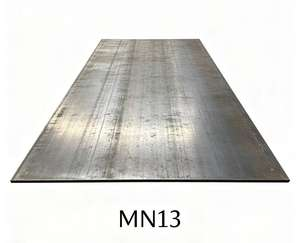
Strong impact + medium abrasive grains‌Jaw crusher liners, large mine car bodies, root parts of excavator bucket teeth, high drop material hoppersNM360/NM400‌ / Hardox 400/450, ‌Mn13‌ (Molding/Rolling)(Molding/Rolling)360-420 / 400-450Priority should be given to ensuring the ‌ impact toughness ‌ to prevent fracture. Mn13 can undergo work hardening under strong impact and become harder with grinding.
‌High abrasive grains + medium to low impact‌Chute liners, screen plates, fan blades, coal conveying pipes, bulldozer bladesNM400/NM450‌ / Hardox 450400-470Balance ‌ wear resistance and weldability/formability ‌; The hardness is sufficient to resist cutting wear while retaining a certain degree of crack resistance.
‌Extreme abrasive grains + heavy impact‌Crusher hammer heads/jaw plates, dump truck bottom plates, concrete mixer truck liners, excavator side edge platesNM450/NM500‌ / Hardox 500/550450-540Pursue ‌ ultimate wear-resistant life ‌; It is necessary to strictly control the welding process to prevent cracking, which is suitable for scenarios with high material hardness and high impact frequency.
‌Ultra-high abrasive grains + micro-impact‌Coal mill rollers/liners, sand mill blades, and severely worn fixed linersNM500/NM550‌ / Hardox 600, ‌High-chromium cast iron composite plate‌500-600+Hardness determines lifespan. If the impact is extremely small, ultra-high hardness plates or surfacing composite plates can be directly used to avoid excessive toughness and cost waste.
‌corrosion + wear‌Hydrometallurgical equipment, seawater environmental transportation, acidic pulp pipelines‌NM400/450 (Cr/Ni modified)‌ / corrosion-resistant special wear-resistant steel400-470Ordinary high-carbon steel is prone to rust and failure. Therefore, special grades with ‌ chromium and ‌ elements added to enhance corrosion resistance should be selected


How to choose between NM400 and NM450?

The core selection criteria for NM400 and NM450 are the wear intensity grade and the tolerance for processing costs: for regular heavy loads, choose NM400; for extreme high-frequency wear and the need to consider certain toughness, choose NM450.

Which is more durable, NM450 or NM500?

NM500

How to determine the thickness of the wear-resistant plate?

The core logic for selecting the thickness of wear-resistant plates: The thickness is only used as a reserve for wear resistance. It is necessary to first match the hardness/impact requirements of the working conditions, and then calculate the redundant thickness based on the expected lifespan. There is no such thing as the thicker the better.

Which grade of wear-resistant plate should be chosen for impact wear resistance?

For resisting impact wear, the preferred materials should be the high manganese steel ZGMn13 series (for strong impact) or the medium-low hardness quenched and tempered wear-resistant steel NM400/Hardox 400 (for medium-strong impact).

What kind of wear-resistant plate should be chosen in a low-temperature environment?

  • Impact exists, low temperature is present → NM400 / NM450
  • Severe wear, normal low temperature → NM500
  • Extremely cold environment (≤ -40℃) → Select low-temperature toughness grade wear-resistant steel

Which kind of 6mm-100mm Thickness  Wear Resistant Steel Sheet should be selected for the welding structure?

The welding structure should preferably choose the‌ clad wear-resistant plate‌ (bimetallic structure) or the‌ low hardness grade quenched and tempered wear-resistant steel‌ (such as NM360/NM400/Hardox 400/450). It is strictly prohibited to conduct the main structure welding directly on the high hardness integral wear-resistant steel (such as NM500/Hardox 550+).

How to reduce the cost of using NM600 Wear Resistance Steel Plate?

The core of reducing the cost of using wear-resistant plates lies in achieving the optimal total life cycle cost (LCC), rather than simply lowering the purchase price. It is necessary to achieve longer service life and reduced downtime by precisely selecting the right type of plates for the specific conditions, optimizing installation and maintenance strategies, and adopting composite/alternative materials.

Are the high-priced wear-resistant plates necessarily of good quality?

아니요

Is the domestic jblstainless wear-resistant plate suitable for export projects?

yes

How to verify the strength of a jblstainless supplier?

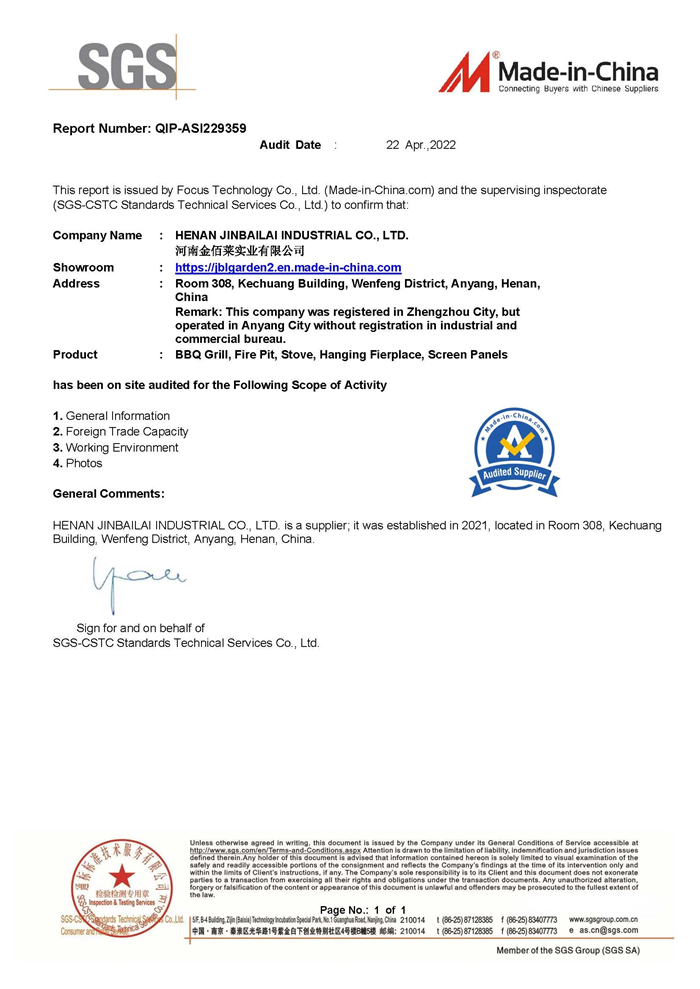
Qualifications and compliance / Production and supply capabilities / Quality control / After-sales service

Where can wear-resistant plates be applied?

Mining/ construction machinery/ electricity/ metallurgy/ cement and port logistics/

무료 견적 요청하기
궁금한 점이 있거나 견적을 요청하려면 메시지를 보내주세요. 1시간 이내에 최대한 빨리 연락드리겠습니다.