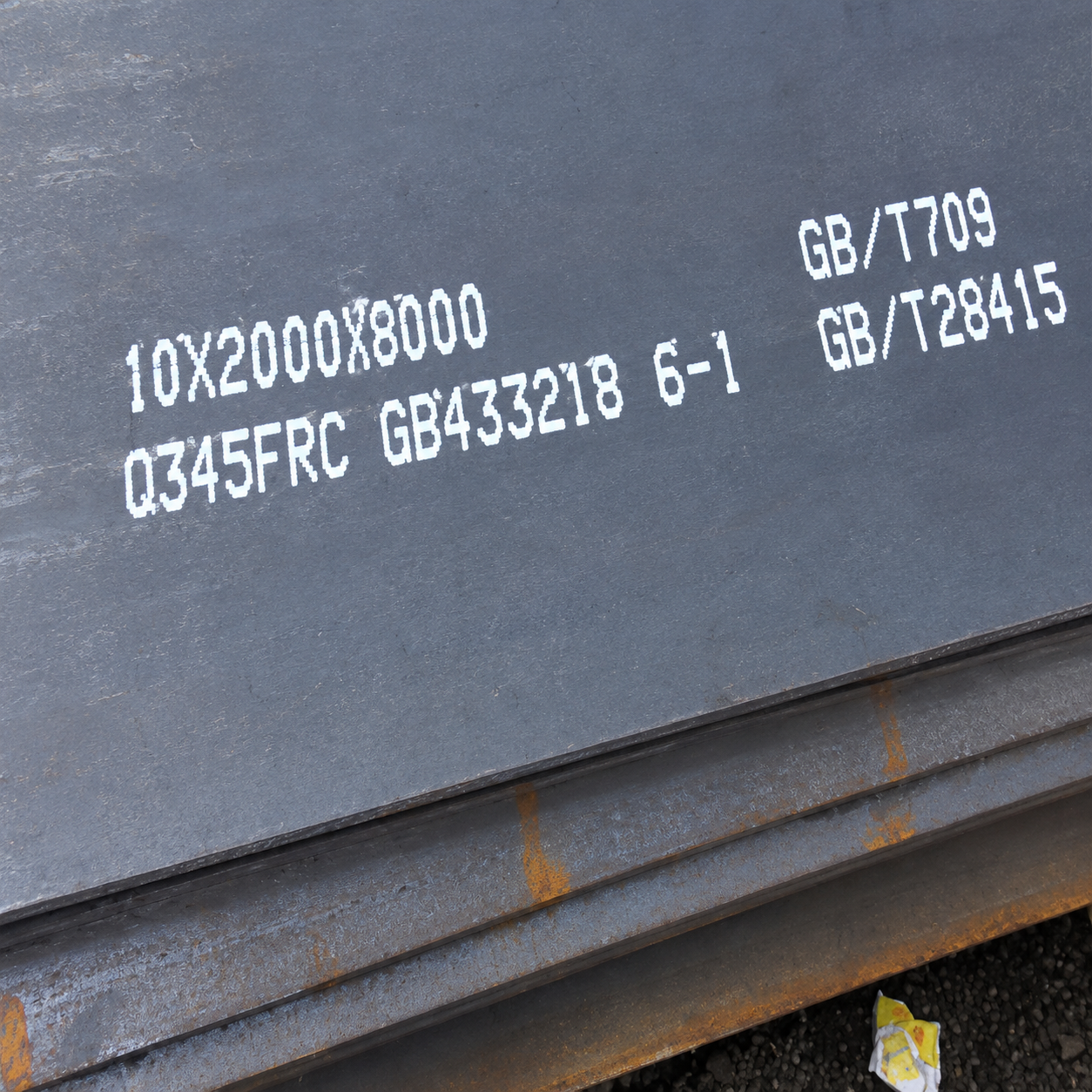
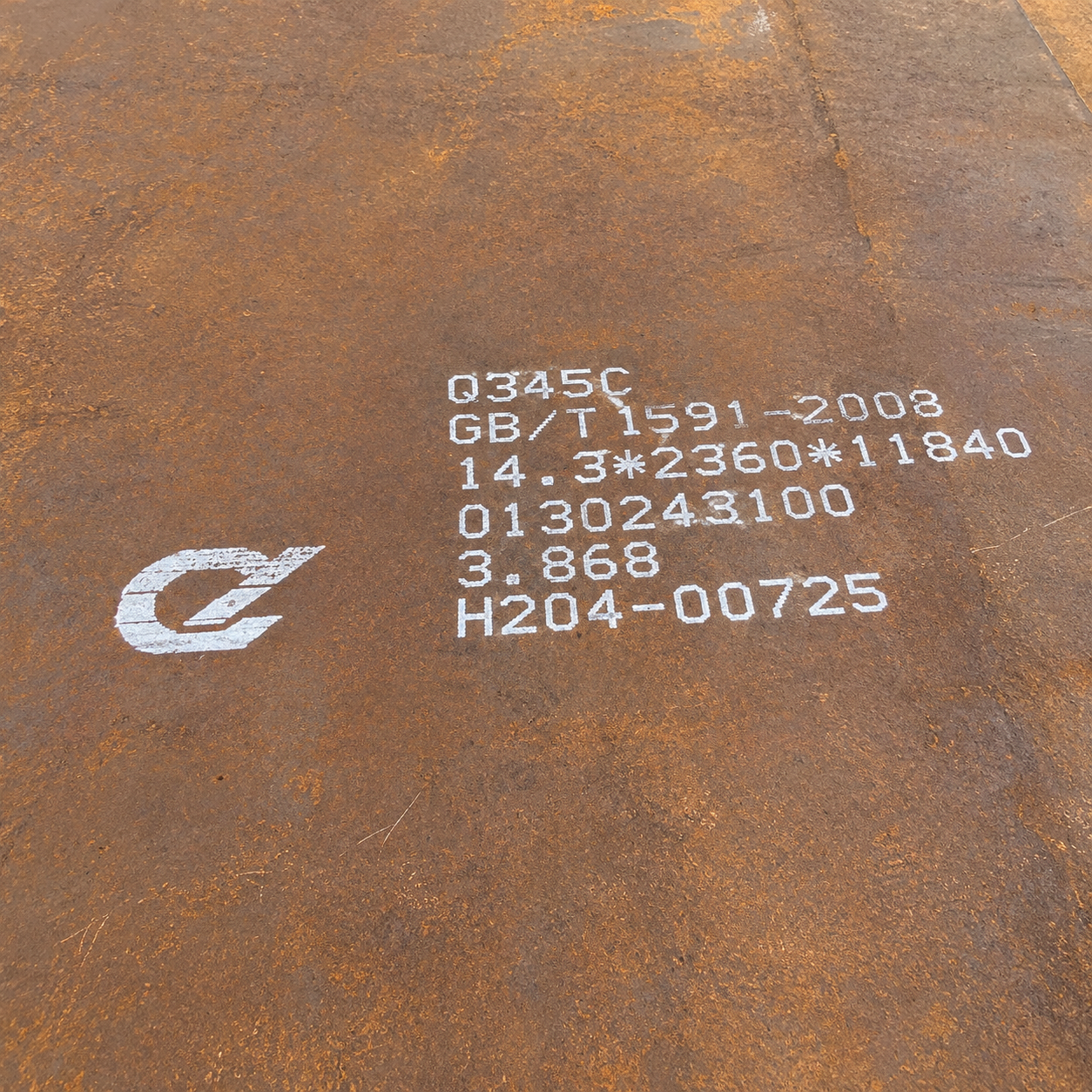
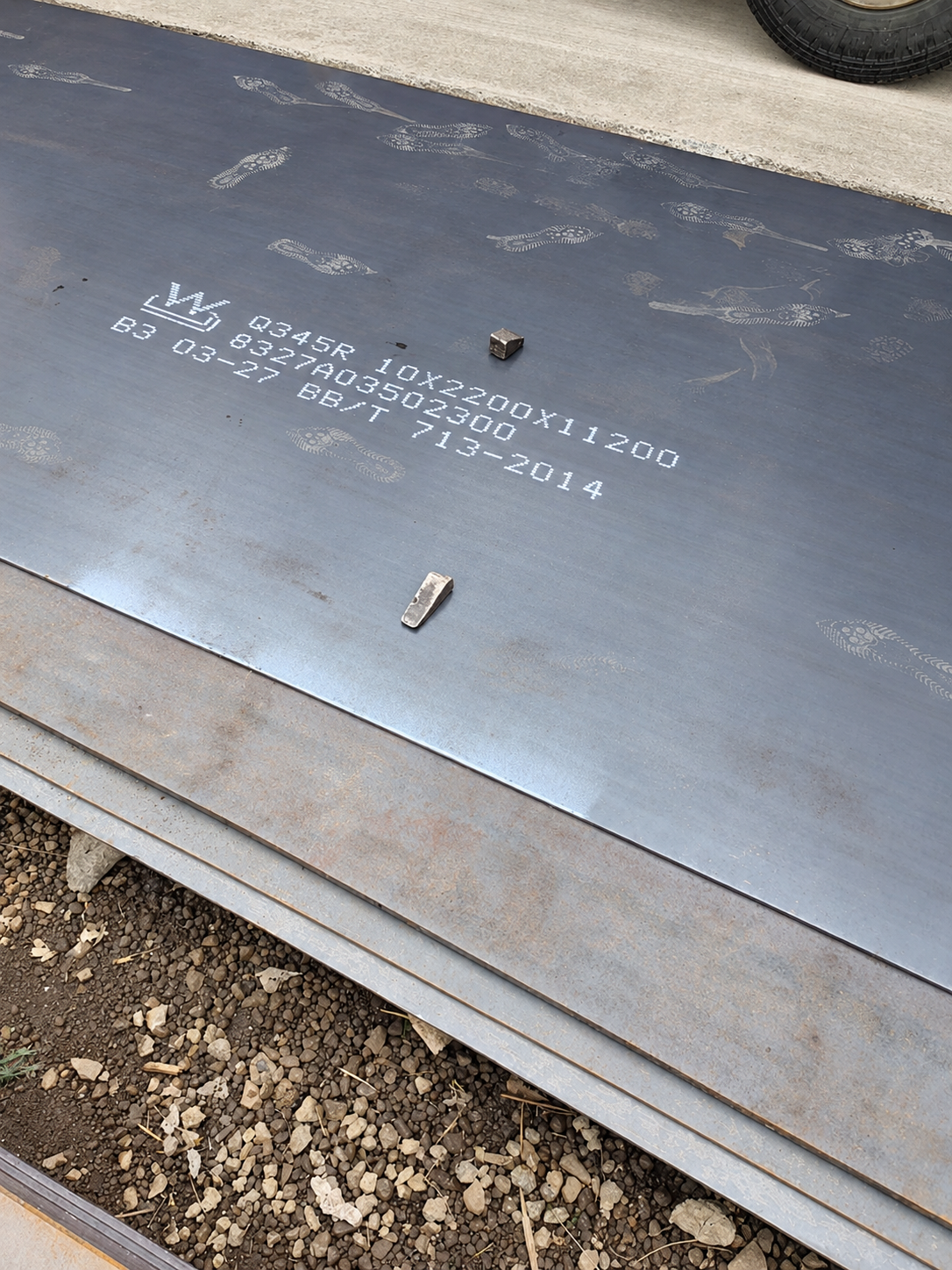
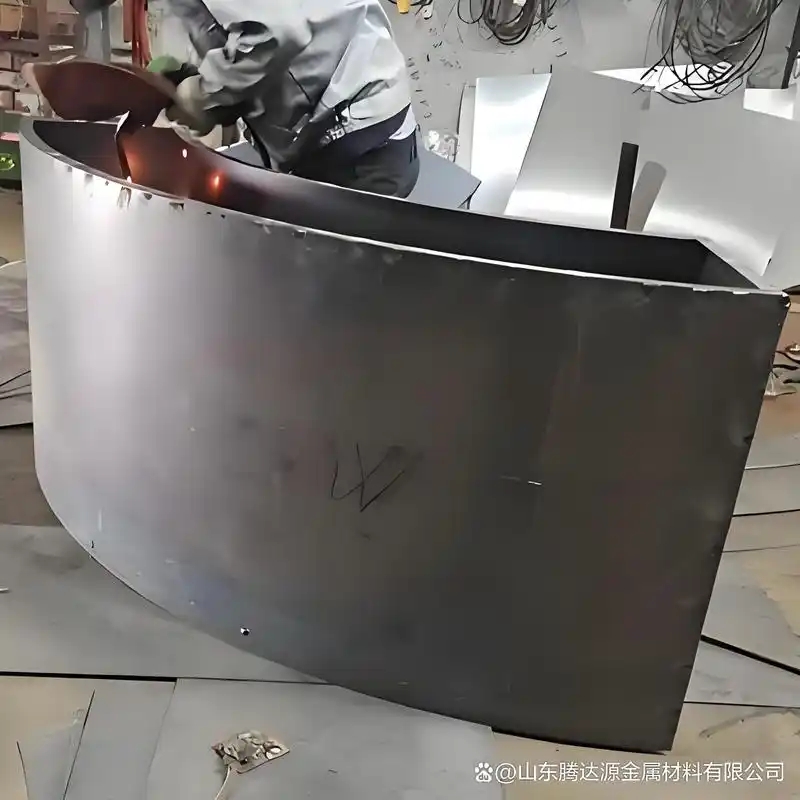
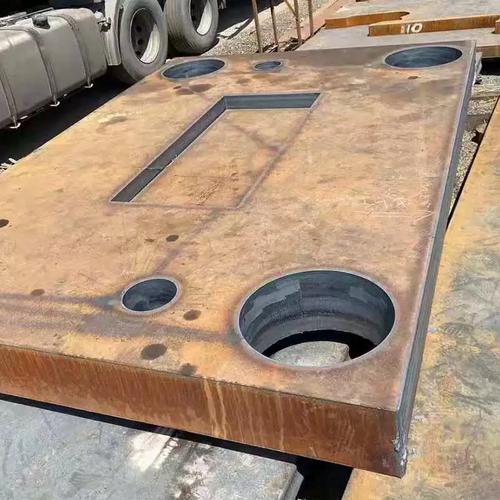
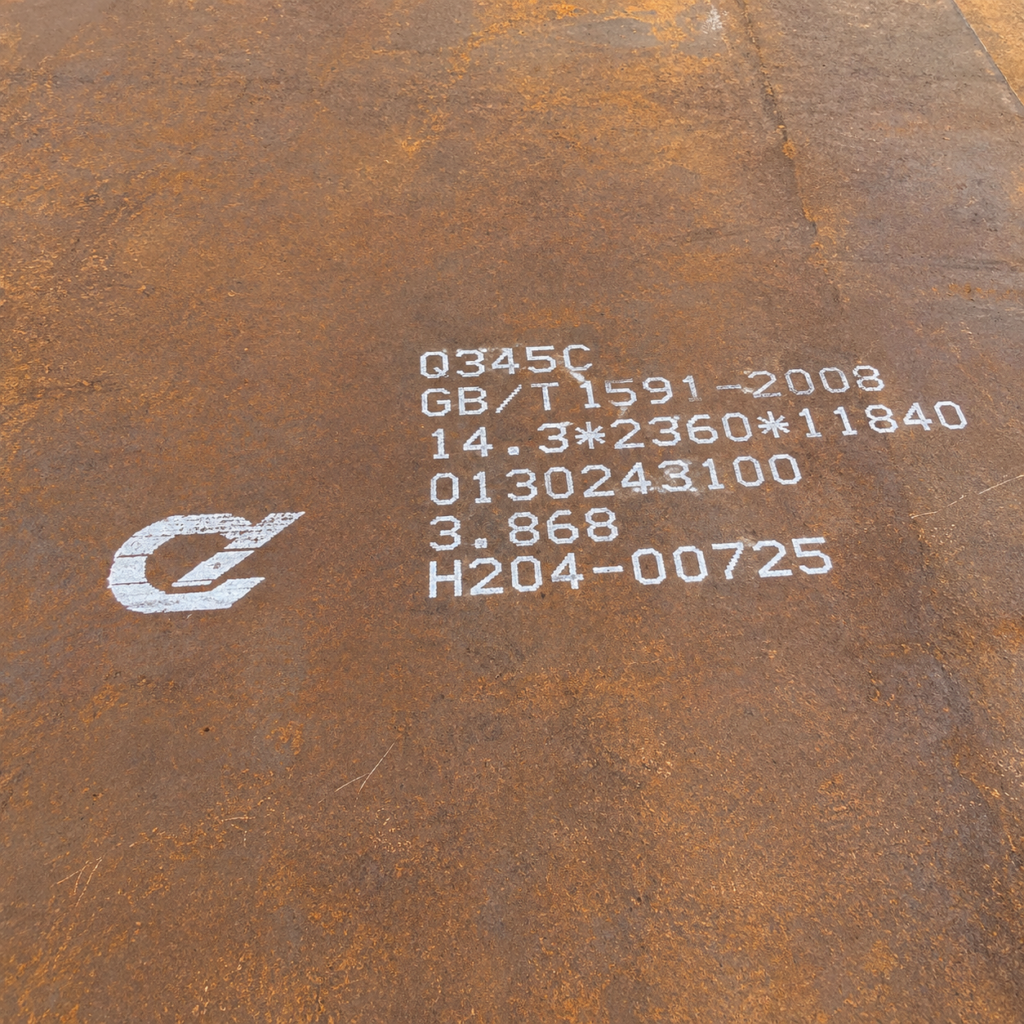
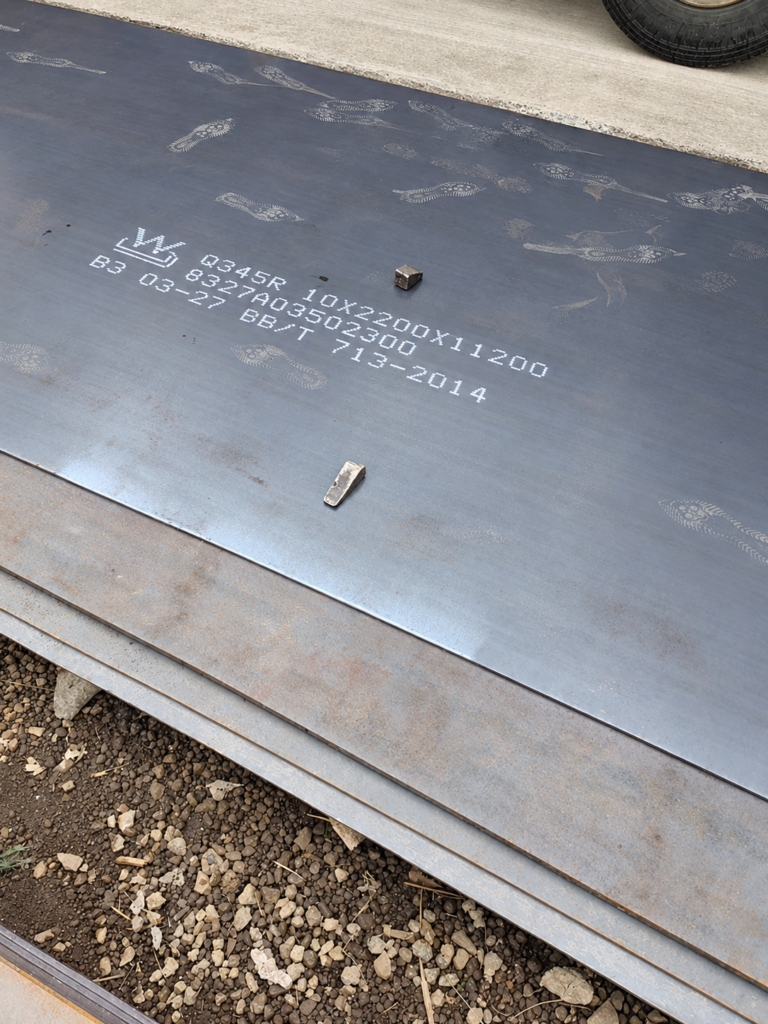
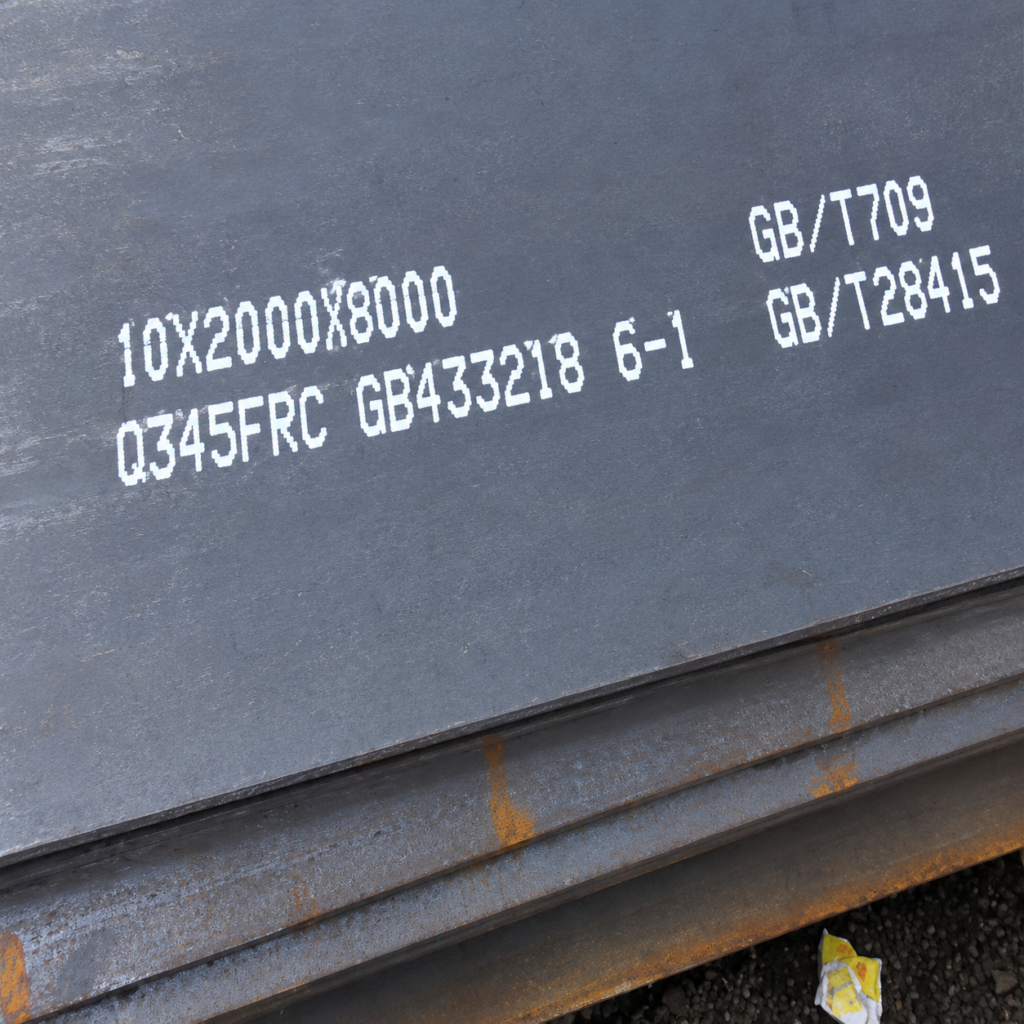
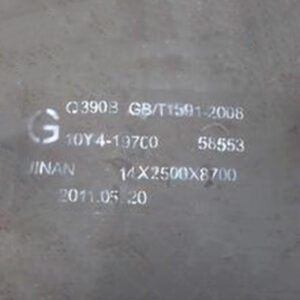
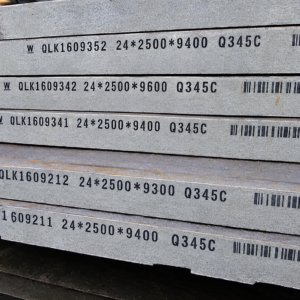
High Strength Low Alloy Steel Plate Q345 Q345A Q345B—-Q345 can be classified into grades Q345A, Q345B, Q345C, Q345D, and Q345E; the primary difference between them lies in the impact test temperature.
등급
Impact Test
Typical Applications
Q345A
No impact test
General structures without low-temperature requirements
Q345B
Impact test at 20°C
Structural components at normal temperatures
Q345C
Impact test at 0°C
Structures in cold regions
Q345D
Impact test at −20°C
Low-temperature environments
Q345E
Impact test at −40°C
Extremely cold and severe environments
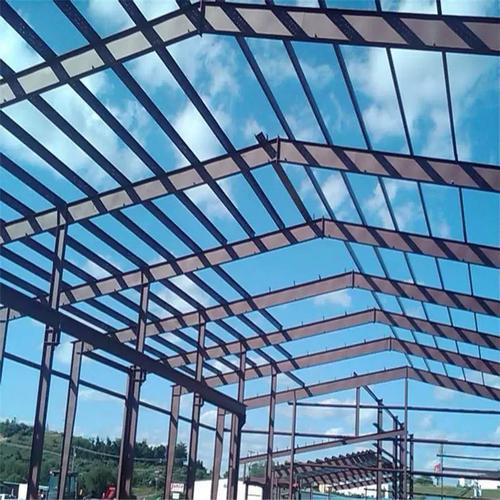
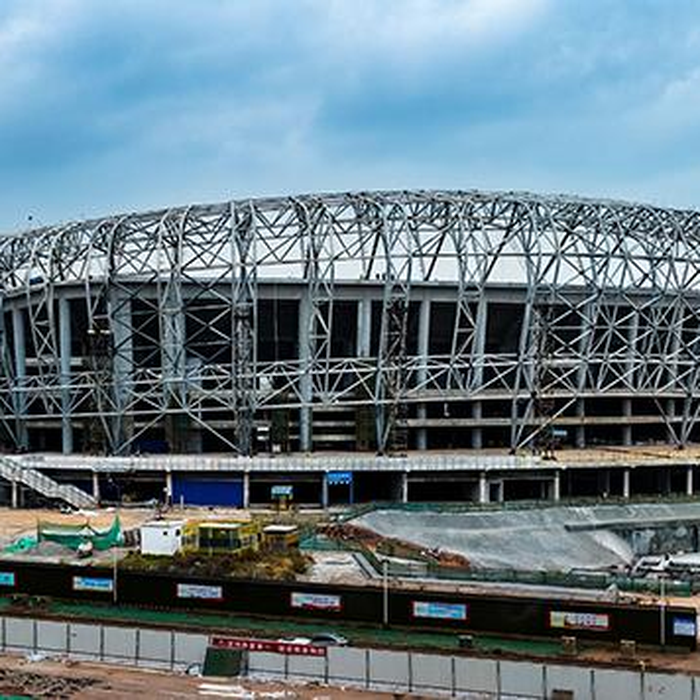
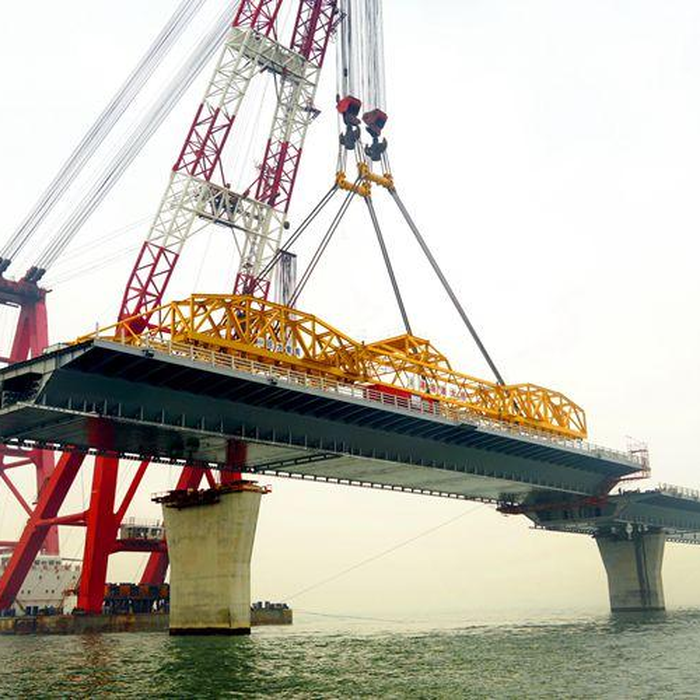
Q345 is a type of steel—specifically, a low-alloy steel (with a carbon content of less than 0.2%)—widely used in construction, bridges, vehicles, ships, and pressure vessels. The “Q” denotes the material’s yield strength, while the “345” indicates a yield value of approximately 345 MPa; this yield value decreases as the material thickness increases.
Difference in Chemical Composition—Q345 Steel Plates
등급
C≤
Mn≤
Si≤
P≤
S≤
V
Al
Q345A
0.20
1.7
0.55
0.045
0.045
0.02~0.15
—
Q345B
0.20
1.7
0.55
0.040
0.040
0.02~0.15
—
Q345C
0.20
1.7
0.55
0.035
0.035
0.02~0.15
≥0.015
Q345D
0.20
1.7
0.55
0.030
0.030
0.02~0.15
≥0.015
Q345E
0.20
1.7
0.55
0.025
0.025
0.02~0.15
≥0.015
Product Series
Q345A、
Q345B、
Q345C、
Q345D、
Q345E、
General-purpose low-alloy high-strength plate; “E” denotes impact testing at -40°C.
Q345FRB/C/D/E
Steel plate for fire-resistant structures, complying with GB/T 28415-2012.
Q345GJB/GJC, etc.
Steel for high-rise buildings, such as Q345GJB-Z15
Q345qE (bridge plate).
Bridge steel (commonly available on the market).
Q345R
Steel for boilers and pressure vessels.
What other factors affect the strength of Q345?
1.Thickness
When the plate thickness is 16 mm or less, the yield strength remains at the standard 345 MPa; however, as the thickness increases to the 20–40 mm range, the yield strength typically drops to around 325 MPa; if the thickness increases further to 40–63 mm, the value may fall to 315 MPa or even lower.
2.Temperature
Low-temperature environments also significantly reduce the toughness of Q345. Although its strength values remain relatively stable, it is more prone to brittle fracture at sub-zero temperatures.
Avoiding Pitfalls in Model Selection: Focus on Elongation and Impact Toughness?
When selecting Q345 steel, a comprehensive assessment of other mechanical properties is essential. First, elongation reflects a material’s deformability; while thin plates typically require high elongation to ensure good formability during processing, thick plates may prioritize static strength. Second, if the component is intended for low-temperature environments or subject to dynamic loads, impact toughness is a critical factor; standard Q345 can become brittle at sub-zero temperatures, so grades with superior low-temperature performance—such as Q345D or Q345E—should be selected instead.
What other types of Q345 steel plates are there that you might not be aware of?
1. Hot-rolled flat steel: Features a mill-scale surface; suitable for structural load-bearing beams.
2. Cold-rolled coil:
Mirror-like finish; transformed into protective underbody plating for vehicles.
3. Galvanized finish:
Clad in silver-like armor; withstands 20 years of service in humid environments without rusting.
4. Laser cutting:
Precision down to the width of a human hair; directly processed into excavator bucket teeth.
A Guide to Avoiding Pitfalls When Buying Watch out for the following issues:
High-quality Q345 steel features a fine, metallic luster on its cross-section; the outer surface does not wrinkle when bent 90 degrees, and it produces a crisp, bell-like sound when struck.
Thickness tolerance exceeding ±0.2mm: May result in assembly gaps.
Lamination in the cross-section: A structural defect resembling the layers of a flaky pastry.
Impact energy <34J at room temperature: Prone to brittle fracture in cold regions.
Abnormal manganese content: Affects toughness after welding.
Q345 — The Subtle Relationship Between Composition and Properties
Balance of strength and toughness
Increased manganese content will increase strength, but excess will reduce low-temperature toughness
Welding performance
Only when the carbon equivalent is controlled below 0.40% can good welding performance be ensured.
Weather resistance
Appropriate addition of copper, chromium and other elements can improve resistance to atmospheric corrosion
Processing performance
Excessive silicon content will increase the difficulty of cold processing
High Strength Low Alloy Steel Plate Q345 Q345A Q345B