What is a high-strength plate?
1.1 China
In China, high-strength steel plates for automotive applications can generally be divided into two categories:
Conventional high-strength steel plates have relatively lower tensile or yield strength, or can be produced using conventional processes or only slightly modified conventional processes. Examples include bake-hardening steel, dual-phase steel, high-strength IF steel, and HSLA steel.
Advanced high-strength steel plates require advanced equipment and manufacturing processes, such as dual-phase (DP) steel, complex-phase (CP) steel, transformation-induced plasticity (TRIP) steel, and martensitic (M or Mart) steel.
1.2 Japan
In Japan, cold-rolled steel sheets with a tensile strength of not less than 340 MPa e hot-rolled steel sheets with a tensile strength of not less than 490 MPa are generally classified as High-Strength Steel (HSS).
1.3 Germany (BMW)
High-Strength Steel (HSS)
Steel sheets with a yield strength greater than 180 MPa and less than 300 MPa, including 180 MPa grades.
Advanced High-Strength Steel (AHSS)
Steel sheets with a yield strength greater than 300 MPa and less than 600 MPa, including 300 MPa grades.
Ultra-High-Strength Steel (UHSS)
Steel sheets with a yield strength greater than 600 MPa, including 600 MPa grades.
1.4 ULSAB Organization
The ULSAB (UltraLight Steel Auto Body) Consortium classifies high-strength steel into two categories:
- High-Strength Steel (HSS): steel with a yield strength of 210–550 MPa.
- Ultra-High-Strength Steel (UHSS): steel with a yield strength above 550 MPa.
1.5 International Iron and Steel Institute (IISI)
High-strength steel is conceptually defined as High-Strength Steel (HSS) e Advanced High-Strength Steel (AHSS).
2 Introduction to High-Strength Steel Grades
2.1 Conventional High-Strength Steel
(1) High-Strength IF Steel
Based on IF steel, different types of strengthening elements, such as P, Mn, and Si, are added together with appropriate process control. This allows the steel to achieve higher strength while maintaining good formability and impact performance, meeting the requirements of complex-shaped automotive stamped components.
(2) Bake-Hardening Steel (BH)
BH steel includes IF bake-hardening steel e low-carbon bake-hardening steel. Its main characteristic is a relatively low yield strength before stamping. After forming, the paint-baking process increases the yield strength of the steel sheet.
(3) Phosphorus-Added Steel
Phosphorus-added steel is strengthened through the solid-solution strengthening effect of phosphorus in the steel. It can be used to manufacture automotive stamped components with relatively complex shapes.
(4) Ultra-Low-Carbon Phosphorus-Added Steel
Ultra-low-carbon phosphorus-added steel is characterized by good deep-drawing ability, formability, and toughness. Elements such as P, Mn, and Si are used for strengthening.
(5) Isotropic Steel Sheet
Isotropic steel sheet (IS steel) is a type of low-carbon microalloyed steel, mainly used for automotive exterior panels.
It has now been commercialized in Europe, with major product categories including:
- Cold-Rolled Bare Sheet
- Electro-Galvanized Sheet
- Hot-Dip Galvanized Sheet
- Hot-Dip Galvannealed Sheet
These products are used mainly in European vehicle models and are relatively less common in Japanese automobiles.
(6) Low-alloy high-strength steel plates:
Hot-rolled low-alloy high-strength steel plates for automotive applications—also known as F-P type low-alloy high-strength steel plates—derive their strength through the addition of alloying elements. Key strengthening mechanisms in modern hot-rolled low-alloy high-strength steels include grain refinement, precipitation strengthening, solid-solution strengthening, and even phase-transformation strengthening.
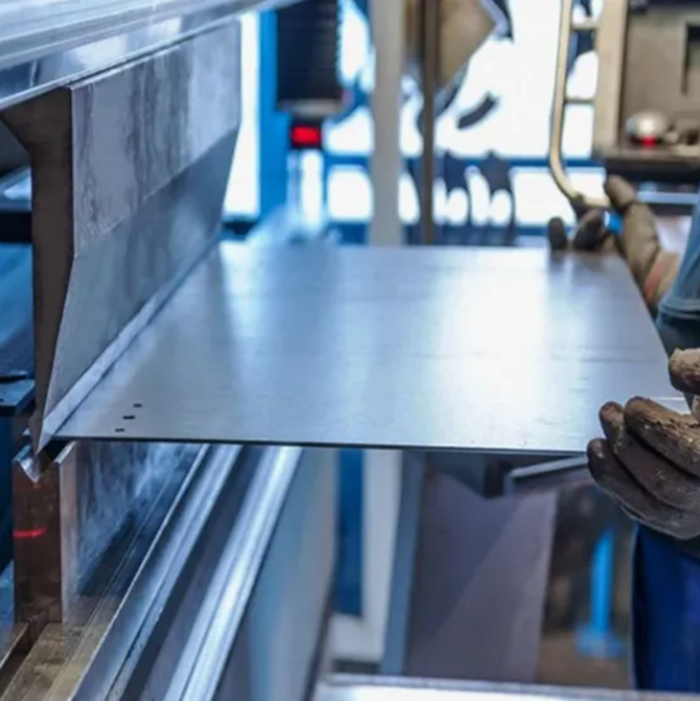
What is a high-strength plate?
2.2 Advanced High-Strength Steel (AHSS)
(1) Dual-Phase (DP) Steel:
The matrix consists of soft ferrite with hard martensite dispersed within it; these phases determine the material’s low yield strength and high tensile strength, respectively. DP steel is characterized by a low yield-to-tensile ratio, a high work-hardening exponent, excellent bake-hardening properties, the absence of yield-point elongation, and resistance to room-temperature aging. It is typically used for automotive components requiring high strength, high crash-energy absorption, and strict formability—such as wheels, bumpers, suspension systems, and their reinforcements. With advancements in steel properties and forming technologies, DP steel is also widely used for automotive inner and outer body panels.
(2) Bainitic Steel:
Hot-rolled bainitic steels include bainitic dual-phase steel (ferrite + bainite) and bainitic steel (bainite). Key alloying elements include Si, Mn, Nb, and Cr. A significant characteristic is excellent stretch-flanging performance, making it highly suitable for stamped automotive support components that require greater thickness and, specifically, good stretch-flanging capabilities.
(3) Transformation-Induced Plasticity (TRIP) Steel:
The high elongation inherent to TRIP steel stems from the strain-induced transformation of retained austenite into martensite. Compared to DP steel, TRIP steel has a lower initial work-hardening exponent; however, it maintains a high work-hardening exponent over a wide strain range, making it particularly suitable for applications requiring high stretch-forming performance.
(4) Complex-phase (CP) steel
is characterized by a microstructure consisting of fine ferrite and a high proportion of hard phases (martensite and bainite). Further strengthening is achieved through precipitation hardening, facilitated by the inclusion of elements such as Nb and Ti. These steels offer high impact energy absorption and excellent hole-expansion properties, making them particularly suitable for safety-critical components such as door impact beams, bumpers, and B-pillars.
(5) Martensitic steel
is produced by rapidly quenching a high-temperature austenitic structure to transform it into a lath-martensite structure. With tensile strengths reaching up to 1500 MPa, it represents the highest strength grade among currently commercialized high-strength steel sheets. It is primarily used for parts with low forming requirements—such as door impact beams—to replace tubular components and reduce manufacturing costs.