

Acaba 316 paslanmaz çelik magnetic ?Due to its austenitic structure, 316 paslanmaz çelik is usually non-magnetic in standard annealed form, but will exhibit weak magnetism after processes such as cold working or welding. This makes it suitable for most applications where non-magnetic materials are required, although factors such as fabrication may introduce slight magnetic properties.
- Typical non-magnetic properties: 316 paslanmaz çelik is an austenitic stainless steel with a face-centred cubic (FCC) crystal structure in the annealed or solid solution state, and is essentially non-magnetic.
- May become slightly magnetic: Cold working or other processes may produce a mild magnetism, but it is usually weak and not comparable to ferritic steels.
In its typical (annealed) form, 316 paslanmaz çelik is not magnetic. However, we’ll explore why that is so and under what conditions 316 paslanmaz çelik can exhibit magnetism in this blog.
What is 316 Stainless Steel?
316 paslanmaz çelik is an austenitic stainless steel known for excellent corrosion resistance, durability and versatility, often referred to as “marine grade” stainless steel, suitable for use in seawater-exposed applications, and is widely used in environments exposed to harsh chemicals or salt water.
It contains about 16–18% chromium, 10–14% nickel, and ~2% molybdenum, which is similar to the common 316L grade. The extra molybdenum helps 316 resist chlorides (e.g. saltwater). Its high nickel content stabilizes the austenite crystal phase. Crucially, austenitic stainless steels (like 304 and 316) have a face-centred cubic structure that is non-magnetic at room temperature.
316 is a modified version of 304 paslanmaz çelik, containing molybdenum for enhanced pitting resistance. It is widely used in medical equipment, food processing equipment and construction.
316 Stainless Steel Chemical Composition
| Element | % | Role |
| Chromium (Cr) | 16-18 | Provides corrosion resistance and helps form a passive oxide layer. |
| Nickel (Ni) | 10-14 | Stabilizes the austenitic structure, contributing to non-magnetic properties. |
| Molybdenum (Mo) | 2-3 | Enhances resistance to chloride-induced corrosion; minimal impact on magnetism. |
| Iron (Fe) | Balance (~65-70%) | Base metal; in austenitic form, it’s non-magnetic. |
| Manganese (Mn) | Up to 2 | Aids in deoxidation and improves hot working properties. |
| Silicon (Si) | Up to 0.75 | Improves oxidation resistance. |
| Carbon (C) | Up to 0.08 | Controls hardness; low levels prevent carbide formation. |
| Others (P, S, N) | Trace amounts | Minor elements for specific enhancements. |
This composition ensures that 316 paslanmaz çelik remains austenitic at room temperature, making it non-magnetic (less attractive to strong magnets) rather than ferromagnetic. Higher nickel and added molybdenum make 316 more stable and less susceptible to magnetic transformation than 304.
316 Stainless Steel Magnetic Properties
Acaba 316 paslanmaz çelik magnetic? The consensus from materials experts is: 316 is not magnetic in its standard (annealed) condition.
The magnetic behavior of 316 paslanmaz çelik depends greatly on its microstructure. The 316 austenitic stainless steel has a face-centered cubic (FCC) structure and is inherently non-magnetic. Nickel stabilizes the austenitic phase, preventing the iron from reverting to a body-centered cubic (BCC) or tetragonal structure, which would be magnetic.
That said, there are exceptions.Cold working or welding can generate martensite or ferrite partially, making the material “weakly magnetic”. With appropriate annealing (approx. 1010-1150 °C), the austenitic organization can be restored and the magnetism disappears.
Permeability data for Austenitic Steels:
| Condition | Permeability Range | Magnetic Response |
| Annealed | 1.003-1.005 | Negligible non-magnetic |
| Cold Worked (Moderate) | 1.01-1.05 | Weak magnetism |
| Heavily Deformed | Up to 1.1+ | Mildly noticeable |
Although 316 paslanmaz çelik has a low base magnetic response, processing such as heavy machining, bending, or welding can cause the austenite to transform to martensite or ferrite in region, resulting in magnetism.
Factors that Make 316 Stainless Steel Magnetic
316 paslanmaz çelik is non-magnetic or only weakly magnetic in the normal state, but work hardening or cold work deformation may lead to magnetic enhancement.
| Machining/ Heat Treatment State | Magnetic Performance | Comment |
| Annealing (or solid solution treatment) | non-magnetic | The austenitic (FCC) structure remains non-magnetic under the stabilizing effect of high nickel (10-14 %) and molybdenum. |
| Cold Working | Mild Magnetic | Processes like rolling, bending, or drawing strain the lattice, forming martensite—a ferromagnetic phase. |
| Kaynak | localized magnetism (especially in the heat affected zone) | Heat-affected zones can create ferrite or martensite, leading to localized magnetism. |
| Casting vs. Wrought | slightly magnetic | Cast 316 (CF-8M) often contains 5-15% ferrite for strength, making it slightly magnetic, unlike wrought forms. |
| Low Temperatures | May generate magnetism | Exposure below room temperature can trigger phase changes. |
To reverse this, stress relieving at 700-800°C or solution annealing at 1000-1150°C restores non-magnetism without compromising corrosion resistance.
316 vs 304 Stainless Steel: Magnetic
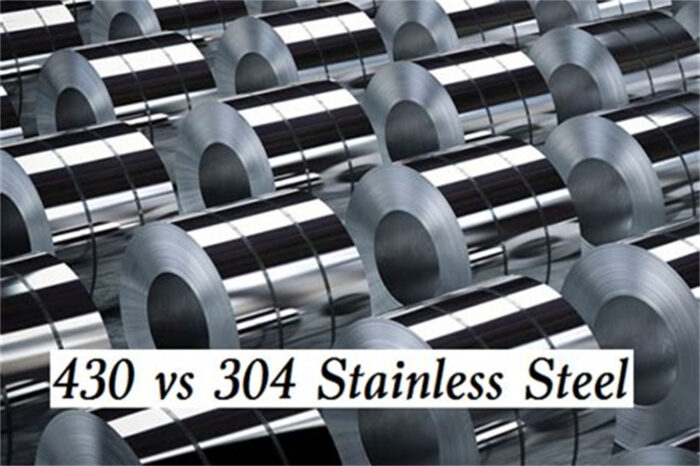
Stainless steels 304 and 316 are two commonly used austenitic stainless steels.Both are typically non-magnetic when annealed, but 304 has a slightly higher magnetic susceptibility; the extra nickel makes 316 steel even less magnetic.
| Feature | 316 Stainless Steel | 304 Stainless Steel |
|---|---|---|
| Nickel Content | 10-14% | 8-10.5% |
| Molybdenum | 2-3% | None |
| Magnetic Response (Annealed) | Negligible | Slightly higher |
| After Cold Working | Less magnetic | More prone to magnetism |
| Applications | Marine, chemical | General purpose |

Applications
Its non-magnetic nature is a key reason for its use in sensitive applications like MRI machines, naval mine-sweeping, and electronics enclosures.Designers choose 316 paslanmaz çelik to avoid interference from magnets or electric fields.
- Medical Devices: Implants and MRI-compatible tools avoid interference.
- Marine Environments: Boat fittings and offshore platforms resist corrosion without magnetic issues.
- Electronics and Instrumentation: Housings for sensors where magnetism could distort readings.
- Chemical Processing: Tanks and pipes handling corrosives.
- Aerospace: Components requiring low weight and non-magnetism.
Common Misconceptions about 316 Stainless Steel Magnetic Properties
1.All Stainless Steel is Non-Magnetic:
False; ferritic types are magnetic, while austenitic like 316 usually aren’t.
2. Magnetism Indicates Low Quality:
Not true; it’s often a result of processing, not defects.
3. 316 is Always 100% Non-Magnetic:
Cold working processing can introduce weak magnetism.
4. Magnetism Affects Corrosion Resistance:
Unrelated; non-magnetic doesn’t guarantee better corrosion.
Conclusion
In summary, 316 paslanmaz çelik magnetic properties are generally non-existent in annealed forms, making it ideal for demanding applications.

 English
  Русский
  Deutsch
  Español
  简体中文
简体中文  Português
  Italiano
  日本語
日本語  Bahasa Indonesia
  한국어
한국어  Français
  Nederlands
  العربية
  Tiếng Việt
  ไทย
ไทย  Tagalog
  Bahasa Melayu
  Polski
  Türkçe
  Português do Brasil
  हिन्दी
  Қазақ тілі
  বাংলা
বাংলা  Hausa
Hausa  Kiswahili
  አማርኛ
አማርኛ  فارسی
فارسی  Ελληνικά
  Română
  Українська