博客

Which is better, 316 or 304 Stainless Steel?

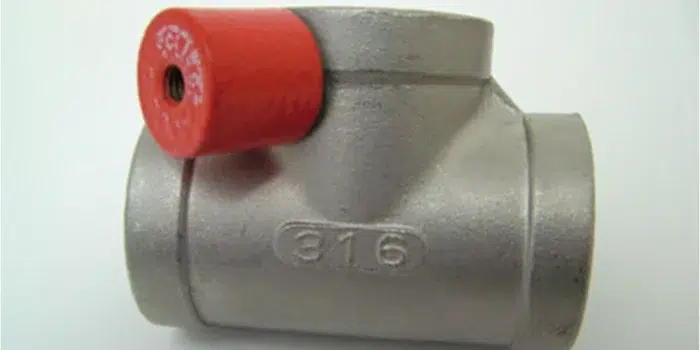
How to Identify SS 304 and SS 316

Both 304 (SS 304) and 316 (SS 316) belong to the austenitic stainless steel family,are widely utilized materials in various industries due to their excellent mechanical properties and corrosion resistance, sharing similar compositions, primarily consisting of chromium and nickel.


阅读更多
304不锈钢

What Is 304 Stainless Steel Mean

304 stainless steel is a standard austenitic stainless steel, belongs to the “18-8” stainless steel family, containing about 18% chromium and 8% nickel. It is the most widely used grade of stainless steel and is known for its good corrosion resistance, formability and weldability.

阅读更多
Can 316 Stainless Steel Rust

Which is better, 316 or 304 Stainless Steel?

304 and 316 stainless steels each have their features. Grade 316 offers superior corrosion resistance (especially to chlorides) and higher strength, but at a significant price premium. Grade 304 is more cost-effective for general use and still highly corrosion-resistant in non-aggressive environments.The best choice depends on the application conditions.

阅读更多
Can 316 Stainless Steel Rust

Can 316 Stainless Steel Rust?

316 stainless steel surface will form a thin layer of chromium oxide protective film, which can block oxygen and moisture contact with the iron element, preventing rusting.But it does not mean that it will not rust, it may still rust under certain conditions.

阅读更多
310不锈钢和316不锈钢,哪一种更好?

310不锈钢和316不锈钢,哪一种更好?

The high chromium and nickel content of stainless steel 310 enables it to perform well in high-temperature oxidizing environments, while the molybdenum in stainless steel 316 enhances its resistance to pitting corrosion. In acidic environments, stainless steel 316 is 15% more corrosion-resistant than stainless steel 310. But, at temperatures over 800°C, stainless steel 310 offers superior oxidation resistance, making it

阅读更多
304不锈钢

304不锈钢有哪些缺点?

304 stainless steel is the most widely used and representative stainless steel grade. With its excellent corrosion resistance, formability and weldability, and relatively economical cost, it is widely used in industries such as manufacturing, construction, healthcare, and consumer goods.However,in chlorine-containing atmospheres, coastal settings, or high-temperature applications, 304 may fail faster than expected, leading to rework, downtime, and costly replacements.

阅读更多
differences between 316 and 317 stainless steel

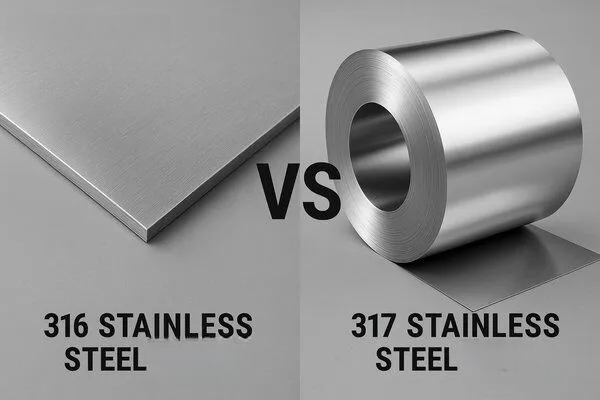
316和317不锈钢有什么区别?

317 is a higher chromium, nickel and molybdenum version of 316 stainless designed principally for increased strength and corrosion resistance when compared to 316.The main characteristic of 317 stainless steel is its higher molybdenum (Mo) content (typically 3.0% to 4.0%), resulting in superior corrosion resistance compared to 316 stainless steel (typically containing 2.0% to 3.0% Mo), especially in resisting pitting

阅读更多
申请免费报价
如有任何疑问或需要报价,请给我们发送消息。我们将在1小时内尽快回复您。.