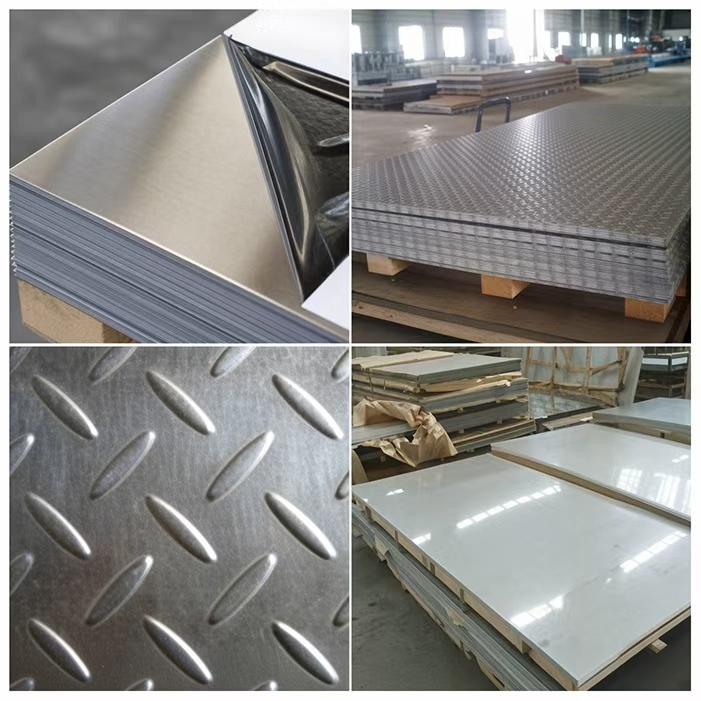
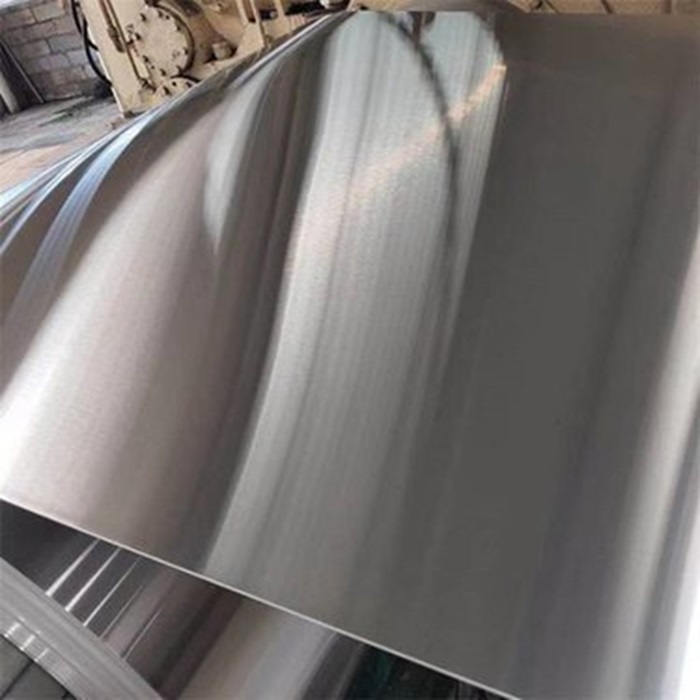
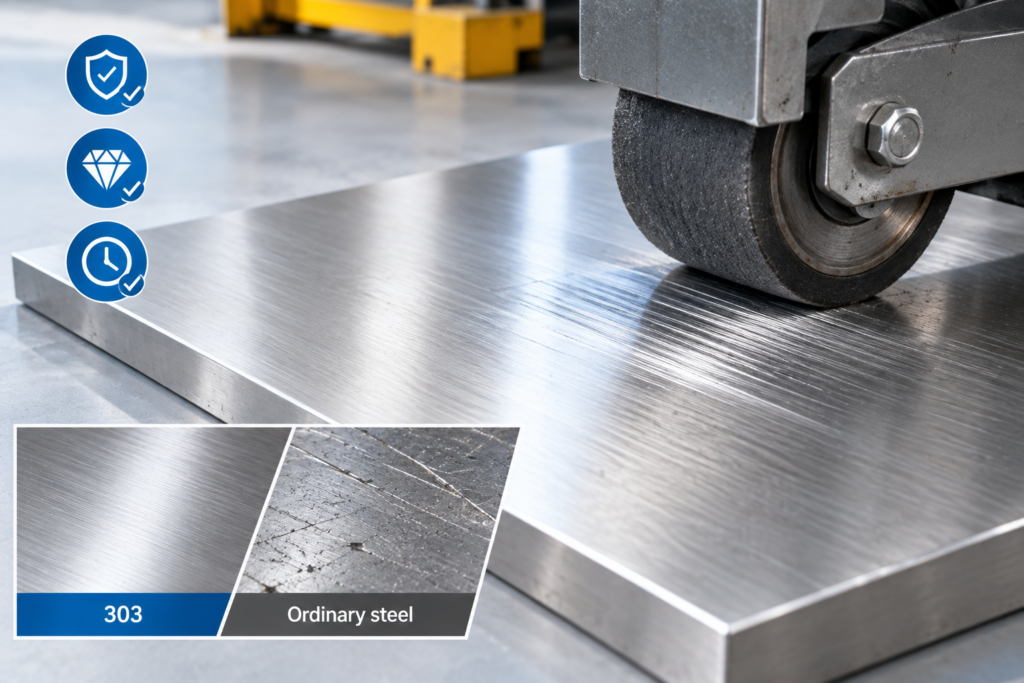
Type 303 303Se 303Sulf Stainless Steel Sheet and Plate is an austenitic type of easy-to-machine, wear-resistant and acid-resistant stainless steel. To improve the performance of this steel, no more than 0.60% of molybdenum can be added to the steel, which can resist erosion.
JBL company offers a complete range of equipment, with reliable quality. We guarantee prompt delivery and supply, as well as convenient logistics and one-stop service. Contact us.
The following are the main differences between the 303, 303Se, and 303Sulf:
“Comparison dimension”
“303 stainless steel”
“303Se stainless steel”
“303Sulf (Sulfur-containing type)”
Adding Elements
Sulfur (S ≥ 0.15%)
Selenium (Se≥0.15%), sulfur content ≤0.060%
Sulfur (S ≥ 0.15%)
machinability
best
Better, but with a slightly lower speed
It is more suitable for dry processing and has a higher turning efficiency
Cold/hot formability
range
The forming performance has been significantly improved
corrosion resistance
Due to the addition of sulfur, its corrosion resistance is significantly lower than that of 304 stainless steel, and pitting corrosion is prone to occur
Without sulfur/selenium addition, its corrosion resistance is slightly better than that of 303, but still lower than that of 304
Product Feature:
Stainless Steel
Plates – Stainless Steel 303 contains 17-19% chromium, so it is a type of stainless steel.
Corrosion resistance:
303 Stainless Steel Plate and Sheet possesses corrosion resistance due to its 17-19% chromium content. Additionally, it contains 8-10% nickel, which enhances the corrosion resistance of the steel. Sulfur makes this steel type susceptible to pitting corrosion, so it should be avoided from being used in environments containing chlorides, especially in temperatures exceeding 140°F (60°C).
Magnetism
Stainless Steel Sheet/Plate 303 usually does not have magnetism in the annealed state. Through cold processing, the crystal structure of this material may change, making it partially or completely magnetic. Through annealing, the material can be restored to a non-magnetic state.
Wear resistance
On a scale of 1 to 6, the wear resistance of 303 stainless steel is 2.
Heat processing
The material is uniformly heated to 2100 – 2300°F (1149 – 1260°C) for heat processing. After the process is completed, the workpiece is rapidly cooled to ensure maximum corrosion resistance.
Cold working property
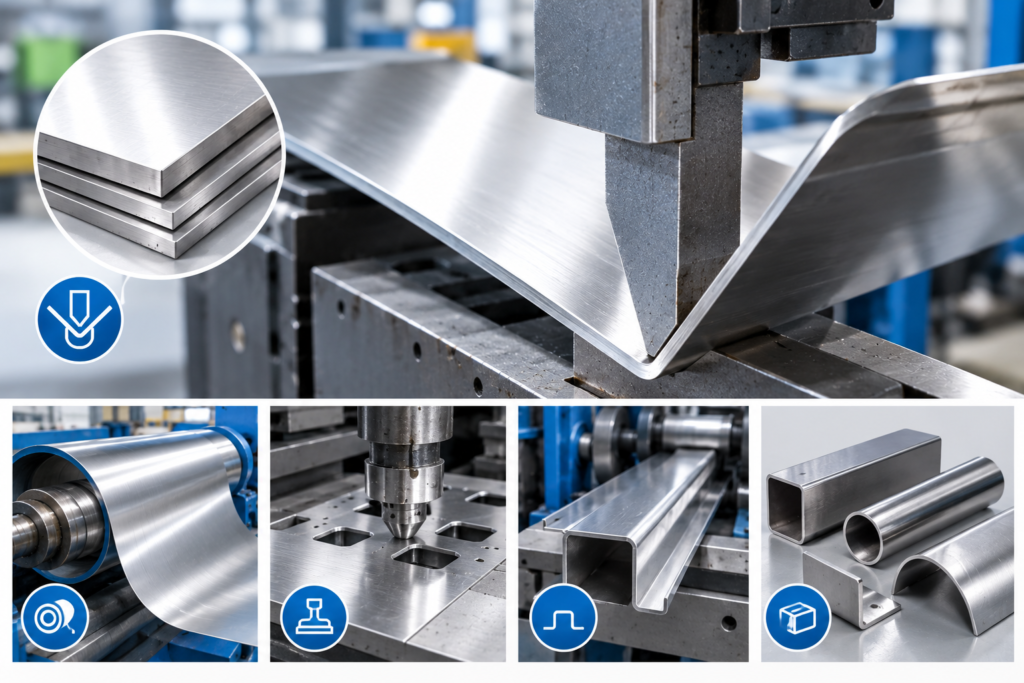
303 Stainless Steel Plate – High-Machinability Alloy is not easy to be cold worked. Some cold working is possible, but extreme bending should be avoided.
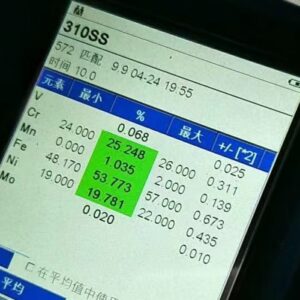
Chemical Composition(Type 303 303Se 303Sulf Stainless Steel Sheet and Plate ):
C:≤0.15%
Si:≤1.00%
Mn :≤2.00%
P:≤0.20%
S:≥ 0.15%
Cr:17.00-19.00 (%)
Ni:8.00-10.00 (%)
Mo:≤0.6%
303 stainless steel sheet local market:
Thickness: 0.1, 0.2/0.3/0.5/0.6/0.7/0.8/0.9/1.0/1.5, 2.0/2.5/3.0/4.0/5.0/6.0/8.0/9/10/12/16/18/20/22/25/30 mm
Cikakken iko kan kayayyaki yana ba mu damar tabbatar da cewa abokan cinikinmu suna samun farashi, inganci da sabis mafi kyau. Tuntube mu don samun ƙididdiga kyauta, JBLSTEEL zai samar da mafita madaidaiciya ga aikin ku.