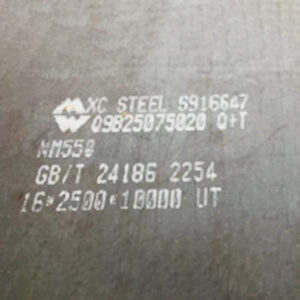
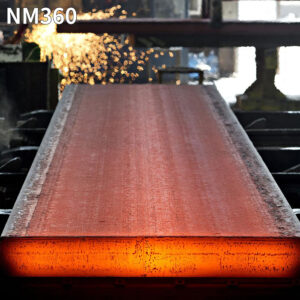
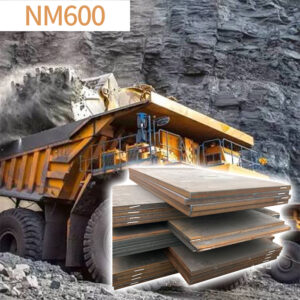
AR500 Grade Abrasion Resistant Steel Plates Sheet

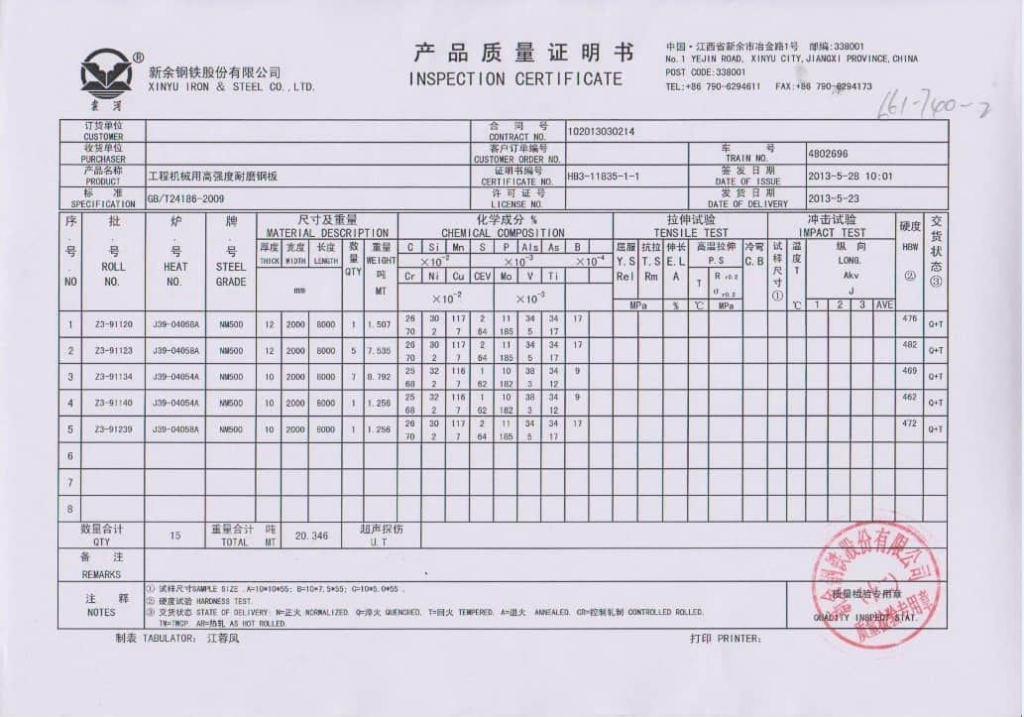
  •  (C)‌:≤ 0.21 ~ 0.30
  • ‌ (Si)‌:≤ 0.40 ~ 0.70
  • ‌ (Mn)‌:≤ 1.00 ~ 1.60
  • ‌ (P)‌:≤ 0.010 ~ 0.025
  • ‌ (S)‌:≤ 0.002 ~ 0.010
  • ‌ (Cr)‌:≤ 0.70 ~ 1.50
  • ‌ (Ni)‌:≤ 0.50 ~ 2.50
  • ‌ (Mo)‌:≤ 0.40 ~ 0.80
  • ‌ (B)‌:≤ 0.005

Deskripsi Produk

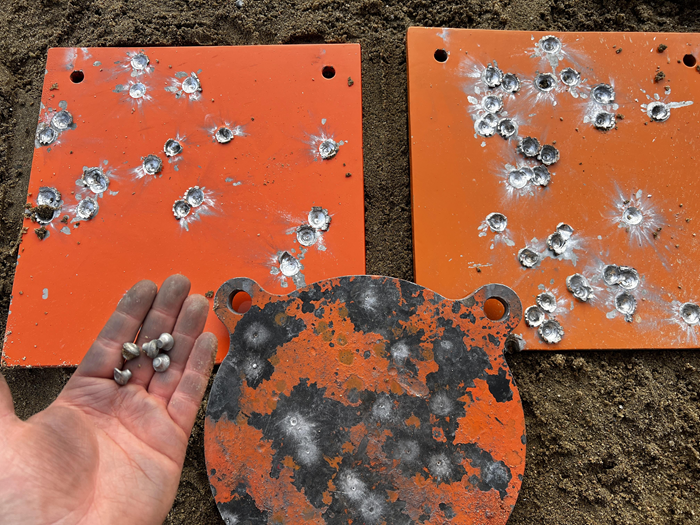
AR500: “AR” stands for Abrasion Resistant or Armor, and “500” is a general grade designation indicating a Brinell hardness of approximately 500 HB. It is not tied to a single manufacturer; multiple steel mills (such as Xinsteel, Baowu, U.S. steel mills, etc.) can produce steel plates meeting this hardness requirement. The composition and manufacturing process may vary by producer. This material is commonly used in bulletproof targets, mining machine liners, and similar applications.

Common Specification Range Reference Table (AR500 steel plate)

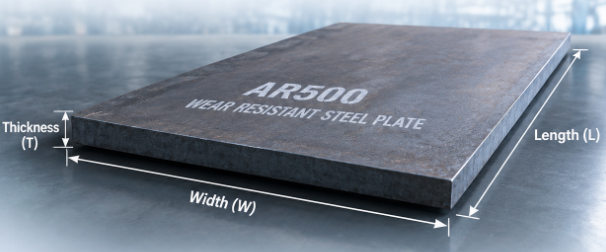
DimensionalityConventional mass production rangeConventional mass production rangeremark
‌Thickness‌6–50 mm2–80 mm (The new steel has already been mass-produced at 76.2 mm)2–80 mm (The new steel has already been mass-produced at 76.2 mm)<For 6mm thickness, it is mostly through cutting or cold rolling, and the performance needs to be verified; > 50mm is for thick plate special production.
‌Width‌1500–2500 mm1000–3000 mmStandard sheet/plate width is mostly 1500/1800/2000/2200/2500mm

Panjang

3000–12000 mmOn-demand cutting (minimum size can be 500mm)Standard delivery is usually 6m/9m/12m. Customized sizes can be precisely cut.
‌Tolerance‌Thickness: ±0.3-0.8mmStandard delivery is usually 6m/9m/12m. Customized sizes can be precisely cut.Standard delivery is usually 6m/9m/12m. Customized sizes can be precisely cut.

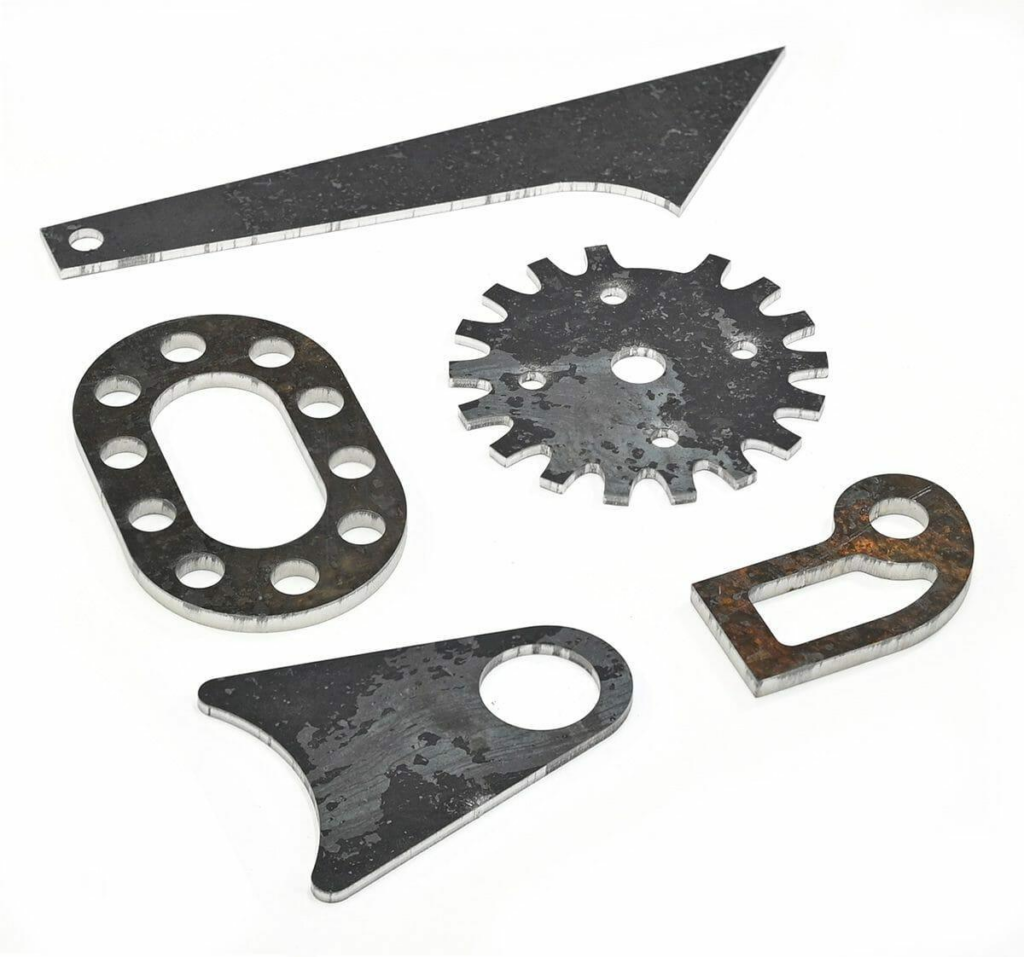
Common shapes of AR500 wear-resistant plates:

  • Linear components: U-shaped slots formed by bending, U-shaped buckets, arc-shaped chutes, round pipes/floor beams (welded), etc.;
  • Flat/spherical liners: Fragmentation machine liners, excavator bucket plates, material hopper linings, screen plates, etc., cut and welded;
  • Special cross-section parts: Wear-resistant guide rails, wear-resistant beams, composite wear-resistant pipes, etc., formed by multiple bends or welding.


AR500 Grade High Wear Abrasion-Resistant Plate—-main application areas

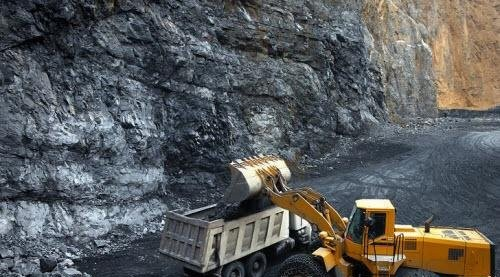
The bucket plates, cutting plates, side cutting plates, bottom plates and blades of excavators, loaders and bulldozers, crushing machine liners, blades, screen plates and mineral material conveying components, sintering machine liners, scraper blades, cement vertical mill liners, mixer liner and dust collector wear-resistant parts, grab blade plates, hopper liners, chain plates and dump truck dump plates, fire power coal grinding machine liners, coal bins, coal conveying pipes and shot blasting machine inner liners, AR500 plates of bulletproof standard are used for light armored vehicles, bulletproof inserts and protective shields.

AR500 wear-resistant steel plate—-Core calculation formulas and units

  • formula:G=L×W×δ×7.85
  • ‌ unit requirements are ‌ : the length L and width W are taken as ‌ meters (m)‌, the thickness δ as ‌ millimeters (mm)‌, and the result G is ‌ kilograms (kg)‌.
  • ‌Density basis ‌ : AR500 is a low alloy wear-resistant steel, and its density is usually taken as ‌7.85 t/m³‌ (i.e., 7.85 kg/dm³), which is consistent with that of common carbon steel.
  • ‌Tonnage conversion ‌ : if the result is tons (t), the formula: L(m)×W(m)×δ(mm)
  • ×0.00785 


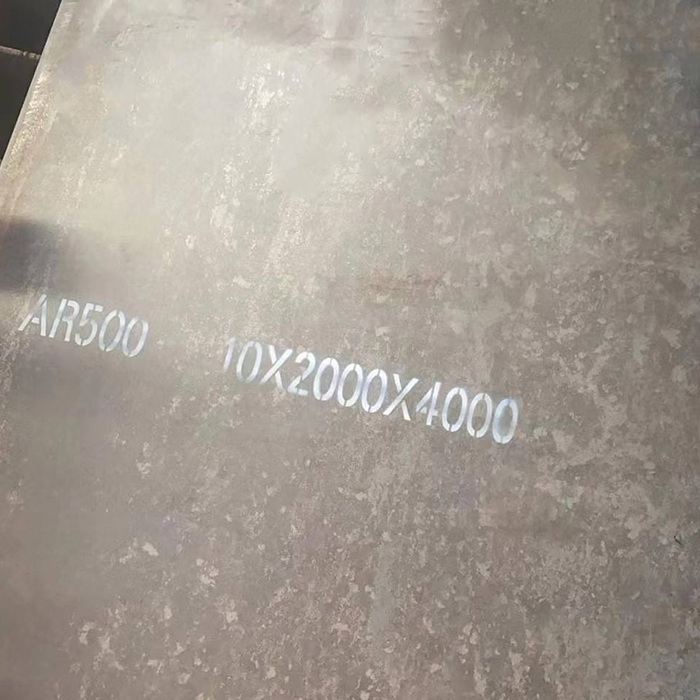
If we need to calculate the weight of an AR500 plate that is ‌ 3 meters long, 1.5 meters wide and 10 millimeters thick ‌ :

  1. put into equation3×1.5×10×7.85
  2. Calculation result: ‌353.25 kg‌ 。‌‌

AR500 Grade Abrasion Resistant Steel Plates Sheet—-International equivalent designations are as follows according to the main producing countries:

Country/RegionCorresponding to typical gradesremark
‌China (GB)‌‌NM500‌、NR500、B-HARD500“NM” is the initial letter of the pinyin for “Wear-resistant”, and 500 represents the hardness value
‌Sweden (SSAB)HARDOX 500‌、SB-50A globally renowned brand of wear-resistant plates, with strict performance standards
‌Germany(DIN/TKS)XAR500‌、Dillidur 500XAR500 is the main grade of ThyssenKrupp, with a hardness of 450-530HB
‌Finland (Rautaruukki)RAEX 500mainstream wear-resistant steel series from Northern Europe
‌Belgium (ArcelorMittal)QUARD 500European standard high-toughness wear-resistant plate
‌France (Creusabro)FORA 500‌、Creusabro 4800/8000FORA series is conventionally wear-resistant, while the latter two are ultra-high-strength wear-resistant
‌Japan (JFE/NKK)JFE-EH500‌、WEL-HARD 500、K500Japanese grades are diverse and need to be confirmed according to the specific steel mill
‌Australian (BHP)Bisplate 500Mainstream wear-resistant structural steel in Australia
‌Korea (POSCO/Sumitomo)SUMIHARD K500It is often associated with Japanese technology

AR500 Steel Wear resistant steel plate – Main Characteristics

Performance indexTypical values/rangeExplain
‌Surface hardness‌‌470 – 540 HBW‌Brinell hardness, with a measurement depth of approximately 1mm, is marked in the 400-500 HB range by some domestic standards
‌Strength of extension‌‌≥ 1300 MPa‌The typical value is approximately 1350 MPa, which belongs to ultra-high strength steel
‌Yield strength‌‌≥ 1100 MPa‌The typical value is approximately 1200 MPa (for reference with a thickness of 15mm).
‌Elongation at break≥ 8% – 10%It reflects the plastic deformation capacity of the material before fracture
‌Impact toughness≥ 24 – 30 JThe Charpy V-notch impact energy at -40℃ ensures the ability to resist brittle fracture at low temperatures
Carbon Equivalent (CEV)0.50% – 0.58%computational formulaC+Mn/6+(Cr+Mo+V)/5+(Ni+Cu)/15,Preheating is required for welding.
‌Condition of deliveryQuenching and tempering (quenching + tempering)The martensitic structure is obtained through heat treatment to achieve high hardness and toughness
Main propertyHigh wear resistance and high impact resistanceIts wear resistance is approximately 4 to 6 times that of ordinary low-carbon steel, and it also has certain weldability and cold formability

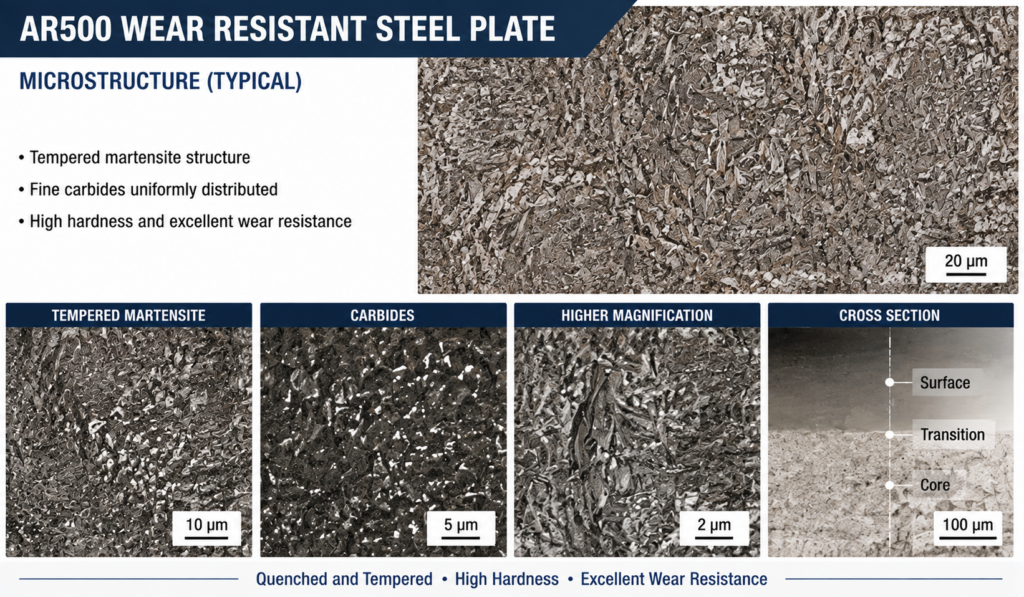
From the microstructure perspective, this AR500 Steel Plate Sheet Coil typically employs advanced alloy design and controlled rolling and cooling processes. Its matrix structure is mostly composed of both strong and tough lamellar martensite or bainite, which provides a strong foundation for the AR500 Wear-resistant Steel Plate. At the same time, through precise addition of alloy elements (such as chromium, molybdenum, nickel, boron, etc.), high-hardness carbide particles are uniformly dispersed in the matrix. These hard phases are the main force resisting abrasive cutting and chiseling. More importantly, the purity of the AR500 Steel Plates for Abrasion Resistance is extremely high, with harmful elements such as sulfur and phosphorus being controlled at very low levels, and the grain size being significantly refined. This “clean” and fine-grained crystal structure can effectively prevent crack initiation and propagation, and is the core that endows the material with high toughness.


This AR500 Abrasion Resistant Steel Plate optimized microstructure directly determines its macroscopic properties. The AR500 Steel Plate 1/4″X 12″X 36″  high-hardness carbides ensure excellent wear resistance, while the tough fine-grained matrix endows the material with extremely high impact toughness, making it less prone to brittle fracture or shedding when subjected to intense impacts. The combination of these two elements enables the AR500 Steel Plate – 1/2″ X 24″ X 36″ to maintain wear resistance while being able to adapt to the manufacturing of complex components through processes such as bending and welding, thereby reducing the risk of cracking during use. The Wear Plate AR500 stability of its performance is also reflected in its good adaptability to low-temperature environments.

AR 500 Steel Plates – Key Characteristics


  • High hardness and wear resistance
  • Good impact toughness
  • Processability
  • Reduce maintenance costs

Processing and Using Ar500 Wear Resistant Steel Plate – Important Notes

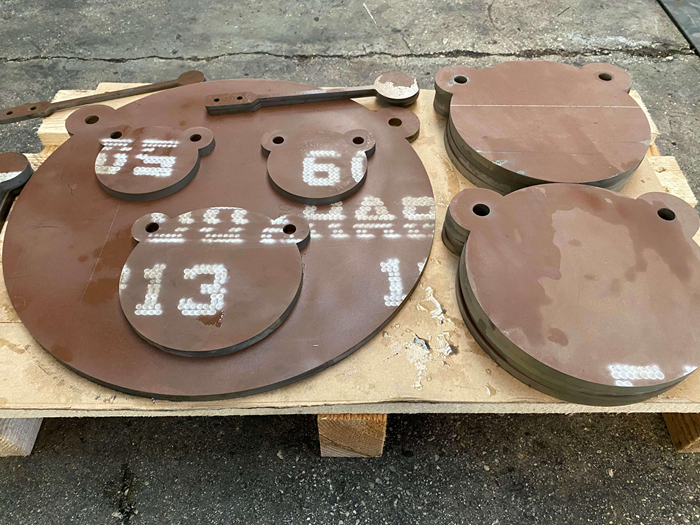
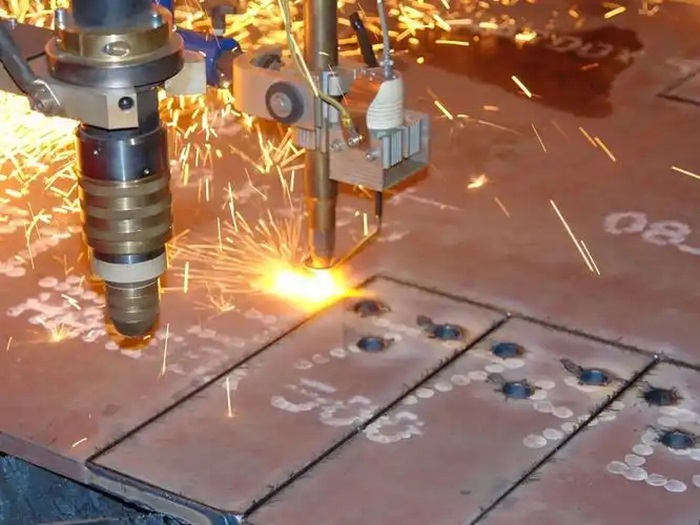
  • Cutting: It is recommended to use thermal cutting methods such as plasma cutting or laser cutting.
  • Bending: If necessary, consider applying appropriate heating to improve the formability.
  • Welding: Diversified selection of dedicated high-hardness wear-resistant welding rods or wires that are compatible with the AR500 material should be made.
  • Installation and maintenance: Ensure a firm fixation to avoid additional impacts and wear due to loosening.

Consideration Factors for Selection and Evaluation —-Abrasion Resistant Steel Plate AR500

Condition analysis//
Structural design//
Full life cycle cost//
Suppliers and technical support//

Is the domestically produced AR500 Quenched & Tempered Steel Plate of reliable quality?

yes

Why is the price of AR500 lower than that of imported wear-resistant plates?

The price of AR500 is lower than that of imported wear-resistant plates. The key lies in the fact that the domestic alternative has eliminated the costs of tariffs and logistics, and the scale effect has lowered the manufacturing costs. Moreover, “domestic AR500” is mostly a brand that is in line with the original specifications rather than an imported brand.

Can AR500 replace Hardox 500?

TIDAK

What are the differences between AR500 and AR400?

The main difference between AR500 and AR400 lies in their Brinell hardness grades (AR500 ≈ 477-555 HB, AR400 ≈ 370-430 HB).

Which is better, AR500 or Hardox 500?

It depends on the specific manufacturing process and working conditions of the manufacturer: Hardox 500 usually offers better toughness consistency, welding/bending performance, and a global quality assurance system. However, domestically produced or other countries’ AR500 can also be suitable if they have a high cost-performance ratio and are suitable for the working conditions.

What are the differences between AR500 and NM500?

The main difference between AR500 and NM500 lies in their naming system and standard classification (the former is the internationally recognized and American-style designation, while the latter is a specific brand name for Chinese national standards). However, their hardness grades and mechanical properties are basically equivalent, and they belong to the same type of quenched and tempered wear-resistant steel, which can be used interchangeably.

What are the advantages of replacing ordinary steel plates with AR500?

This kind of wear-resistant steel has an initial hardness much higher than that of ordinary structural steel. This means that when abrasive materials attempt to cut or chisel its surface, they will encounter greater resistance, and the rate of material loss will significantly slow down. Although its purchase price may be higher than that of ordinary steel, in environments with intense wear, its longer service life can reduce the material consumption and maintenance frequency per unit time. From a long-term operation perspective, it may be more economically viable.

Kirim Pertanyaan

Hubungi Kami

Kontrol penuh atas produk memungkinkan kami untuk memastikan pelanggan kami menerima harga dan layanan dengan kualitas terbaik. Hubungi kami untuk penawaran gratis, JBLSTEEL akan memberikan solusi yang tepat untuk proyek Anda.

Hubungi

Alamat

MINTA PENAWARAN GRATIS
Kirimkan pesan kepada kami jika Anda memiliki pertanyaan atau meminta penawaran. Kami akan menghubungi Anda sesegera mungkin dalam waktu 1 jam.