Is the Q1100 high-strength plate superior to the Q690, Q890, or Q960 high-strength plates?
Q1100 high-strength plate belongs to Ultra High Strength Steel (UHSS). Q1100 has a higher load-bearing capacity and enables lightweight design of equipment.
What are the differences between Q1100D steel plate and Q1100E steel plate?
The main difference between Q1100D and Q1100E steel plates lies in the temperature difference for the low-temperature impact toughness test caused by the difference in quality grades (Grade D is -20℃, while Grade E is -40℃). Both have exactly the same yield strength, chemical composition limits, and delivery conditions.
What does Q1100 high-strength plate mean?
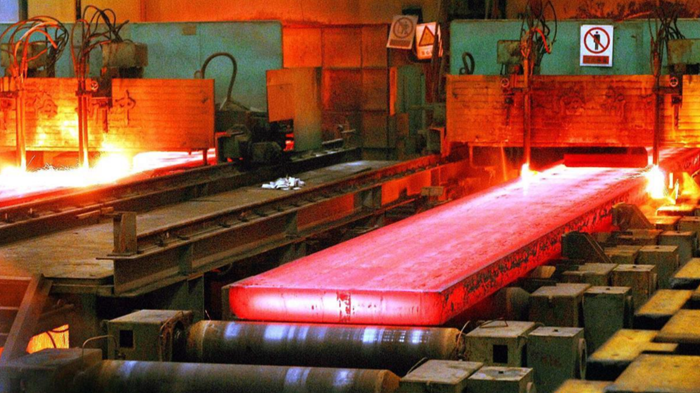
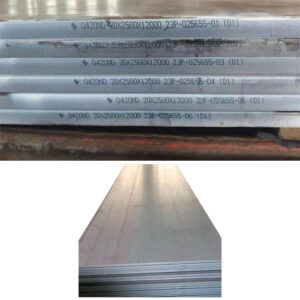
Q1100 High-strength Plate refers to ultra-high-strength structural steel through quenching and tempering, with the yield strength lower limit of ≥ 1100 MPa. The grade is composed of “Q (yield) + 1100 (MPa) + quality level (such as D/E)”. It should be delivered after undergoing quenching + tempering heat treatment.
Q1100 is a high-strength plate or an ultra-high-strength plate?
ultra-high-strength plate
What are the differences between Q1100 and imported ultra-high-strength steel?
If used for thick plate structures of construction machinery and requiring welding, the domestic Q1100 has an extremely high cost-performance ratio and its performance has reached the level of imported counterparts in the same category. If it involves stamping of automotive body panels, super high strength (above 1300MPa) or special coating requirements, specific technical parameters of the corresponding imported brands (such as SSAB, ArcelorMittal) need to be compared.
What are the main specifications of Q1100?
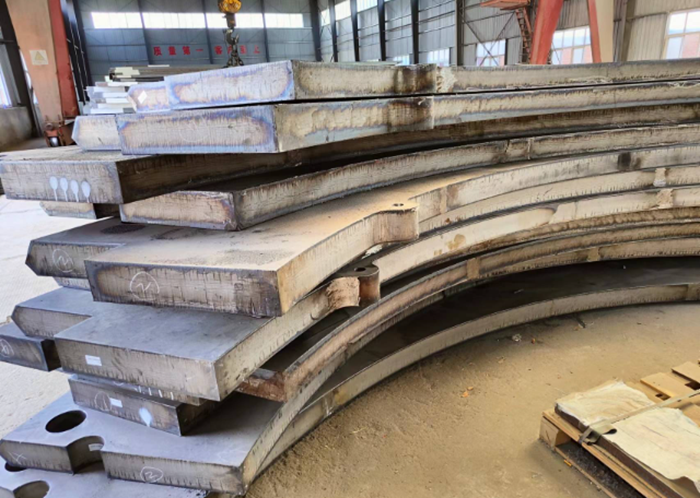
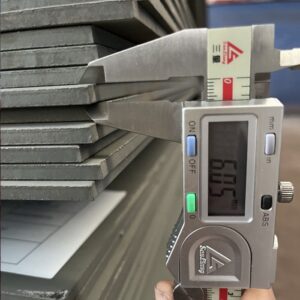
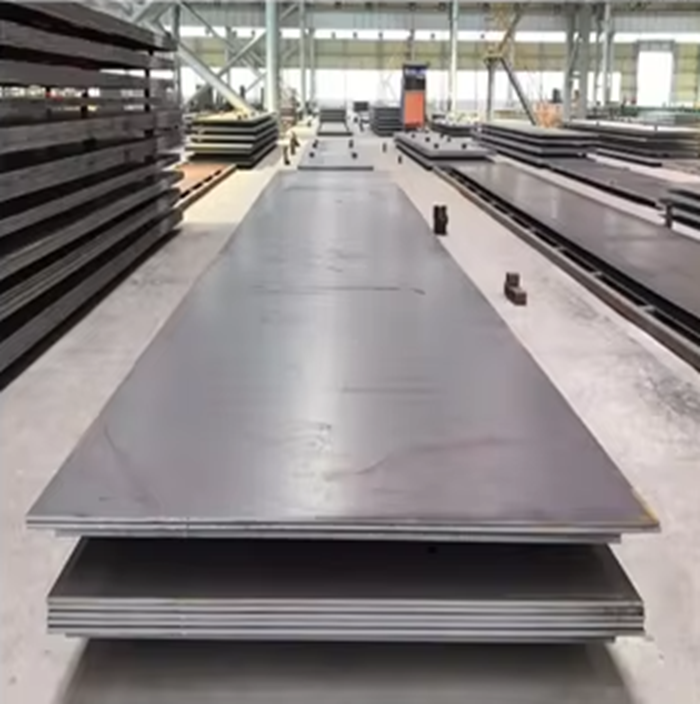
Q1100 high-strength plates (including Q1100D/Q1100E) have the following mainstream specifications: thickness ranging from 5 to 30 mm (some enterprise standards can reach 50 mm), width ranging from 1000 to 2800 mm, and length no more than 16000 mm. The specific dimensions are subject to the rolling specifications set by the steel mill.
What is the maximum thickness that Q1100 can achieve?
The Q1100 ultra-high strength steel are compliant with the national standard specifications, with the maximum thickness allowed being 50mm. However, in actual production, the thickness can be customized up to 200mm.
Which steel mills are capable of producing Q1100?
- HBIS Wuyang Steel
- NISCO (Nanjing Iron & Steel United)
- Valin Xiangtan Steel
- Shougang Group
- Jingye Yingkou Steel
Why is the strength of Q1100 so high?
Q1100 has an ultimate strength of ≥ 1100 MPa. The core strength lies in the synergistic strengthening effect resulting from the low-carbon microalloying composition design and the tempering heat treatment (quenching + tempering) that forms the lamellar martensite structure.
Why can the Q1100 material maintain its toughness even after its strength has been increased?
Q1100 steel maintains high toughness even at a strength level of 1100 MPa. The key lies in the design of low-carbon and micro-alloying components combined with quenching and tempering heat treatment (quenching + high-temperature tempering). By refining grains, precipitating strengthening, and obtaining an aged bainite structure, it breaks the traditional “strength – toughness inversion” relationship.
Why do cranes prefer to use Q1100?
The crane does not “like” Q1100; rather, it has chosen it because of its yield strength of ≥ 1100 MPa, high toughness, and weldability, which make it a key material for achieving lightweight and high load-bearing balance in super-large-tonnage booms.
Can Q1100 replace Q690/Q890?
TIDAK
Q1100 is suitable for which extreme working conditions?
Q1100 (including Q1100D/Q1100E) is specially designed for extreme working conditions featuring extremely high load, extremely low temperatures, strong impact wear resistance, and the need for lightweight heavy-duty applications. The core relies on a yield strength of ≥ 1100 MPa and specific low-temperature toughness.
Q1100 vs Q960
Comparison of key Parameters of Q1100 and Q960 high-strength plates
| “Comparison dimension” | Q960 series (e.g. Q960D/E) | Q1100 series (e.g. Q1100D/E) |
|---|
| executive standard | GB/T 16270-2009(high yield strength structural steel) | GB/T 28909-2012 (Quenched and Tempered Steel for Construction Machinery) |
| yield strength | ≥960 MPa (thickness≤16mm 时) | ≥1100 MPa (thickness≤30mm 时) |
| strength of extension | 980 ~ 1150 MPa | 1200 ~ 1550 MPa |
| ductility | ≥10% | ≥9% |
| low-temperature toughness | Class D: Impact at -20℃ Class E: -40℃ impact ≥34J | Class D: Impact at -20℃ Class E: -40℃ impact ≥27J |
| condition of delivery | Quenching + tempering (quenching and tempering) | Quenching + tempering (quenching and tempering) |
| Carbon equivalent/weldability | It is relatively high and needs to be preheated to 130-150℃ to control the line energy | Extremely high, preheating is required at 150-200℃, and the line energy control is stricter |
| main advantage | The balance between strength and toughness is good, and the application maturity is high | Stronger ultimate load-bearing capacity , and more significant weight reduction effect under the same load |
| typical application | Large crane booms, heavy mining machinery, Bridges | Super-large mining carriages, main booms of cranes in extreme working conditions, and armored protection |

 English
  Русский
 Deutsch
 Español
 简体中文
简体中文
 Português
 Italiano
 日本語
日本語
 Bahasa Indonesia
 한국어
한국어
 Français
 Nederlands
 العربية
 Tiếng Việt
 ไทย
ไทย
 Tagalog
 Bahasa Melayu
 Polski
 Türkçe
 Português do Brasil
 हिन्दी
 Қазақ тілі
 বাংলা
বাংলা
 Hausa
Hausa
 Kiswahili
 አማርኛ
አማርኛ
 فارسی
فارسی
 Ελληνικά
 Română
 Українська