
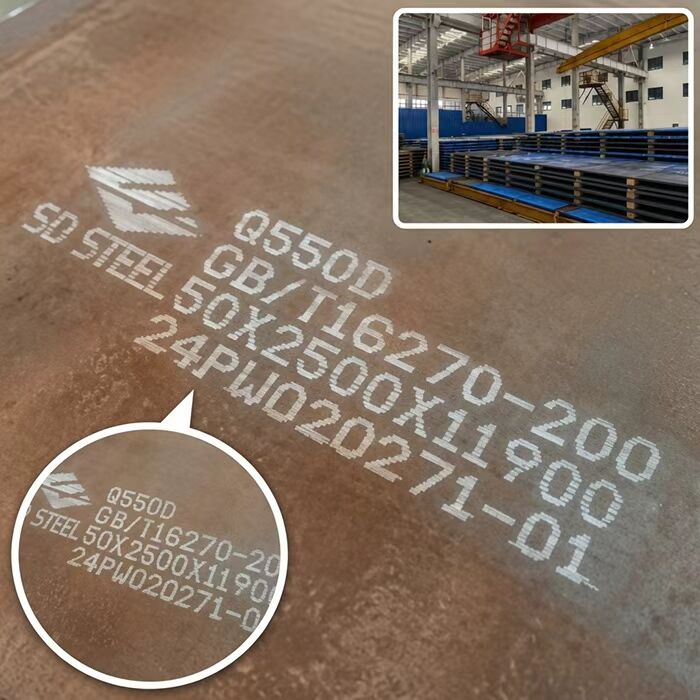
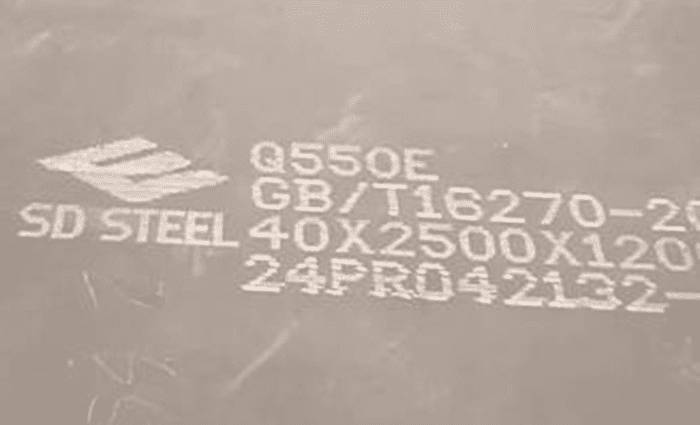
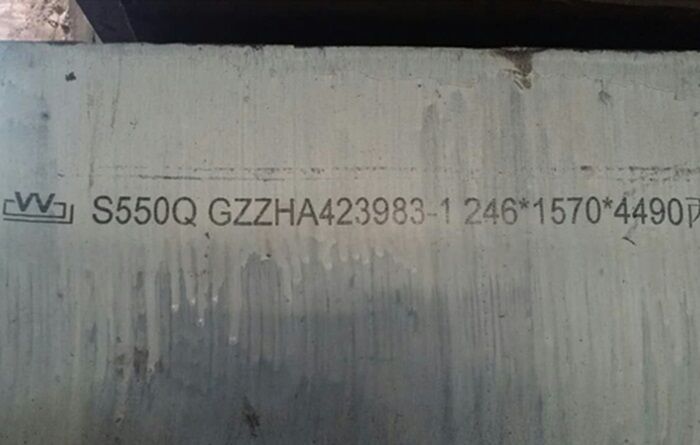
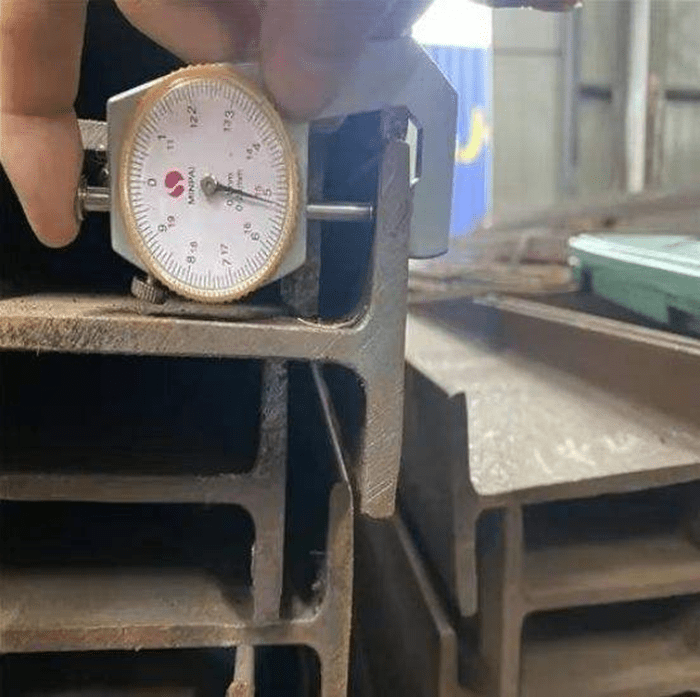
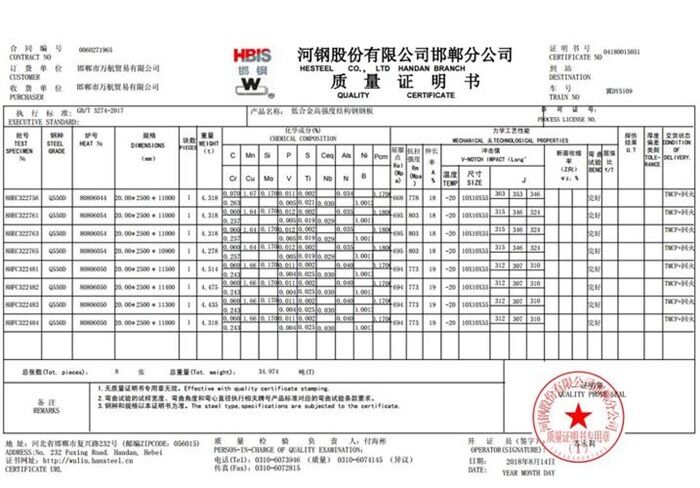
Q550 Q550B Q550C Q550D Q550E High Strength Steel
Q550C: +20℃
Q550D: -20℃
Q550E: -40℃
Including laser, plasma and flame cutting, drilling, edge milling, bending and flattening —- JBLjblstainless
jblstainless Q550 Q550B Q550C Q550D Q550E High Strength Steel From raw material selection to precise rolling, and then to heat treatment strengthening, every step is strictly controlled. By optimizing the alloy composition and controlling the rolling and cooling processes, the plates can ensure both strength and ductility, meeting the requirements of complex engineering projects. Q550 is commonly used in structural components such as bridges, buildings, and vehicles.
The modern Q550 high-strength steel plate factory focuses on energy conservation and emission reduction, adopting technologies such as waste heat recovery and low-emission smelting to reduce the impact on the environment and promote the transformation of the steel industry towards a low-carbon model.

Q550 high-strength plates can be used in which fields?
Excavator boom / Crane main beam / Mining dump truck frame / Hydraulic support / Crusher structure / Main beam of large-span bridge / Bridge piers / High-rise steel structure beams and columns / Large factory support framework / Pressure pipe of hydropower station / Wind turbine tower (especially in cold regions) / Petrochemical storage tanks and high-pressure pipelines / Railway freight car bogie / Heavy truck chassis / Key structural components of ships / Nuclear power auxiliary structure / Aerospace ground support devices / Heavy machinery base
High-strength steel plate Q550 —— Chemical elements
Q550 High Tensile Strength Steel Plate —— Chemical elements


What services can JBL Company provide for the Q550?
What kinds of test reports will be provided when the Q550 low-carbon steels are manufactured?
MTC + chemical composition + stretching + impact + UT inspection + hardness + third-party inspection report
.

| mark | Impact test temperature | Minimum impact energy (KV₂) | Upper limit of phosphorus (P) | Sulfur (S) upper limit | Typical delivery status | applicable scene |
|---|---|---|---|---|---|---|
| Q550B | 20℃ (At room temperature) | ≥27J/34J* | ≤0.040% | ≤0.040% | Hot rolling/controlled rolling | Normal-temperature heavy-duty structure with no low-temperature requirements |
| Q550C | 0℃ | ≥34J | ≤0.035% | ≤0.035% | TMCP/Quenching and Tempering | General low-temperature environments, mining machinery, cranes |
| Q550D | -20℃ | ≥34J (Regular control ≥ 40J) | ≤0.030% | ≤0.030% | Quenching and tempering (QT) is the main approach | Cold region engineering, offshore wind power, port equipment |
| Q550E | -40℃ | ≥27J/34J* | ≤0.025% | ≤0.025% | Tempering (QT) | Extremely cold regions, LNG facilities, nuclear power, military industry |
| Q550F | -60℃(Contract) | ≥27J (Contract) | ≤0.020% | ≤0.020% | Tempering (QT) | Ultra-low temperature special equipment (Customized agreement required) |
| Q550qC | 0℃ | ≥47J (Bridge-specific) | ≤0.025% | ≤0.020% | TMCP+ Ultra-fast cooling | Long-span Bridges (with high fatigue performance requirements) |
What is Q550 high strength steel?
Q550 steel plate is a high-strength, high-toughness low-alloy structural steel plate.
What do the “Q” and “550” in Q550 represent?
In Q550 high-strength structural steel, the “Q” represents the yield strength, and 550 indicates that the lower limit value of its yield strength is 550 N/mm².
What are the common thicknesses, widths and lengths of Q550?
Can Q550 be produced in fixed-length batches?
yes
What is the carbon equivalent value (CEV) of Q550?
≤0.45%
Is Industrial Grade Steel Plate Q550 suitable for low-temperature environments?
yes
Q550 high-strength structural steel is easy to weld?
yes
Does JBL Does JBL support third-party testing (such as SGS, BV, TÜV, etc.)? support third-party testing (such as SGS, BV, TÜV, etc.)?
yes
Q550 H Beam

Q550 steel pipe
Q550 Carbon Steel PlatesSheets
Q550 Steel Square Tube
What are the differences between Q550 and Q460?
High Strength Structural Steels Q550 has a yield strength of ≥ 550 MPa, while Q460 has a yield strength of ≥ 460 MPa. The main difference between the two lies in their strength grades. high-strength steel Q550 has a higher strength and is suitable for more heavy-load structures.
What are the differences between Q550 and Q690?
Q550 and Q690 are both types of high-strength steel. Among them, the yield strength of Steel Plates Grade Q550 is no less than 550 megapascals, while that of Q690 is no less than 690 megapascals.
What are the advantages of Q550 compared to Q355?
Q550 and Q355 both belong to low-alloy high-strength structural steels, but Q550 High Strength Steel Plate High Strength Alloy Steel Sheet has significant advantages in terms of load-bearing capacity and material efficiency.
Can Q550 replace Q460?
From the perspective of mechanical properties, ultra-high-strength steel plate Q550 can replace Q460.
When is it not recommended to replace Q550 with Q690?
Under extreme working conditions, stringent welding requirements and high toughness low-temperature environments, it is not recommended to replace Q690 with Hot Rolled Q550 High Strength Steel Plate.
Which foreign brand does Q550 correspond to?
Why is Q550 steel prone to deformation?
The Q550F carbon steel itself is a type of high-strength steel and is not prone to deformation under load. The so-called “easy deformation” usually occurs due to improper processing and cutting techniques, unremoved thermal treatment stresses, or exceeding its 550 MPa yield limit.
Q550 – How to choose the thickness?
Which countries can Q550 be exported to?
The Q550 Q550B Q550C Q550D Q550E High Strength Steel can be exported to Southeast Asia (Laos, Malaysia), Africa (East Africa), as well as countries and regions worldwide that follow American standards, European standards, and Japanese standards.

**********After the Q550 high-strength plate has been in service for a long time, its remaining strength needs to be evaluated. However, since it is not possible to cut standard tensile specimens from the component, the **Brinell Hardness Test (HBW)** is usually used for on-site rapid detection.

**********Under high heat input welding conditions, the coarse-grained heat-affected zone (CGHAZ) of Q550 thick steel plates treated with Ca experienced significant microstructure evolution, which had a decisive impact on the toughness and crack resistance of the welded joint. During the welding process, as the peak temperature usually exceeded 1100 ℃, the original ferrite and pearlite structures were completely austenitized, and at the same time, the grains rapidly grew, resulting in the formation of coarse austenite grains. As the weld cooled down, the coarse-grained area mainly transformed into bainite, M/A (martensite-austenite) components, and a small amount of Widmanstätten structure. When the heat input was high and the cooling rate was slow, the M/A components were prone to accumulate at the original austenite grain boundaries and become stress concentration areas, reducing the impact toughness of the coarse-grained area and providing favorable conditions for crack initiation.
Il controllo completo sui prodotti ci permette di garantire ai nostri clienti i prezzi e il servizio migliori. Contattateci per un preventivo gratuito, JBLSTEEL vi fornirà la soluzione giusta per il vostro progetto.
 English English Русский Deutsch Español 简体中文 Português Italiano 日本語 Bahasa Indonesia 한국어 Français Nederlands العربية Tiếng Việt ไทย Tagalog Bahasa Melayu Polski Türkçe Português do Brasil हिन्दी Қазақ тілі বাংলা
  Hausa Kiswahili አማርኛ فارسی Ελληνικά Română Українська English English Русский Deutsch Español 简体中文 Português Italiano 日本語 Bahasa Indonesia 한국어 Français Nederlands العربية Tiếng Việt ไทย Tagalog Bahasa Melayu Polski Türkçe Português do Brasil हिन्दी Қазақ тілі বাংলা Hausa Kiswahili አማርኛ فارسی Ελληνικά Română Українська
Automated page speed optimizations for fast site performance
