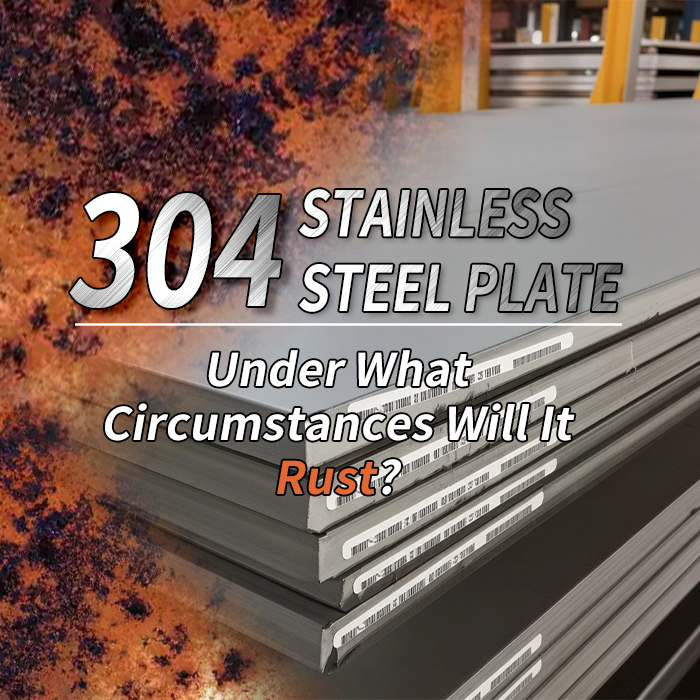
304不锈钢 plates hardly rust in a dry and clean environment. However, when exposed to high chloride ions, mechanical damage or high temperatures, the protective layer on the surface may fail. This article will explain the corrosion resistance principle, prone rusting scenarios and corresponding solutions.
一、Corrosion resistance principle of 304 stainless steel sheet
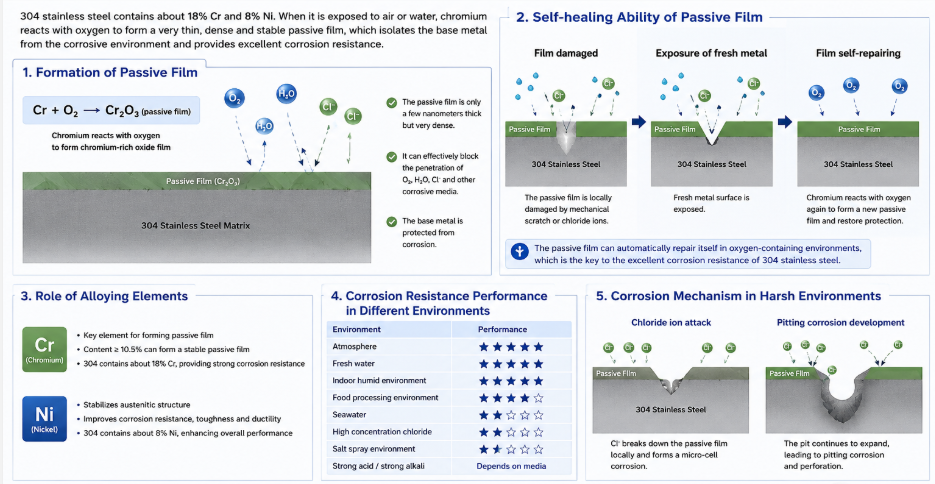
The rust prevention ability of 304不锈钢 plate mainly relies on a very thin layer of chromium oxide on the surface. When the chromium content reaches over 18%, it will react with oxygen to form a dense chromium oxide layer, like a hidden armor that isolates moisture and corrosive media.
This protective film has self-repairing properties – even if there is a slight scratch, the exposed chromium will recombine with oxygen to form a new protective layer. However, if the concentration of chloride ions in the environment is too high, or acidic substances persist, the repair speed may not keep up with the destruction speed.
二、Conditions that may cause SS 304 Plates to rust
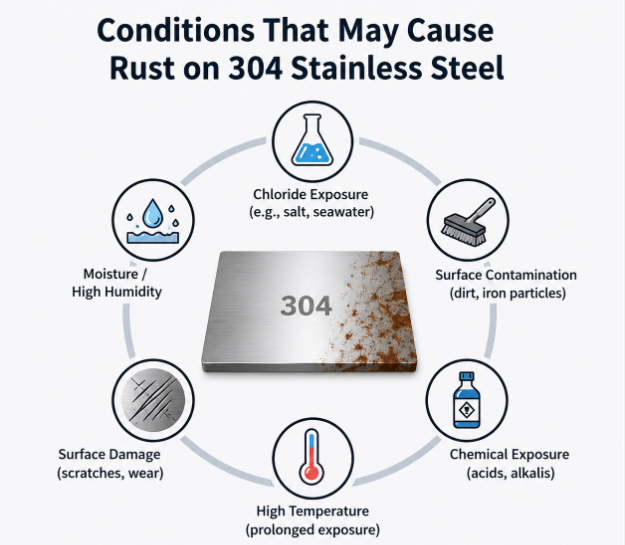
- High chloride environment: Salt in the air of coastal areas, chlorine ions from pool disinfectants or chemical plants can penetrate the oxide film and cause pitting corrosion. There was a case where the 304不锈钢 decorative panels of a seaside hotel developed rust spots after three years, which was a typical example of chloride corrosion.
- Mechanical damage: Deep scratches or the welding heat affected zone may locally damage the oxide film. If exposed to a humid environment at the same time, rusting will spread from the damaged area.
- High-temperature oxidation: When exposed to an environment above 400°C for a long time, the structure of the oxide film may change, reducing its protective effect.
?? Key differences: Chloride corrosion often initially manifests as pinpoint-sized pitting corrosion, while rust caused by mechanical damage typically spreads along the scratches in a linear pattern.
三、How to choose the right 304 Stainless Steel to avoid rusting
For situations where there is prolonged exposure to salt spray, seawater or chemical environments, 316 stainless steel plates containing molybdenum are a more reliable choice – the molybdenum element can significantly enhance the resistance to chloride ion corrosion. While for ordinary indoor decoration and outdoor facilities in dry areas, 304不锈钢 plates are sufficient.
If the budget is limited and the environment is not harsh, 430 stainless steel plates can also meet some low-requirement scenarios, but it should be noted that they have a lower chromium content and relatively weaker corrosion resistance.
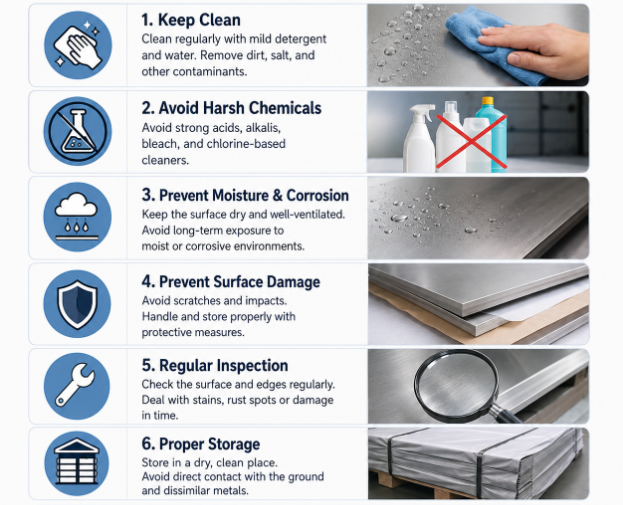
四、Methods for maintaining and extending the service life of Stainless Steel Sheet – Type 304
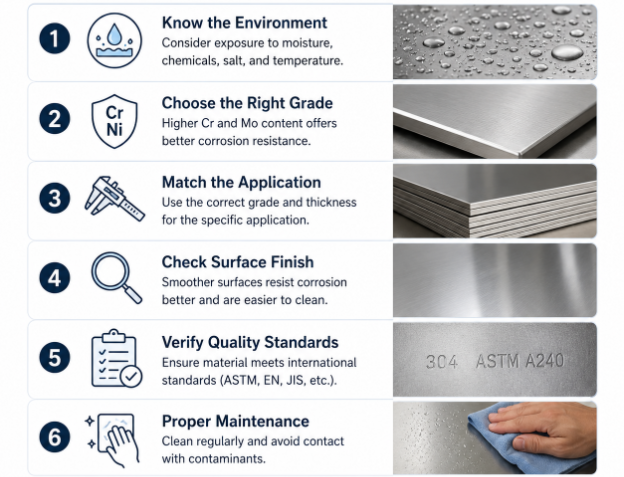
Even if the right material is chosen, daily maintenance is still essential:Even if the right material is chosen, daily maintenance is still essential:
Regular cleaning: Use a neutral stainless steel plate cleaning agent to remove surface salt, acidic and alkaline contaminants. Avoid using chlorine-based cleaners.
Repairing damage: For deep scratches, you can first apply a special surface treatment agent for stainless steel plates, then polish to restore the protective layer.
Auxiliary protection: In harsh environments, a thin layer of stainless steel plate anti-rust oil can be applied for temporary protection.
?? Key points for operation: When cleaning, wipe along the grain of the stainless steel plate to avoid applying force sideways and damaging the surface structure.