
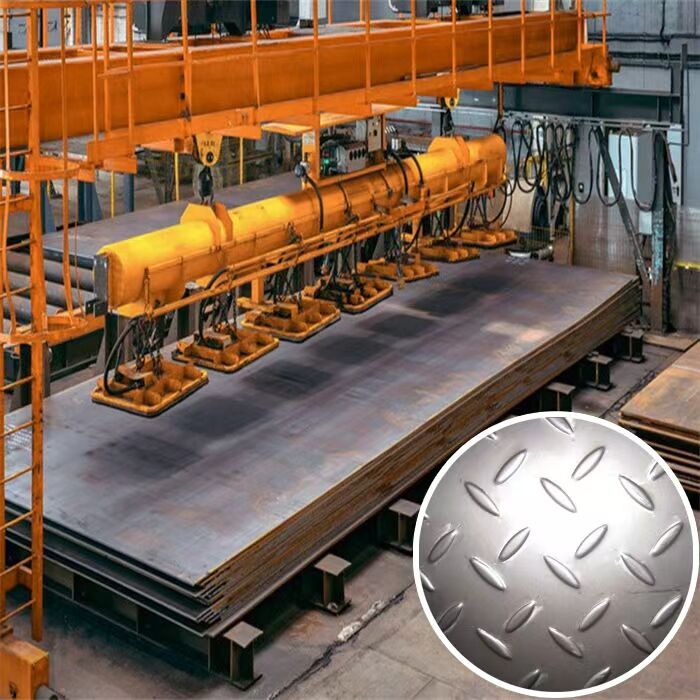
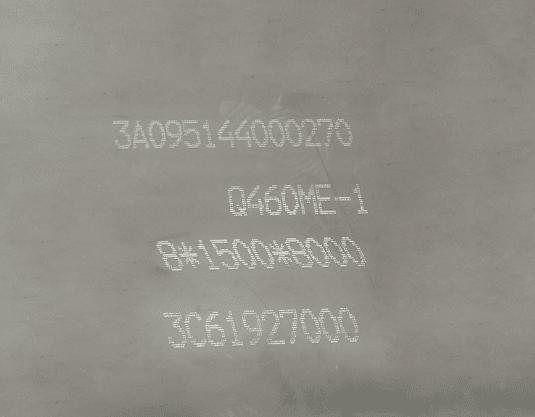
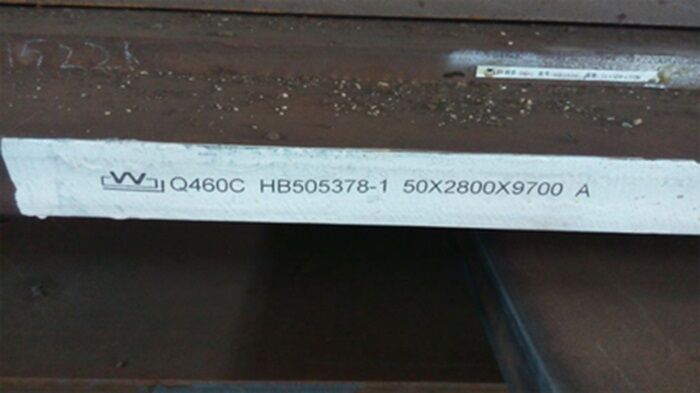
Q460 Q460C Q460D Q46E Q460F alloy steel plate
Q460C/D/E high-strength steel plate – High-strength plate for construction machinery – Bridge building structural steel – Available in fixed lengths and fixed thicknesses.
jblstainless Q460C, Q460D, Q460E, Q460ND, Q460NE, Q460MC, Q460MD (The suffixes after the letters represent the low-temperature impact toughness grades, such as D grade represents -20℃ impact toughness, and E grade represents -40℃)
Q460 High-strength Plate – Dimensions
No fixed single size
⇒ The dimensions of Q460 Steel are subject to the applicable standards (such as GB/T 1591-2018), the delivery condition (hot rolled/normalized/controlled rolling), and the equipment limitations of the steel mill. Non-standard dimensions need to be determined by contacting the steel mill for rolling.


Q460 H-shaped steel / Q460 square and rectangular tubes / Q460 channel steel / Q460 angle steel / Q460 round pipe

Q460 H-shaped steel (used for heavy industrial buildings and large-scale steel structure main beams)

Q460(Angle Steel)
Q460(Channel Steel)
Q460(I Beam)
Q460 Seamless Round Tube (Hollow Round Steel Pipe)
Q460 Square tube (The most widely used in construction machinery)
Q460 low-alloy high-strength structural steel——(Chemical Composition)
| chemical element | Content range (%) | main function |
|---|---|---|
| C | ≤0.20 | Enhance strength and hardness, and control welding performance |
| Si | ≤0.55 | Deoxidation enhances strength |
| Mn | ≤1.70 | Enhance strength, toughness and hardenability |
| P | ≤0.025 | Limit elements to enhance low-temperature toughness |
| S | ≤0,015 | Reduce inclusions and improve plasticity |
| Nb | ≤0.11 | Refine the grains and enhance the strength |
| V | ≤0.20 | Precipitation strengthening enhances strength |
| Ti | ≤0.20 | Refine the organization and enhance resilience |
| Cr | ≤0.30 | Enhance wear resistance and corrosion resistance |
| Ni | ≤0.50 | Improve low-temperature impact toughness |
| Mo | ≤0,10 | Improve hardenability |
Q460 High Strength Steel——(Chemical Composition)
Functional Item | Indicator requirements/numerical range | works remarks |
|---|---|---|
| yield strength ReLReL | ≤16mm: ≥460 16-40mm: ≥440 40-63mm: ≥420 63-80mm: ≥400 80-100mm: ≥400 100-150mm: ≥380 | It decreases with the increase of thickness; Thickness greater than 150mm needs to be negotiated |
RmRm | 550 – 720 | Universal across the entire thickness range |
| percentage elongation after fracture AA (%) | ≥17% (thickness≤40mm) ≥16% (thickness>40mm) | gauge length is usually 5.65√S₀ |
| percentage elongation after fracture KV2KV2 | Q460C: 0℃ ≥34J Q460D: -20℃ ≥34J Q460E: -40℃ ≥27J | Longitudinal specimen, V-notch; Different quality grades correspond to different test temperatures |
| bending property | 180° bending center diameter dd:≤16mm 时 d=2ad=2a;>16mm 时 d=3ad=3a | aa represents the thickness of the sample |
Q460 steel grade——(differences between the brand names)
| Grade example | quality grade | Impact test temperature | Typical delivery condition/process | Core features and applicable scenarios |
|---|---|---|---|---|
| Q460C | Grade C | 0℃ | Hot rolling (default) | The cost is the lowest and the control of ingredients is relatively loose. It is suitable for ordinary structures at normal temperature without special low-temperature toughness requirements. |
| Q460D | Grade D | -20℃ | Hot rolling/normalizing /TMCP | Strictly control the P/S content and possess basic low-temperature toughness; It is widely used in Bridges in cold regions, construction machinery and general low-temperature environments. |
| Q460E | Grade E | -40℃ | Normalizing / TMCP | Extremely strict impurity control (S≤0.020%), with the strongest resistance to brittle fracture at low temperatures. Specifically designed for extremely cold regions, LNG facilities and high-safety-level components. |
| Q460NC | Grade C | 0℃ | Normalizing/Normalized rolling | The structure is more uniform than that of hot-rolled ones and has better plasticity. It is suitable for thick plate structures that have requirements for internal microstructure uniformity but do not require extremely low temperatures. |
| Q460ND | Grade D | -20℃ | Normalizing/Normalized rolling | Eliminate banded structure and ensure stable performance of thick plates. It is commonly used in pressure vessels, large steel structures and scenarios where the toughness of thick sections needs to be guaranteed. |
| Q460NE | Grade E | -40℃ | Normalizing/Normalized rolling | It combines extremely low-temperature toughness with the uniformity of thick plate structure. It is suitable for ultra-thick-walled equipment in extremely cold working conditions (such as thick-walled containers). |
| Q460MC | Grade C | 0℃ | TMCP (Thermal Mechanical Rolling) | The grain is refined, the weldability is better than that of the normalized state, and the internal stress is small. Suitable for medium-thickness structural components that are sensitive to welding deformation. |
| Q460MD | Grade D | -20℃ | TMCP (Thermal Mechanical Rolling) | High strength, high toughness and low preheating requirements for welding; The preferred choice for heavy-duty dynamic load structures such as wind turbine towers and main beams of heavy machinery. |
| Q460ME | Grade E | -40℃ | TMCP (Thermal Mechanical Rolling) | The best comprehensive performance (high strength, toughness at -40℃, excellent weldability); Core materials for extremely cold heavy loads, high dynamic loads and those requiring lightweight design. |
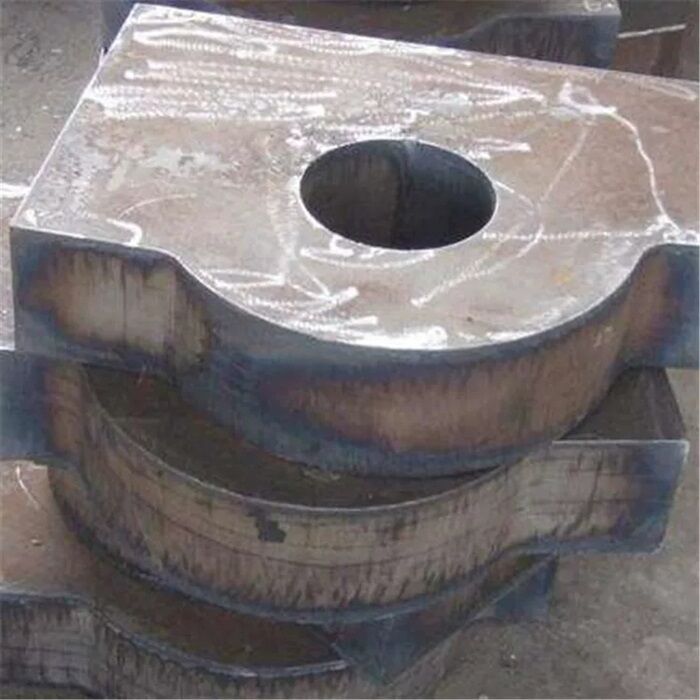
Hanging ears / U-shaped / fork-shaped, Y-shaped, T-shaped split flange / arc-shaped / crescent-shaped, fan-shaped curved plate / irregular polygonal perforated connection plate / special-shaped flange, lily pad shape, eccentric disc
Q460 U-shaped Notched Special-shaped Thick Plate (Support, Limiting Plate)
Q460 Arc-shaped Moon-shaped, fan-shaped curved plates

Q460 Fork-shaped, Y-shaped, T-shaped bifurcated web plate
Q460 Hanger Riveted Ear Plate (The most frequently used type)
Q460 Irregular polygonal perforated connection plate (equipment base, node plate)
Q460 special-shaped flanges, plum-shaped flanges, and eccentric discs.
jblstainless Q460 high-strength plate – What do the “Q” and “460” represent in this plate?
In high-strength plates, “Q” stands for yield strength (the initial letter of the Chinese pinyin for “yield”), and “460” represents the lower limit value of the yield strength, which is 460 MPa (megapascals).
What are the differences between jblstainless Q460 and Q345, Q390, and Q420?
Q345 ≥ 345 MPa, Q390 ≥ 390 MPa, Q420 ≥ 420 MPa, Q460 ≥ 460 MPa (as the thickness increases, the strength indicators decrease in a stepwise manner)
What are the differences between jblstainless Q460, Q550 and Q690 high-strength plates?
Q460 ≥ 460 MPa, Q550 ≥ 550 MPa, Q690 ≥ 690 MPa (the value slightly decreases as the plate thickness increases)
jblstainless Q460 high-strength steel plate What are the corresponding foreign brand names?
How can the quality of jblstainless Q460 high strength low alloy steel plate be determined based on its chemical composition?
It is mainly determined by detecting the microalloying elements such as C, Si, Mn, P, S, as well as Nb, V, Ti, etc.
jblstainless Q460 High-Strength Steel Why is controlled cooling necessary?
Q460 requires controlled cooling to precisely regulate the cooling rate, thereby inhibiting grain coarsening and inducing the precipitation of fine bainite/ferrite, so as to achieve a yield strength of ≥ 460 MPa while ensuring low-temperature toughness and weldability.
jblstainless Q460 Steel Plates Why is it prone to generating residual stress?
Apart from the changes in the microstructure of the heat-affected zone, the Q460 steel thick plate residual stress introduced by the cutting process is another key performance influencing factor.
In which industries is jblstainless Q460 mainly applied?
Long-span bridge main beams / Super high-rise building steel structures / Excavators / Crane booms / Shield machine cutter heads / Coal mine hydraulic supports / Heavy transport vehicle beams / Ship structures / Deck and offshore platform components / Wind turbine towers / High-pressure vessels / Boilers / Oil and gas pipelines / Key structural components of railway vehicles / Special vehicle chassis / Trailer beams /
What are the advantages of jblstainless Q460 compared to the ordinary Q355?
The core advantage of Q460 compared to Q355 is that its yield strength is increased by approximately 30% (≥ 460 MPa vs ≥ 355 MPa)
What are the differences between jblstainless Q460 and Hardox wear-resistant plates?
Q460 is a low-alloy high-strength structural steel (focusing on load-bearing and toughness), while Hardox is a special quenched and tempered wear-resistant steel (focusing on wear resistance and surface hardness); the design goals, hardness ranges, and application scenarios of the two are completely different.
jblstainless Q460 can it replace the NM450 wear-resistant plate?
Q460 ≠ NM450,They cannot be directly interchanged.
jblstainless Q460 is suitable for wear-resistant environments?
TIDAK
jblstainless q460c steel plate What is the service life?
(Usually, a major overhaul is required after 15 to 25 years.)
Kontrol penuh atas produk memungkinkan kami untuk memastikan pelanggan kami menerima harga dan layanan dengan kualitas terbaik. Hubungi kami untuk penawaran gratis, JBLSTEEL akan memberikan solusi yang tepat untuk proyek Anda.
 English English Русский Deutsch Español 简体中文 Português Italiano 日本語 Bahasa Indonesia 한국어 Français Nederlands العربية Tiếng Việt ไทย Tagalog Bahasa Melayu Polski Türkçe Português do Brasil हिन्दी Қазақ тілі বাংলা
  Hausa Kiswahili አማርኛ فارسی Ελληνικά Română Українська English English Русский Deutsch Español 简体中文 Português Italiano 日本語 Bahasa Indonesia 한국어 Français Nederlands العربية Tiếng Việt ไทย Tagalog Bahasa Melayu Polski Türkçe Português do Brasil हिन्दी Қазақ тілі বাংলা Hausa Kiswahili አማርኛ فارسی Ελληνικά Română Українська
Automated page speed optimizations for fast site performance
