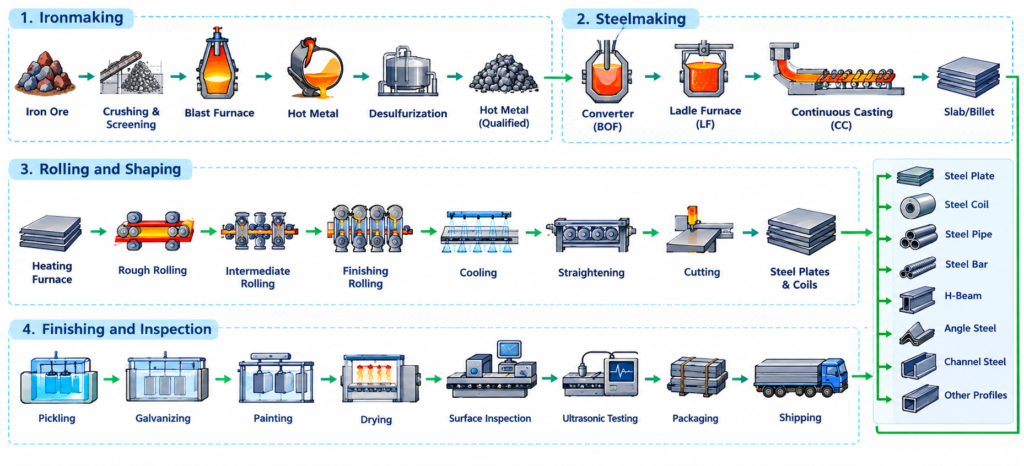
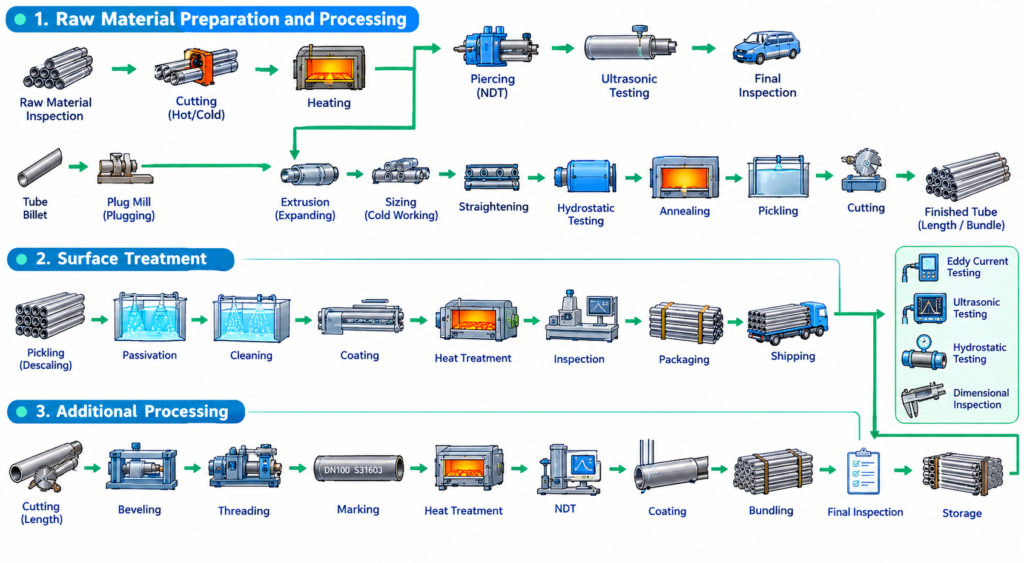
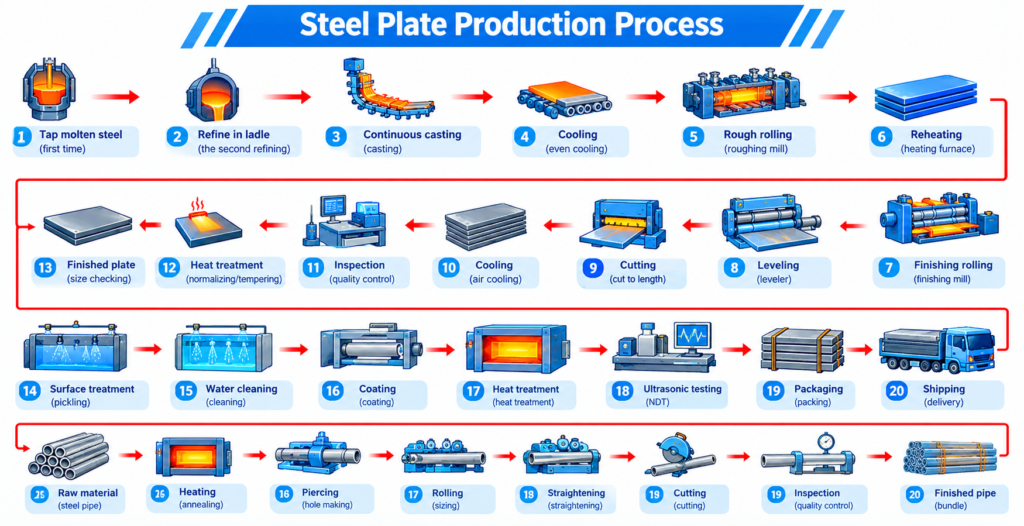
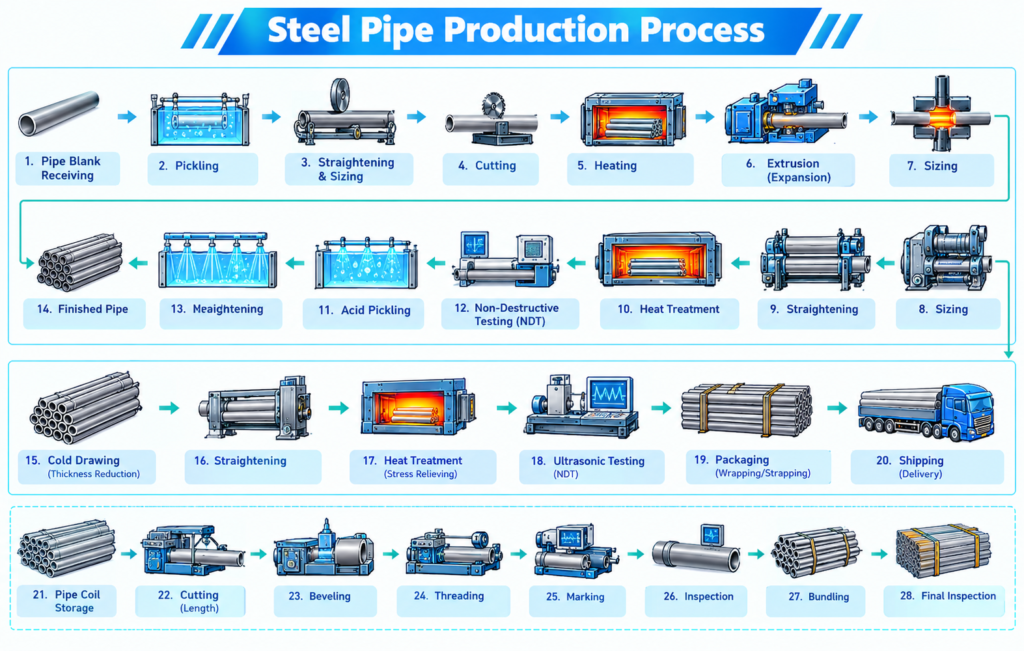
The production process for seamless steel pipes consists of the following steps: round billet → heating → piercing → three-roll skew rolling, continuous rolling, or extrusion → mandrel removal → sizing (or reducing) → cooling → straightening → hydrostatic testing (or flaw detection) → marking → warehousing. Seamless steel pipes are manufactured by piercing steel ingots or solid billets to form a hollow shell, which is then processed via hot rolling, cold rolling, or cold drawing.
Seamless steel pipes are primarily categorized into hot-rolled, cold-drawn, and cold-rolled types; this article provides a detailed explanation of these three production processes.
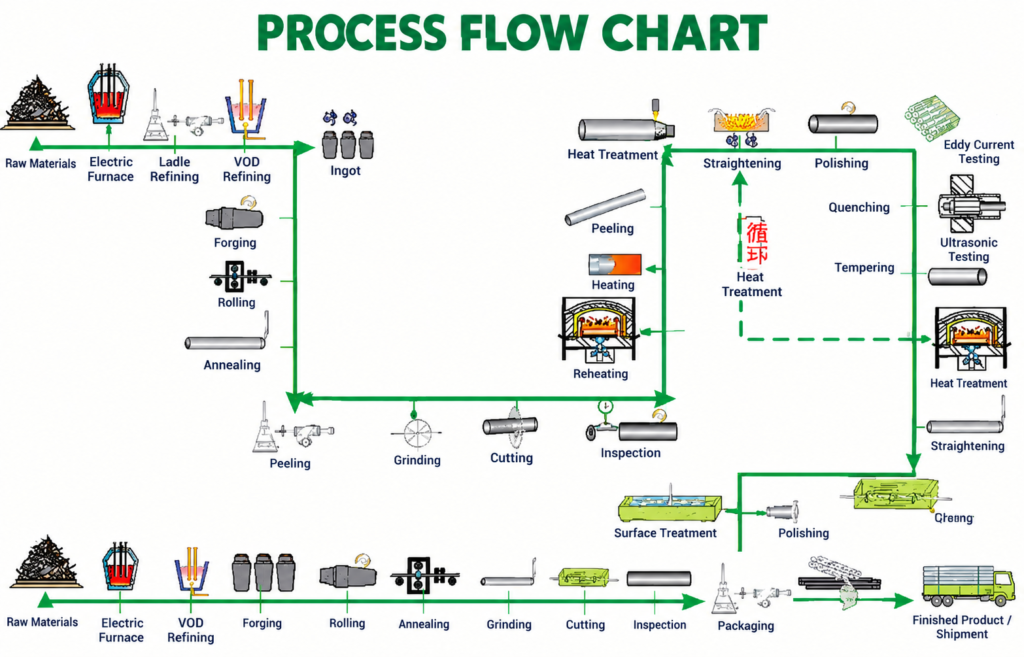
General seamless steel pipe and piping process flow chart:
Piping Fabrication Flowchart
Seamless Steel Pipe Manufacturing Process Flowchart:
Process Flowchart for Oil Country Tubular Goods (OCTG): Tubing – Casing – Drill Pipe
Process Flow for Hot-Rolled Seamless Steel Pipe Production Line (Carbon Steel and Alloy Steel):
Production Process Flowchart for Hot-Rolled Seamless Steel Pipes:
Process Flow for Φ140 Hot-Rolled Seamless Steel Pipe Production Line
Production Process for Cold-Drawn Seamless Steel Pipe (Carbon Steel and Alloy Steel)
The production process for cold-rolled seamless steel pipes is similar to that of cold-drawn seamless steel pipes, the key difference being the substitution of the cold-drawing process with cold-rolling. Common methods include two-roll and three-roll cold rolling, with five-roll cold rolling also used in some cases; there is a wide variety of cold-rolling machinery, which will not be listed individually here.
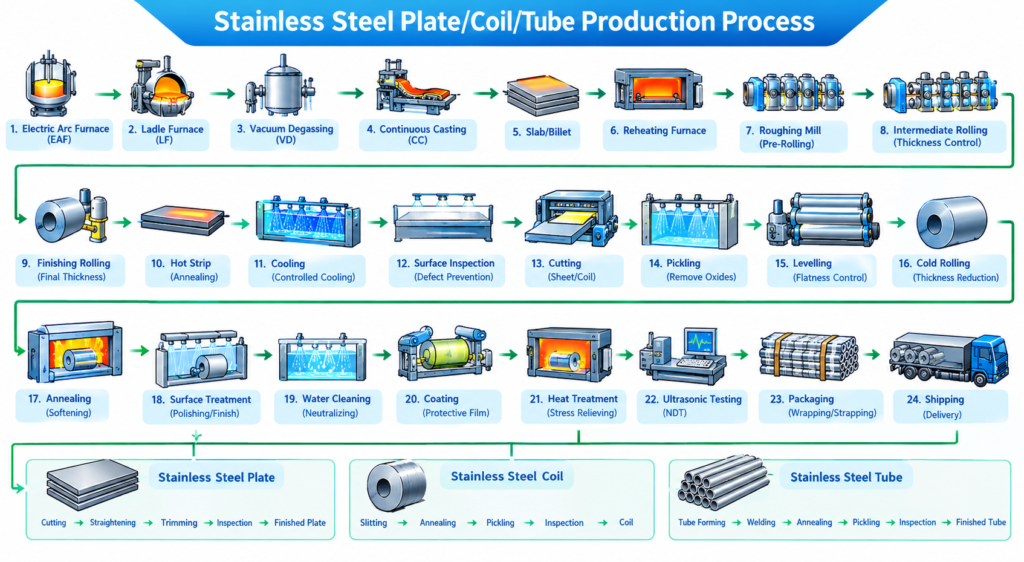
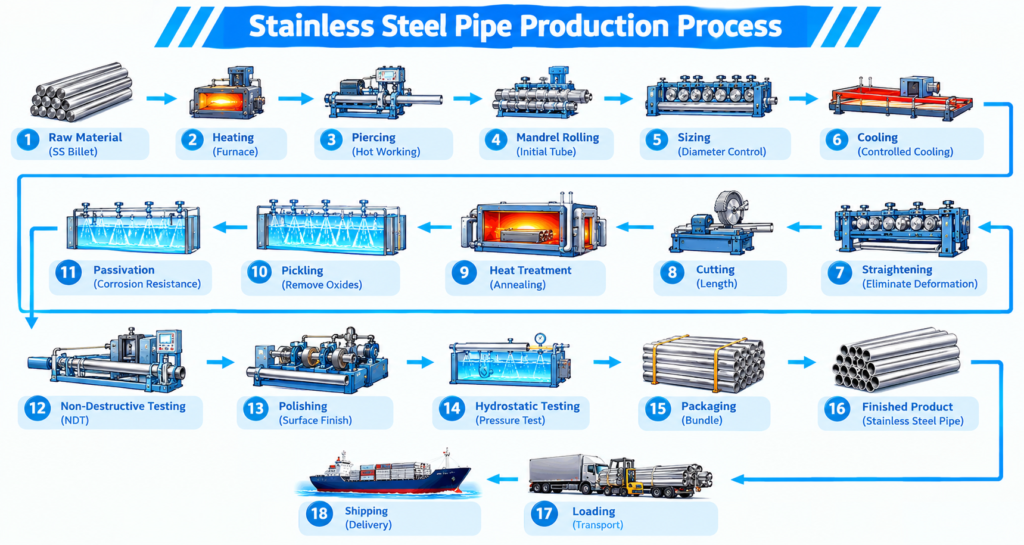
Production process flows for stainless steel round bars, seamless stainless steel pipes, and welded stainless steel pipes
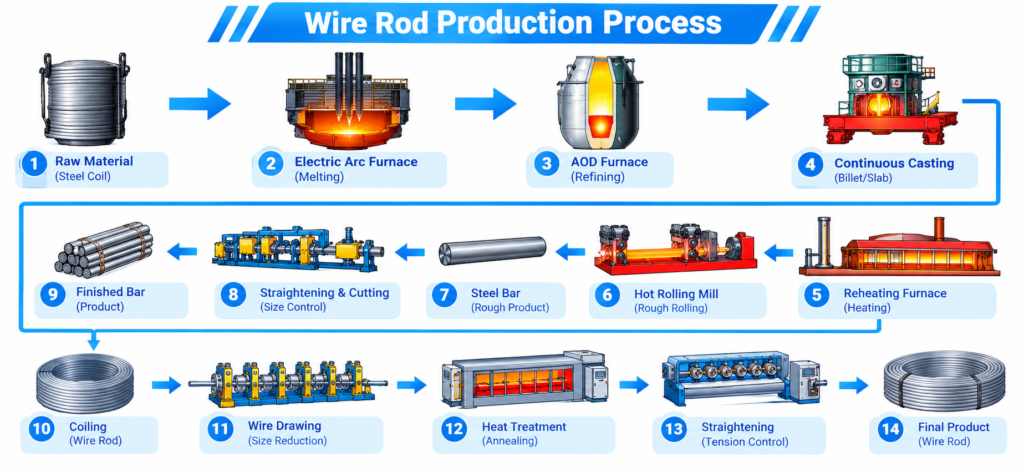
Process flow chart for stainless steel round bars:
rocess Flowchart for Stainless Steel Round Bars
Process Flowchart for Stainless Steel Seamless Pipes
Process Flow Chart for Welded Stainless Steel Pipe: