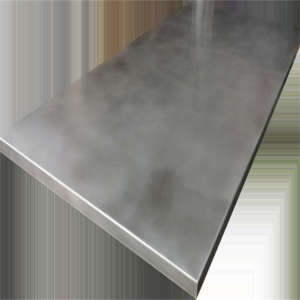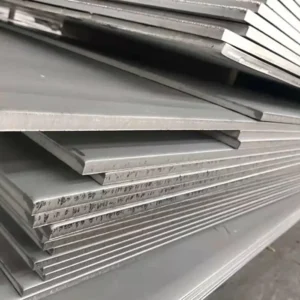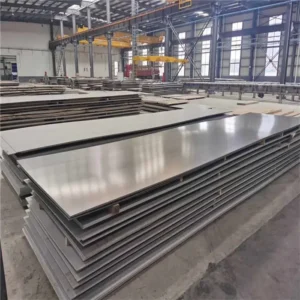
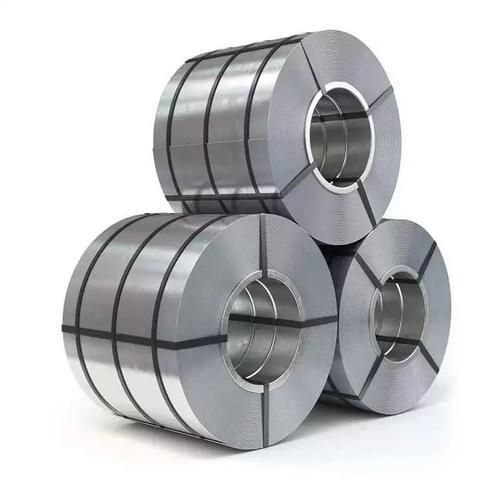


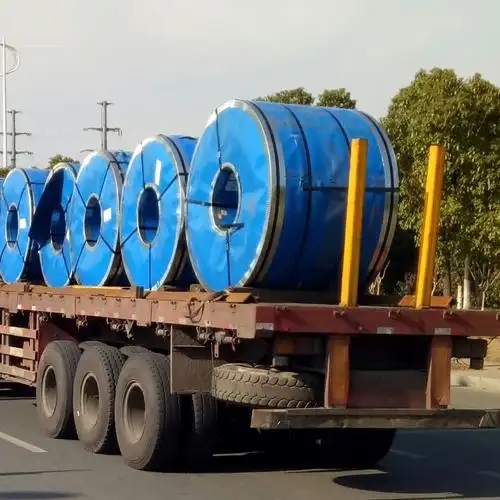

Martensitic stainless steel strip coil 410
Martensitic stainless steel strip coil 410 is a grade produced in accordance with American ASTM standards. It is equivalent to my country’s 1Cr13 (new designation: 12Cr13) stainless steel, as well as the American AISI/ASTM 410 (UNS S41000) and the Japanese JIS SUS410. In terms of chemical composition, 410 stainless steel contains 0.15% carbon and 11.5%–13.5% chromium.
Chemical Component [Martensitic stainless steel strip coil 410 ]
chemical componen | C | Si | Mn | P | S | Cr |
standard | 0.15 | 1.00 | 1.00 | 0.04 | 0.030 | 11.5~13.5 |
ordinary | 0.045 | 0.45 | 0.50 | 0.020 | 0.001 | 13. 0 |
Physical Parameter[Martensitic stainless steel strip coil 410 ]
Density (g/cm³) | magnetism | Specific heat: 25℃(J/kg.℃) | Thermal conductivity: 100℃(W/m.℃) | Thermal expansion rate: 20-100℃(10/℃) |
7.70 | have | 460 | 24.9 | 9.9 |
Mechanical Parameter[Martensitic stainless steel strip coil 410 ]
differentiate | mechanical property | 备注 | |||
Ys (Mpa) | Ts (Mpa) | El (%) | Hv | ||
standard | ≥ 205 | ≥ 440 | ≥ 20 | ≤ 210 | NO.2B/1.2t |
ordinary | 260 | 470 | 30 | 145 | |
Provided by JBL Company
| American Standard AISI/ASTM | ***GB | Target SUS | use |
| 410 | 1Cr13 | SUS410 | Blades, mechanical parts, petroleum, refining equipment, bolts, nuts, pumps, valve parts, tableware, etc |
| 420 | 2Cr13 | SUS420J1 | Blades, mechanical parts, petroleum, refining equipment, bolts, nuts, pumps, valve parts, tableware, etc |
| 420 | 3Cr13 | SUS420J2 | Cutting tools, measuring rulers, medical devices, *** electronics, etc |
Using 410 stainless steel for tableware is very safe; it is resistant to oxidation and flaking, durable, and shatterproof. It can be safely heated over an open flame or on an induction cooktop, and it is easy to clean. However, you should avoid using 410 stainless steel tableware to store salty foods or vegetable soups for long periods, as this could trigger a chemical reaction that causes toxic metal elements to leach out.
410 stainless steel is a martensitic chromium stainless steel. Its rolled products (including sheets, coils, and strips) feature the following characteristics:
Advantages:
1. Good mechanical properties: Through appropriate heat treatment, it can achieve high strength and hardness, along with good wear resistance.
2. Heat-treatability: This is a key characteristic; its strength and hardness can be enhanced via processes such as quenching and tempering.
3. Magnetic properties: It is ferromagnetic and can be attracted by magnets—a beneficial trait for applications requiring magnetic properties.
4. Moderate corrosion resistance: It offers better corrosion resistance than carbon steel in atmospheric conditions, fresh water, and certain mildly corrosive environments. It is suitable for settings with low-to-moderate corrosion requirements.
5. Good polishability: The surface can achieve a high level of brightness when polished.
Disadvantages:
1. Relatively poor corrosion resistance: Compared to common austenitic stainless steels like 304 or 316, 410 stainless steel has significantly lower corrosion resistance—particularly against acids, alkalis, and chlorides. It is not suitable for use in marine environments or highly corrosive conditions, such as those found in the chemical industry.
2. Mediocre weldability: The weld zone and the heat-affected zone are prone to hardening after welding, creating a high risk of cracking. Consequently, specialized welding procedures—such as preheating and post-weld heat treatment—are required.
3. Limited ductility: Compared to austenitic stainless steels, it possesses lower toughness and reduced cold-forming capability.
Designation System:
1. Austenitic stainless steels are designated using numbers in the 200 and 300 series.
2. Ferritic and martensitic stainless steels are designated using numbers in the 400 series. For example, some common austenitic stainless steels are identified as 302, 304, 316, and 310.
3. Ferritic stainless steels are identified as 430 and 446, while martensitic stainless steels are identified as 410, 420, and 440C. Duplex (austenitic-ferritic) stainless steels…
Comparison Item | 410 Stainless Steel (Martensitic) | 304 Stainless Steel (Austenitic) | 430 Stainless Steel (Ferritic) | 316 Stainless Steel (Austenitic) |
|---|---|---|---|---|
Main Chemical Composition | 12% Chromium, 0.12% Carbon | 18% Chromium, 8% Nickel | 16–18% Chromium, No Nickel | 16–18% Chromium, 10–14% Nickel, 2–3% Molybdenum |
Magnetism | Magnetic | Non-magnetic (or slightly magnetic) | Magnetic | Non-magnetic |
Hardness / Strength | High (HRC 50+ after heat treatment) | Medium, good toughness | Medium, lower than 410 | Medium, high-temperature strength |
Corrosion Resistance | Fair, not suitable for strong corrosive environments | Excellent, good resistance to atmospheric corrosion | Good, resistant to atmospheric corrosion | Excellent, resistant to chloride and seawater corrosion |
Processing Performance | Can be strengthened by heat treatment; preheating is required for welding | Easy to process and weld | Good formability, average weldability | Good weldability, relatively high processing difficulty |
Typical Applications | Knives, valves, mechanical components | Food processing equipment, medical devices, building materials | Home appliance housings, decorative trim | Chemical equipment, marine environments |
Cost | Relatively low (less nickel) | Medium | Low | High (contains nickel and molybdenum) |
Complete control over products allows us to ensure our customers receive the best quality prices and service. Contact us for a free quote,JBLSTEEL will provide the right solution for your project.