
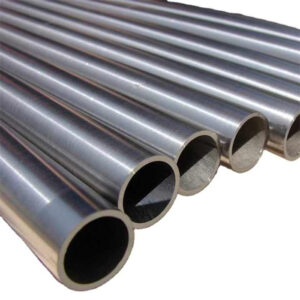
AUSTENITIC STAINLESS STEEL SEAMLESS PIPE
(304、304L、316、316L、321、321H、347、347H、309S、310S、904L)
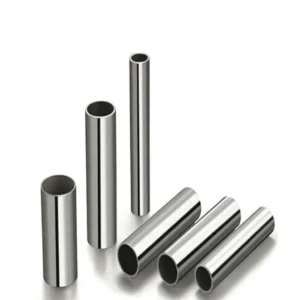
FERRITIC STAINLESS STEEL SEAMLESS PIPE
(409、430、439、441、444)
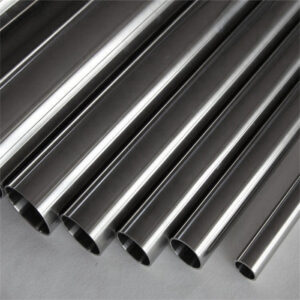
AUSTENITIC STAINLESS STEEL SEAMLESS PIPE
(410 / SUS410、420 / SUS420、430F、440A、440B、440C)
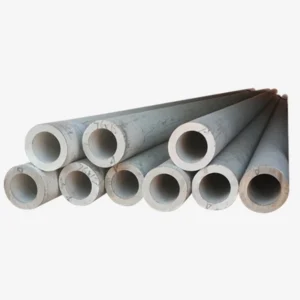
BIPHASIC STAINLESS STEEL SEAMLESS PIPE
(2205、2304、2507、S32760)
Showing 1–9 of 18 results
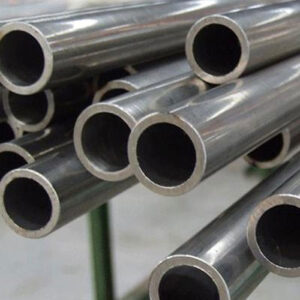
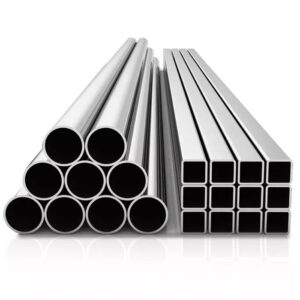
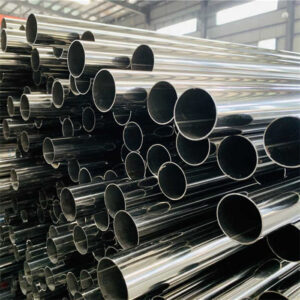
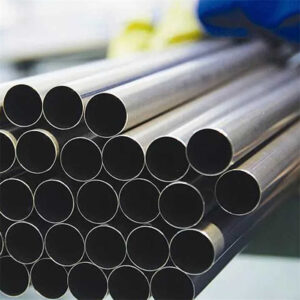
What are the differences between seamless pipes and welded pipes?
1. The appearance is different. Seamless pipes are formed by rolling in one process, with a seamless surface and excellent performance. While welded pipes have weld beads on the inner wall and need to be rolled and welded afterwards.
2. The pressure is different. Seamless pipes have higher pressure, while welded pipes have a pressure of 10 MPa.
3. The process is different. Welded pipes are made through cold rolling and high-frequency welding and are mainly used in construction, while seamless pipes are divided into hot-rolled and cold-rolled and are mainly used in factories.
What are the production processes for SS Seamless Pipes?
The production process of Seamless Stainless Pipe consists of the following steps: round pipe billet → heating → piercing → three-roll cross-rolling, continuous rolling or extrusion → uncoiling → sizing (or reducing diameter) → cooling → straightening → hydrostatic test (or flaw detection) → marking → storage. Seamless steel pipes are made by piercing steel ingots or solid pipe billets to form a rough pipe, and then through hot rolling, cold rolling or cold drawing to be produced.
Seamless steel pipes are mainly divided into: hot-rolled seamless steel pipes, cold-drawn seamless steel pipes, and cold-rolled seamless steel pipes.
What specifications can be provided when purchasing Seamless Stainless Steel Pipe?
1. Classified by material
• Carbon steel: Common steel grades include 10#, 20#, 35#, 45#, etc.; specifications usually range from 1/2 inch to 24 inches, with wall thickness ranging from 2 to 30 mm. For example, 20# steel is widely used in mechanical structures and hydraulic systems.
• Alloy steel: Such as 16Mn, etc., specifications are similar to carbon steel (1/2 – 24 inches, wall thickness 2 – 30 mm), mostly used for high-pressure fluid transportation in oil and gas.
• Stainless steel: Such as 304, 316, etc.; specifications are 1/8 – 30 inches, wall thickness 1 – 40 mm, suitable for industries with high corrosion requirements such as food and pharmaceuticals.
2. Classified by application
• Seamless pipes for structural use: Such as Q345B, etc.; outer diameter 6 – 1020 mm, wall thickness 1 – 150 mm, mainly used for supporting in building structures.
• Seamless pipes for fluid transportation: Such as 20#, Q235, etc.; outer diameter 21.3 – 1020 mm, wall thickness 2.5 – 60 mm, used for fluid transportation of water, oil, gas, etc.
• Seamless pipes for petroleum cracking: Such as J55, K55, N80, etc.; outer diameter 21.3 – 530 mm, wall thickness 2.5 – 60 mm, specifically used in petroleum cracking units.
3. Examples of common specifications for hot-rolled seamless steel pipes
The combinations of outer diameter and wall thickness are diverse, such as 38×(4, 5, 6, 8, 10) and 42×(3.5, 4, 5, 6, 8, 10, 12), etc.
How is the size of stainless steel seamless pipe calculated?
How is the weight of Seamless Pipes and Tubes calculated?
Basic formula: W = (D – t) × t × 0.02466, where D = outer diameter (mm), t = wall thickness (mm).
Total weight: Weight per meter × Length (m) = Total weight (kg).
(The coefficient 0.02466 is derived from the steel density of 7850 kg/m³, π, and unit conversion.
Alternatively, it can be calculated directly using the volume formula: W = π × (D – t) × t × L × ρ / 1000.)
What are the common standards for Stainless Steel Seamless Pipes?
Is it better for the seamless pipe to have a thicker wall thickness?
NO
Can Seamless Pipe be processed?
YES
What is the most easily overlooked aspect when purchasing high quality seamless stainless steel pipe?
Core confirmation list before purchasing JBLstainless Company stainless steel seamless tubes?
Model + Standard + Outer Diameter + Wall Thickness + Length + Quantity + Surface Treatment + Inspection Requirements + Packaging Method + MTC Certificate
Stainless steel seamless pipe corresponding to —- foreign brand names
| Chinese national standard (GB/T 20878) | American-Standard (AISI/ASTM) | UNS Number | Japanese Industrial Standards (JIS) | German standard (EN/W-Nr) | Typical application |
|---|---|---|---|---|---|
| 06Cr19Ni10 (new) / 0Cr18Ni9 (former) | 304 | S30400 | SUS 304 | X5CrNi18-10 (1.4301) | General Fluids, Food and Chemicals |
| 022Cr19Ni10 (new) / 00Cr19Ni10 (former) | 304L | S30403 | SUS 304L | X2CrNi18-9 (1.4307) | Welded parts, anti-intergranular corrosion |
| 06Cr17Ni12Mo2 (new) / 0Cr17Ni12Mo2 (former) | 316 | S31600 | SUS 316 | X5CrNiMo17-12-2 (1.4401) | Marine environment, chlorinated medium |
| 022Cr17Ni12Mo2 (new) / 00Cr17Ni14Mo2 (former) | 316L | S31603 | SUS 316L | X2CrNiMo17-12-2 (1.4404) | High corrosion-resistant welding structure |
| 06Cr25Ni20 (new) / 0Cr25Ni20 (former) | 310S | S31008 | SUS 310S | X8CrNi25-21 (1.4845) | High-temperature furnace tubes, heat-resistant components |
| 06Cr18Ni11Ti | 321 | S32100 | SUS 321 | X6CrNiTi18-10 (1.4541) | Anti-sensitization high-temperature pipeline |
| 06Cr18Ni11Nb | 347 | S34700 | SUS 347 | X6CrNiNb18-10 (1.4550) | High-temperature pressure-bearing components |
| 022Cr23Ni5Mo3N | 2205 | S32205/S31803 | SUS 329J4L | X2CrNiMoN22-5-3 (1.4462) | Dual-phase steel, stress corrosion resistance |
How to choose between 304 and 316 Seamless Stainless Steel Pipes?
304 has outstanding cost-effectiveness in regular scenarios, while 316 provides safety guarantees in highly corrosive environments. When making a selection, first determine the composition of the medium and the stress conditions, and then match the material properties.
What are the differences between food-grade and industrial-grade seamless pipes?
The main application of food-grade stainless steel is in situations where it comes into contact with food, such as in food processing, manufacturing of tableware, baking pans, and various utensils. The production standards for this type of stainless steel must comply with hygiene standards and regulations.
On the other hand, industrial-grade stainless steel is mainly used in fields such as chemical engineering, crude oil, medical devices, and construction. Its main characteristics are strength and corrosion resistance.
What is the maximum temperature limit for the 310S high-temperature seamless pipe?
In an oxidative environment, the continuous working temperature can reach up to approximately 1150°C. The short-term peak temperature resistance capability is up to 1200°C.
How can one check if there are any cracks or defects in stainless steel seamless pipes?
Visual inspection: Mainly conducted through visual observation, to check whether there are cracks, sand holes, peeling, scratches, dents, etc. on the surface of the stainless steel pipe. For some minor surface defects, auxiliary inspections can also be carried out with the help of magnifying glasses and other tools.
How do the common blemishes and cracks on the surface of seamless pipes come about?
The small, patchy or point-like indentations that appear on the surface of Stainless Seamless Pipe Manufacturer are called “peeling”. The causes of this phenomenon are diverse, including point-like corrosion during the acid washing process, excessive oxide scale after annealing, and the indentation of the oxide scale on the pipe surface during straightening.
What are the differences between hot-rolled and cold-drawn stainless steel seamless pipes?
| Comparison project | Hot-rolled seamless pipe | seamless drawn tube |
|---|---|---|
Processing Temperature | High-temperature processing | Room temperature cold processing |
Producing efficiency | higher | lower |
| Dimensional accuracy | ordinary | high |
| Wall thickness accuracy | ordinary | high |
| Surface Quality | ordinary | preferably |
| Specification range | Larger diameters have more advantages | Small diameters and precise specifications have more advantages |
| wall thickness | Thick-walled pipes have obvious advantages | The advantages of thin walls and precise wall thickness are obvious |
| mechanical property | Hot working state | The strength may increase after cold working |
| finished cost | lower | higher |
| Suitable application | Pipes, pressure pipes, large equipment | Precision equipment, hydraulics, instruments, etc |