
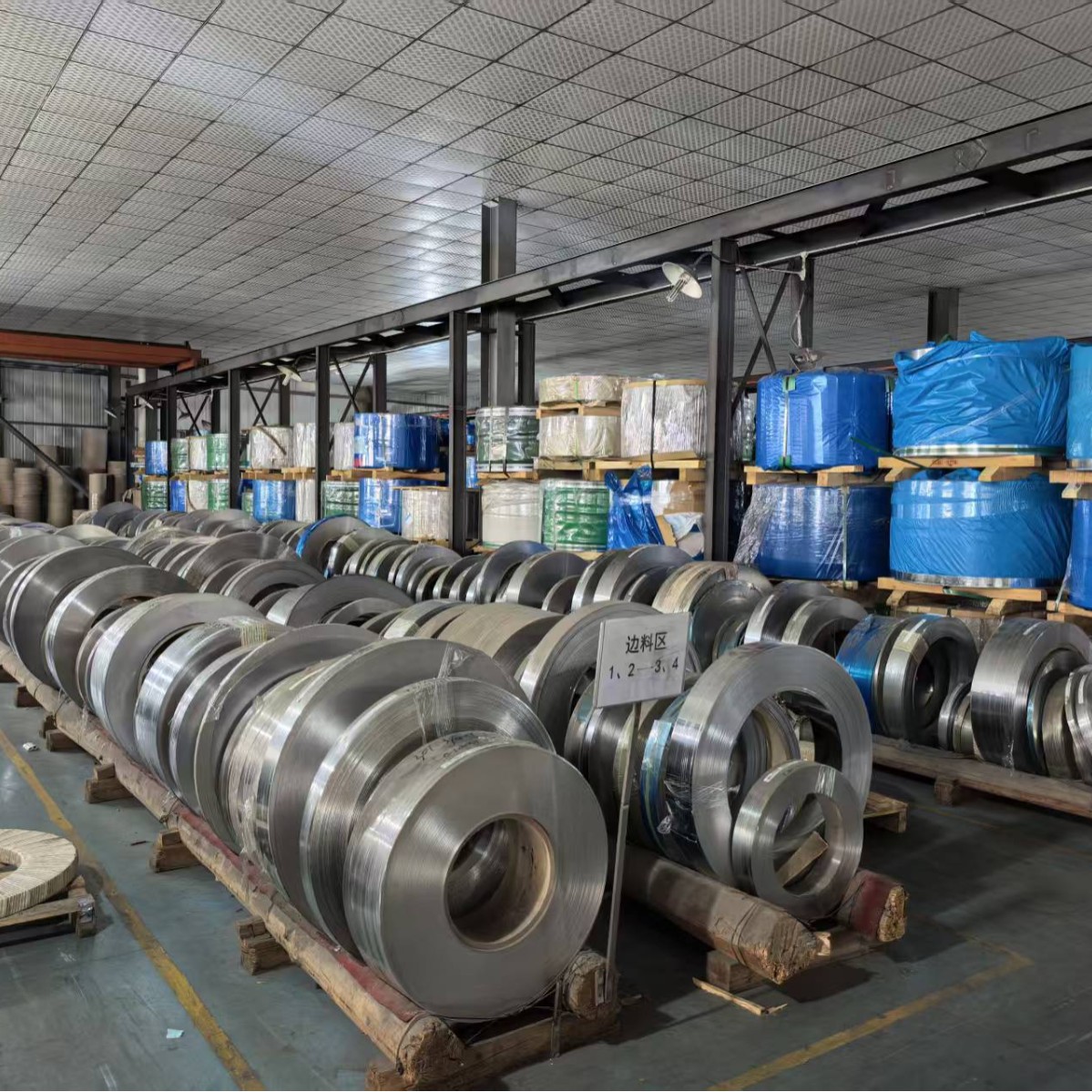

AISI 304L (1.4306) Stainless steel precision strip
Surface Characteristics:
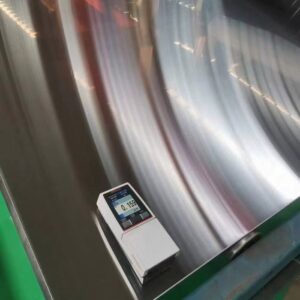
NO.1: Silver-white
NO.2D: Silver-white
NO.2B: Higher luster than NO.2D (processed from NO.2D)
BA: Bright, mirror-like finish
NO.3: Coarse-ground
NO.4: Medium-ground
NO.240: Fine-ground
NO.320: Very fine-ground
NO.400: Luster approaching that of BA (processed from NO.2B)
HL: Hairline-ground
NO.7: Near-mirror finish
NO.8: Mirror finish
AISI 304L (1.4306) Stainless steel precision strip-SUS304L Stainless Steel Strip, 304L Deep-Drawing Stainless Steel Strip, 304 Low-Carbon Stainless Steel Strip – Samples Available.
SUS304 Stainless Steel Strip, 304 Ultra-thin Stainless Steel Strip/Foil, Stainless Steel Strip for Automotive Parts.
304L Stainless Steel Plate – 304L stainless steel is a versatile, general-purpose stainless steel material.
304L Stainless Steel Grade: 00Cr19Ni10 (0Cr18Ni10)
304L Stainless Steel Chemical Composition (%):
C: ≤0.07
Si: ≤1.0
Mn: ≤2.0
Cr: 17.0–19.0
Ni: 8.0–11.0
S: ≤0.03
P: ≤0.035
Mechanical Properties of 304L Stainless Steel:
Yield Strength (N/mm²): ≥205
Tensile Strength: ≥520
Elongation (%): ≥40
Hardness: HB ≤187, HRB ≤90, HV ≤200
Density: 7.93 g/cm³
Specific Heat Capacity c (20°C): 0.502 J/(g·°C)
Thermal Conductivity λ/W(m·°C)⁻¹ (at temperatures: 20°C, 100°C, 500°C): 12.1, 16.3, 21.4
Coefficient of Linear Expansion α/(10⁻⁶/°C) (over temperature ranges: 20–100°C, 20–200°C, 20–300°C, 20–400°C): 16.0, 16.8, 17.5, 18.1
Electrical Resistivity: 0.73 Ω·mm²/m
Melting Point: 1398–1420°C
AISI 304L (1.4306) Stainless steel precision strip is a variant of 304 stainless steel with a lower carbon content, designed for applications that require welding. A lower carbon content minimizes the precipitation of carbides in the heat-affected zone near the weld—carbide precipitation that can otherwise lead to intergranular corrosion (weld decay) in stainless steel when exposed to certain environments.

Item | Details |
|---|---|
Materials | 304L |
Specifications & Dimensions | Thickness: 0.05–3.0 mm; Width: 4–2000 mm; Length: Customizable according to customer requirements |
Hardness Conditions | HV 150–600+; Cold-rolled annealed (ANN), 1/2H, 3/4H, H, EH, SEH |
Applications | Hardware stamping, gasket blades, optical fiber cable protection tubes, corrugated tubes, petroleum, chemical processing, automotive, electronic and electrical appliances, medical equipment, decoration, nuclear industry, chemical granulation, refrigeration equipment, stainless steel conveyor belts, spring strips, power plant gaskets, mechanical gaskets, precision molds, machinery manufacturing, bending, stretching, stamped parts, tube manufacturing, metal products, sealing components, aerospace, automotive parts, and other industries. |
Item | Details |
|---|---|
Production Locations | Taigang, Yongjin, Tsingshan, Xinhai, Puxiang, Jiugang |
Surface Finishes | 2B, 2BB, 2D, 2DD, BA, 8K, Hairline, and others |
Thickness (mm) | Width 10–150 mm | Width >150–300 mm | Width >300–450 mm |
|---|---|---|---|
0.03–0.10 | ±0.005 | ±0.005 | ±0.010 |
>0.10–0.15 | ±0.010 | ±0.010 | ±0.010 |
>0.15–0.25 | +0.010 / −0.015 | +0.010 / −0.015 | +0.010 / −0.015 |
>0.25–0.45 | ±0.015 | ±0.015 | ±0.015 |
>0.45–0.65 | ±0.020 | ±0.020 | ±0.020 |
>0.65–0.90 | +0.005 / −0.030 | +0.005 / −0.030 | ±0.030 |
>0.90–1.20 | +0.030 / −0.035 | ±0.035 | ±0.040 |
>1.20–1.50 | +0.010 / −0.045 | +0.010 / −0.045 | ±0.050 |
Note: Tolerances are in millimeters. Width ranges and values have been transcribed from the supplied image.
Width (mm) | Thickness 5–150 mm* | Thickness >150–300 mm* | Thickness >300–450 mm* |
|---|---|---|---|
0.03–0.15 | ±0.10 | ±0.10 | ±0.20 |
>0.15–0.50 | ±0.15 | ±0.15 | ±0.20 |
>0.50–1.00 | ±0.20 | ±0.20 | ±0.25 |
>1.00–1.50 | ±0.20 | ±0.25 | ±0.25 |
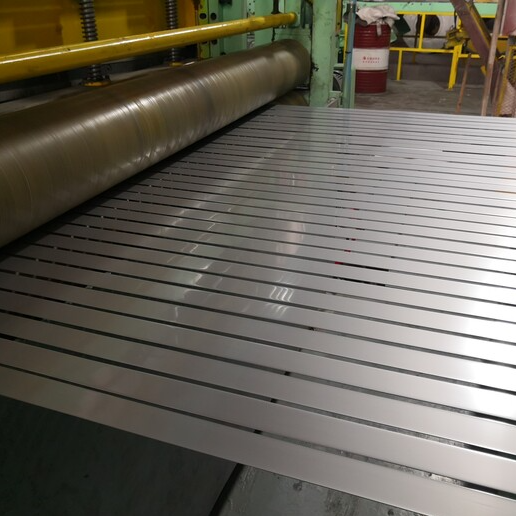

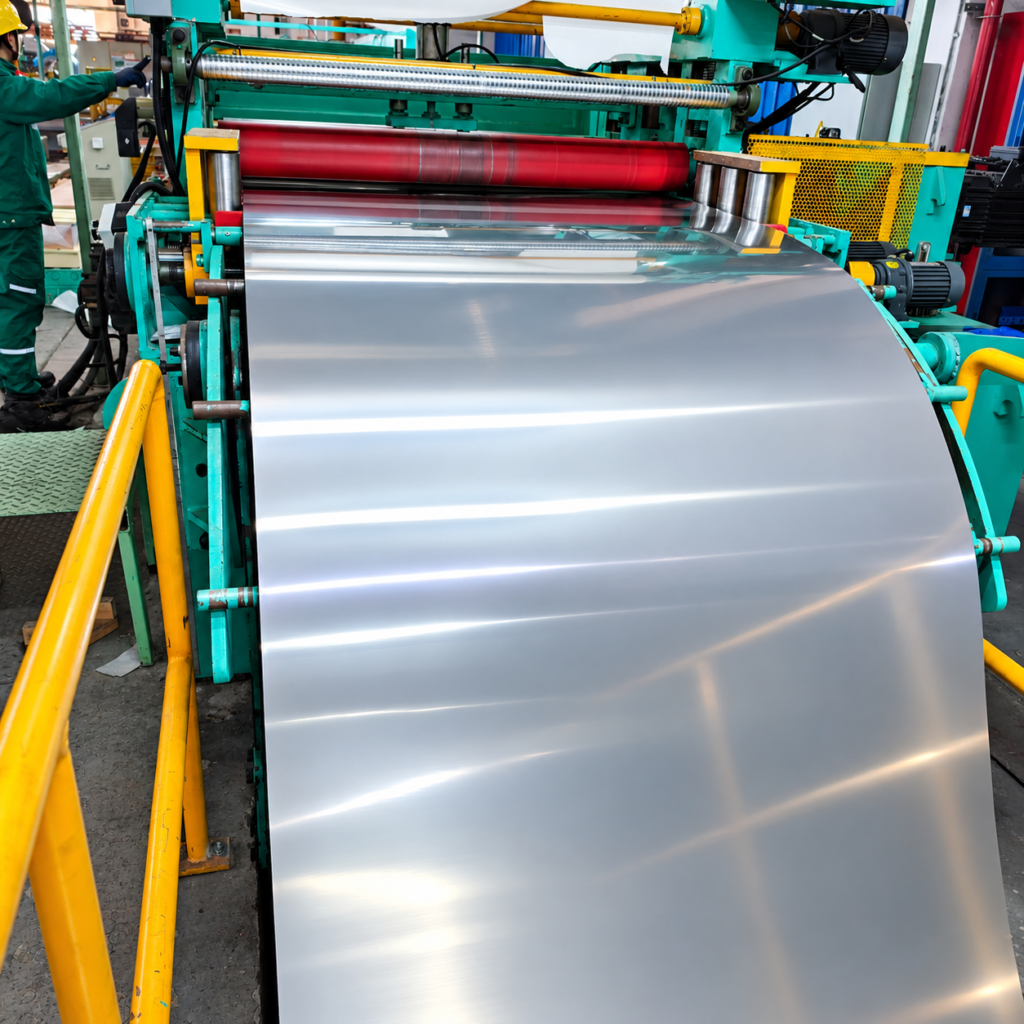
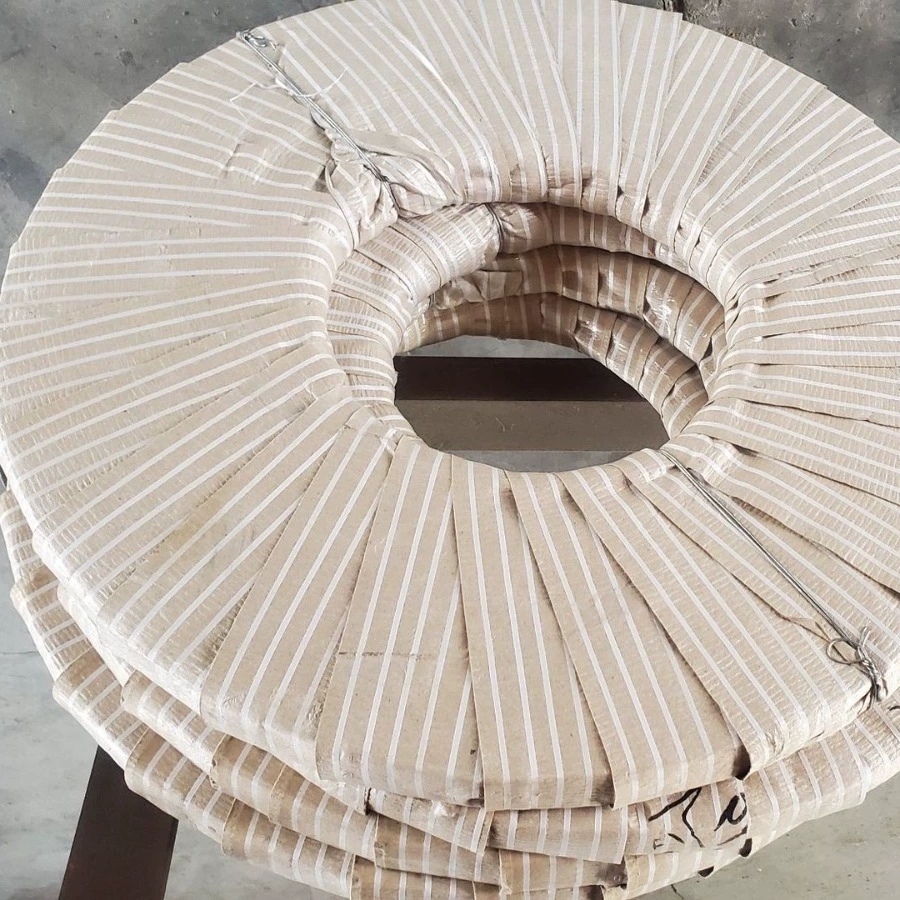
Properties and Applications of AISI 304L (1.4306) Stainless steel precision strip:
As a low-carbon variant of 304 stainless steel, it exhibits corrosion resistance comparable to that of standard 304 steel under typical conditions; however, it demonstrates superior resistance to intergranular corrosion following welding or exposure to stress. It maintains excellent corrosion resistance even without heat treatment and is generally suitable for use at temperatures below 400°C (it is non-magnetic, with an operating temperature range of -196°C to 800°C).
It is used in applications requiring high resistance to intergranular corrosion—such as in the chemical, coal, and petroleum industries—including for outdoor equipment, construction materials, heat-resistant components, and parts that are difficult to subject to heat treatment.
Grade | Characteristics and Applications |
|---|---|
301 | Exhibits significant work hardening during deformation and is used in applications requiring high strength. |
302 | A higher-carbon variant of 304 stainless steel. Cold rolling can increase its strength. |
302B | A stainless steel with a high silicon content and excellent high-temperature oxidation resistance. |
303 / 303Se | Free-machining stainless steels containing sulfur and selenium, respectively. Used where good machinability and high surface finish are required. Also suitable for hot-heading components due to their good hot-working properties. |
304L | A low-carbon variant of 304 stainless steel, primarily used in welding applications. Its lower carbon content minimizes carbide precipitation near welds, reducing the risk of intergranular corrosion in certain environments. |
304N | A nitrogen-containing stainless steel in which nitrogen is added to increase strength. |
305 / 384 | Contain relatively high nickel levels and have low work-hardening rates, making them suitable for applications requiring excellent cold formability. |
308 | Primarily used in the manufacture of welding electrodes. |
309 / 310 / 314 / 330 | Have higher nickel and chromium contents to improve high-temperature oxidation resistance and creep strength. |
309S / 310S | Low-carbon variants of 309 and 310, respectively. Their lower carbon content reduces carbide precipitation near welds. |
330 | Offers excellent carburization resistance and thermal shock resistance. |
316 / 317 | Molybdenum-containing stainless steels with significantly better pitting corrosion resistance than 304 in marine and chemical processing environments. |
316L | A low-carbon variant of 316 stainless steel. |
316N | A nitrogen-containing, high-strength variant of 316 stainless steel. |
316F | A free-machining variant of 316 stainless steel with a higher sulfur content. |
321 | Titanium-stabilized stainless steel suitable for welded components operating at elevated temperatures. |
347 | Niobium-stabilized stainless steel suitable for welded components operating at elevated temperatures. |
348 | Niobium-stabilized stainless steel used in the nuclear power industry, with specific restrictions on tantalum and cobalt content. |
Complete control over products allows us to ensure our customers receive the best quality prices and service. Contact us for a free quote,JBLSTEEL will provide the right solution for your project.