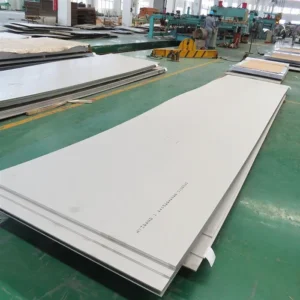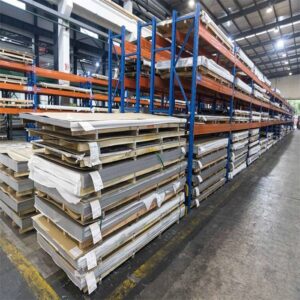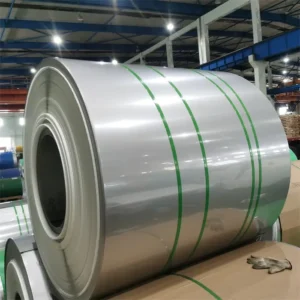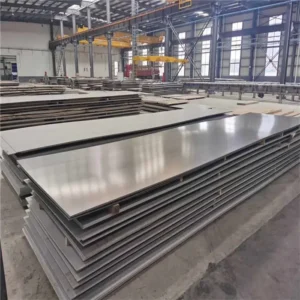
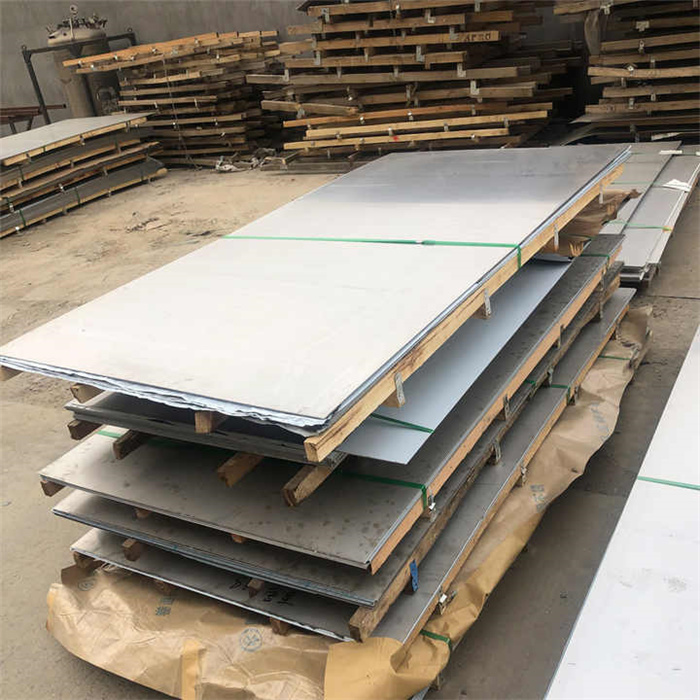
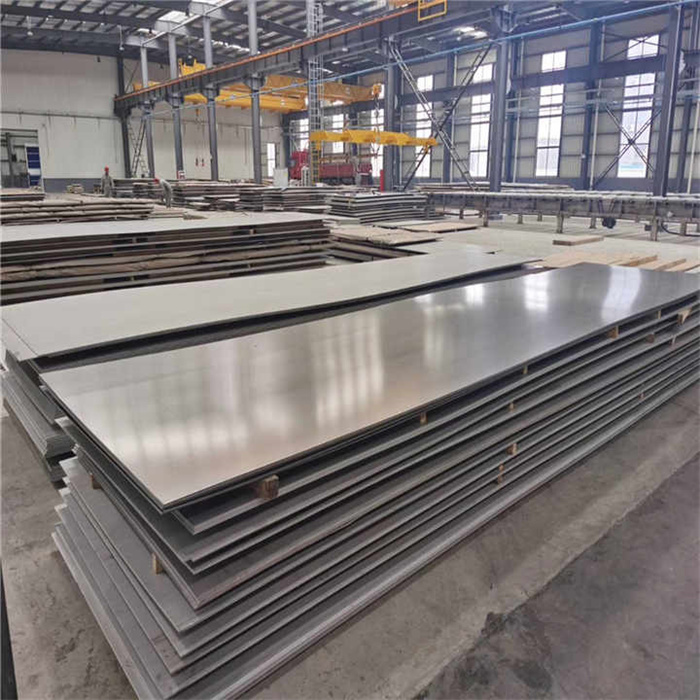
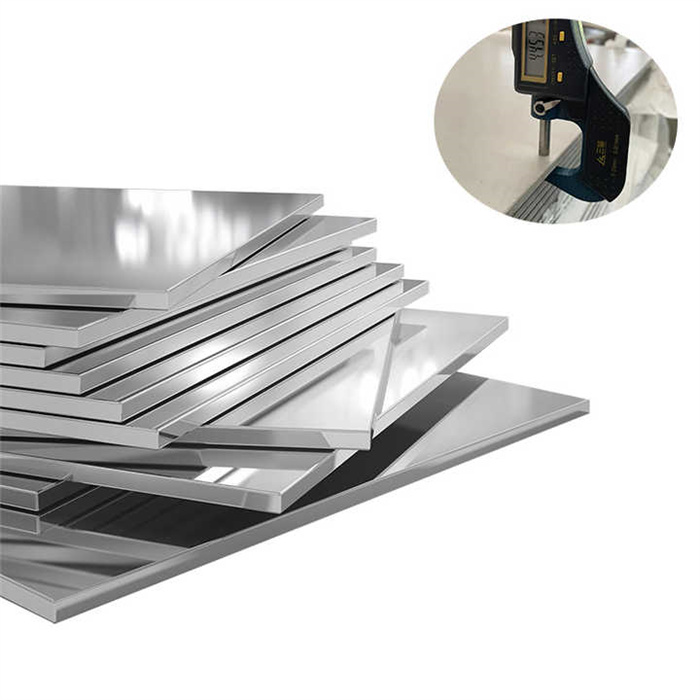
Stainless steel clad plate is a new type of composite material created by metallurgically bonding a thin layer of stainless steel to a thick layer of carbon steel, combining the excellent corrosion resistance and high/low temperature resistance of stainless steel with the high strength, low cost, and weldability of carbon steel.
Material combination: S30403+Q235B, S31603+Q355B, S22053+Q355B
Specification: 5~100*700(1500) – 4500*6000~15000(17000)mm
Stainless steel clad plate is a composite steel material created by metallurgical bonding technology that combines carbon steel sheets (such as Q235B and Q345R pressure vessel steel) with stainless steel sheets (commonly 304, 316L, and 2205 duplex stainless steel). The base metal provides required mechanical strength and pressure resistance, while the cladding metal offers excellent corrosion resistance and a clean, aesthetic appearance, thereby complementing the properties of both materials.
Unlike regular coating or bonding, it forms an atomic-level diffusion bond that will never delaminate. The cladding layer provides surface protection, while the substrate bears the mechanical load.It combines the excellent corrosion resistance and high- and low-temperature resistance of stainless steel with the high strength, low cost, and weldability of carbon steel, making it an economical solution that offers “the strength of carbon steel with the functionality of stainless steel.”
| Satandard | GB/T8165–2008,A263, A264 |
| Base metal | carbon steel :Q235B; Q345R; Q355; Q245R; Q355R; 20#; X60-70, etc |
| Cladding metal | SUS304, 304L, 316L, S25023, etc |
| Thickness | base material: 3.0–39.5mm; |
| cladding material: 0.5–5.0mm | |
| Width | 100-2800mm, can be customized |
| Length | 500-13000mm |
| Technology | Single-sided; Double-Sided; Hot-rolled; Cold-rolled |
| Shear Strength (MPa) | 320~450 |
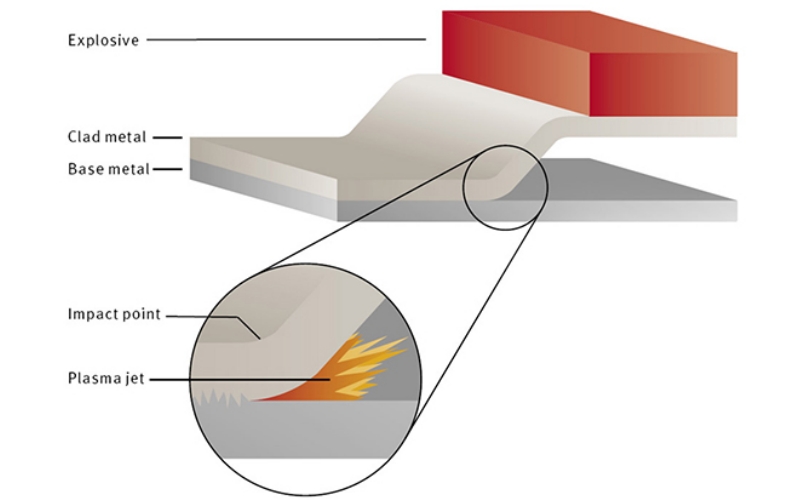
The explosive bonding method, which uses TNT for metal cladding, is now increasingly banned abroad. This approach presents significant safety hazards and environmental pollution risks, failing to meet the safety and environmental standards required in modern industrial production.
Hot rolling is a common method in the market for producing composite materials, but when it comes to reactive metals, the interfacial bonding strength tends to be relatively low. Currently, most metal composite plates on the market are manufactured using the hot rolling process, which often leads to difficulties during operations such as welding, bending, and drilling. As a result, large-scale application of these materials remains challenging.
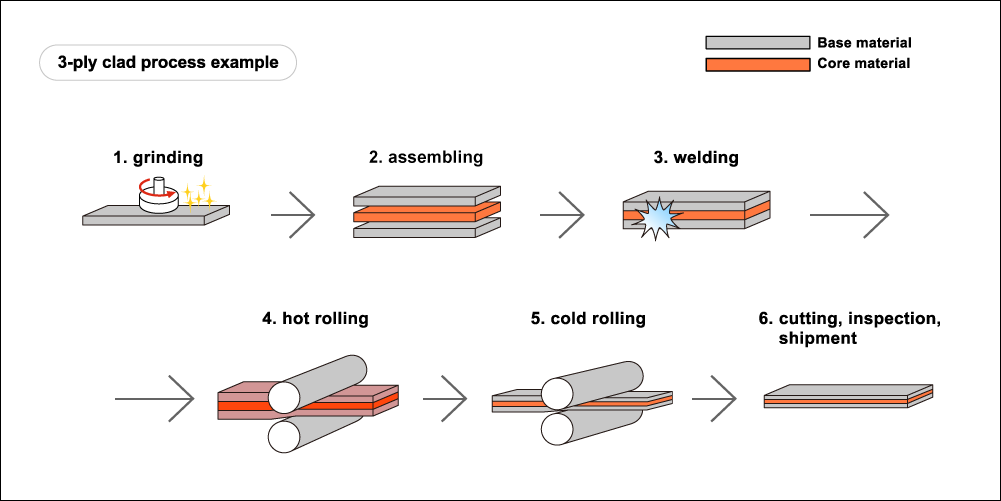
To achieve reliable metallurgical bonding of dissimilar metals, we address a core challenge: difficulty in conventional fusion due to melting-point differences. By introducing a special transition-layer material with a graded melting point and excellent interfacial wetting, the hot-rolling composite process promotes interdiffusion of interface atoms and significantly improves interface compatibility, ensuring complete metallurgical bonding. Testing indicates the resulting composite shows significantly improved interfacial shear strength, meeting industrial application requirements.
The proprietary technology enables metal composites, whether two-layer, three-layer, or multi-layer, to achieve high-strength integrity with exceptionally strong bonding interfaces. This characteristic ensures the stability and reliability of the products under complex working conditions.
We JBLSTEEL company has achieved continuous production of plates, strips, and tubes, significantly enhancing production efficiency. Compared to traditional production methods, continuous production reduces pauses and transition times in the manufacturing process, thereby increasing production capacity.
Our technology enables composite production with various metal materials and specifications, such as carbon steel-stainless steel, carbon steel-copper alloy, carbon steel-titanium alloy, carbon steel-nickel alloy, aluminum alloy-titanium or nickel alloy, and other challenging products. This capability allows the company to meet the diverse needs of different clients.
Compared to other materials, stainless steel-carbon steel Clad Plate offers multiple advantages:
1.Excellent Corrosion Resistance
The cladding provides corrosion resistance comparable to that of pure stainless steel, shielding the base material from media corrosion. This extends equipment service life by 2–3 times and significantly reduces maintenance costs.
2. Cost-effective
Combines the benefits of carbon steel and stainless steel. The high-strength carbon steel base layer meets structural load-bearing requirements, while the austenitic/duplex stainless steel cladding provides excellent corrosion resistance and high-temperature resistance. Compared to pure stainless steel plates of the same thickness, clad plates offer higher strength at a lower cost.
3. High Machinability
It can be easily cut and formed, including plasma cutting, drawing, stamping, welding, bending, and hot pressing. We also offer customised solutions, including processing of wide-width and irregularly shaped parts, and surface finishing (brushed, mirror-polished, etc.) service.
JBLSTEEL specialize in supplying stainless steel-carbon steel clad plate (304/316 cladding + Q235/Q345 base layer), combining the corrosion resistance of stainless steel with the high strength of carbon steel. It is widely used in petroleum, chemistry, food processing, automobiles, water conservancy, electricity, coal & coking, aviation, and other industries.
1.High-speed Rail Bridge Truss; Bridge Steel Plate
2. Freight Truck
3. Rail Transportation
4.Gas Storage Tank
5.Marine Steel Plate
6.Lifeline Engineering: Gas Supply, Water Supply, Drainage, Transportation, Communications, Power Supply
7.Grain Storage Tank
8.Bioreactor/Fermentation Tank
Complete control over products allows us to ensure our customers receive the best quality prices and service. Contact us for a free quote,JBLSTEEL will provide the right solution for your project.